How climate change is driving increased pesticide usage

p22_spraying_2

Climate change isn’t just stressing crops — it’s giving the insects that eat them a leg up. Warmer temperatures are expanding pests’ ranges, lengthening their breeding seasons and, in some cases, helping them shrug off the very pesticides meant to kill them, as Yale Climate Connections’ Sanket Jain reports.

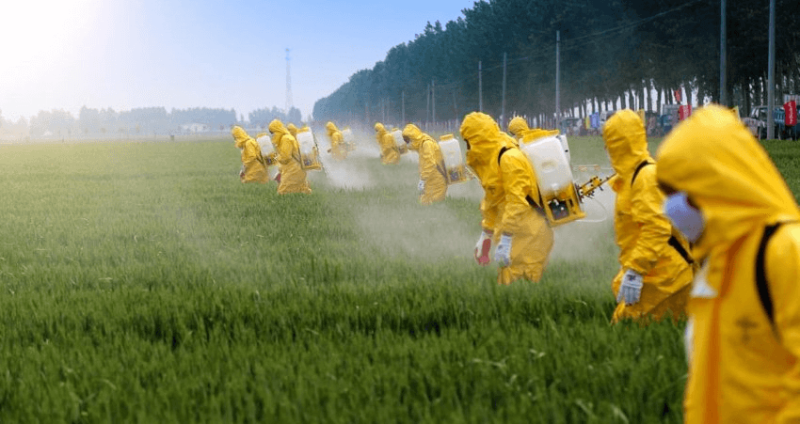
Farmers are responding by spraying more: global agricultural pesticide use more than doubled between 1990 and 2024, according to the UN’s Food and Agriculture Organization.

The biology helps explain why. Faster-maturing insects pack more generations into a year, giving resistant individuals more chances to survive spraying and pass on their traits. Some genes may govern both heat tolerance and insecticide resistance.

“Environmental change can cause populations to be more resistant to an insecticide, or it can also cause populations to be more susceptible,” said Henry Chung, an evolutionary biologist and associate professor at Michigan State University.

Take the diamondback moth, a notorious cabbage pest. According to a study published in Nature Communications, 50 years of warming expanded the area where it can survive winter by about 2.4 million square kilometers — and resistance levels were 158 times higher where it overwinters than where it appears only seasonally.

Mis- and disinformation are distorting science and public policy. Subscribe to our Daily and Weekly Digests for incisive coverage of ‘disruptive’ innovations in AI, agricultural biotechnology, food, chemicals, nuclear energy, vaccines, and other disruptive innovations.

In Brazil, researchers found that resistant fall armyworms needed a spinetoram concentration 340 times higher than susceptible insects to reach the same mortality at 28°C — and nearly 590 times higher at 32°C.
“In regions experiencing frequent heat waves, we could certainly see a decline in insecticide efficacy over time,” said study co-author Aline Guidolin, an entomologist and professor at the University of São Paulo’s Luiz de Queiroz College of Agriculture.

Experts recommend integrated pest management — monitoring fields, rotating chemicals, enlisting natural predators — but that’s a tough sell for smallholders like Laxman Mane, who farms just under two acres in western India.

“Poor farmers like me are left with no resort but to keep spraying,” Mane said.

Read the original article here

Related Articles

Infographic: Global regulatory and health research agencies on whether glyphosate causes cancer

Infographic: Global regulatory and health research agencies on whether glyphosate causes cancer

Does glyphosate—the world's most heavily-used herbicide—pose serious harm to humans? Is it carcinogenic? Those issues are of both legal and ...

Most Popular

Bayer Crop Circle in Golden Wheat
Making fertilizer from thin air: Bayer’s gene-editing innovation could dramatically cut chemical fertilizer use in growing food
Picture1
Viewpoint: How badly is the U.S. food-safety net fraying? FDA’s bungled handling of the tainted lettuce crisis deepens concerns over cuts to disease tracking and response
Smiling-Woman-Over-Teal-Abstract-Shapes
Viewpoint: RFK Jr.’s latest foray into junk science: Even Kennedy’s hand-picked NIH director balks at appointment of crackpot mental health director
Screenshot-2026-11-03-at-12.31.18-PM
Gene editing once viewed with suspicion by UK  farmers, upwards of 90% now open to their sustainability benefits
Neon Genome_ Fetal Dreamscape
The race to genetically engineer babies
Reaching Through the Woven Sky
Challenging genetic modification rejectionists: Our evolving food system has relied on science for thousands of years
Screenshot-2026-10-29-at-11.18.34-AM
Viewpoint: ‘Just the flu’: Skipping your child’s flu shot could be a fatal mistake
ChatGPT-Image-Mar-10-2026-01_39_01-PM
Viewpoint—“Miracle molecule” debunked: Why acemannan supplements don’t work
Screenshot-2026-11-02-at-11.34.28-AM
Farmers are collateral damage in the PFAS “forever chemicals” crossfire. Here’s what they need to know.
Glossy Plastic Bag of Tokens and Labels
Viewpoint: How CNN got played by environmental activists pushing a plastics scare and litigation agenda
Screenshot 2026-10-27 at 10.32
“Do your own research”: What Medicare’s annual open enrollment circus teaches us about the seductive trap of DIY health and science
Red and Green Embroidered Campaign Caps
Viewpoint: The fragile (and often bizarre) MAHA-MAGA-far left health-and-chemicals coalition is fracturing. Here’s why
Screenshot-2026-10-21-at-11.30.51-AM
Viewpoint: Yes, our food system stinks, but the attack of ultra-processed foods is often misplaced
glp menu logo outlined

Get news on human & agricultural genetics and biotechnology delivered to your inbox.