


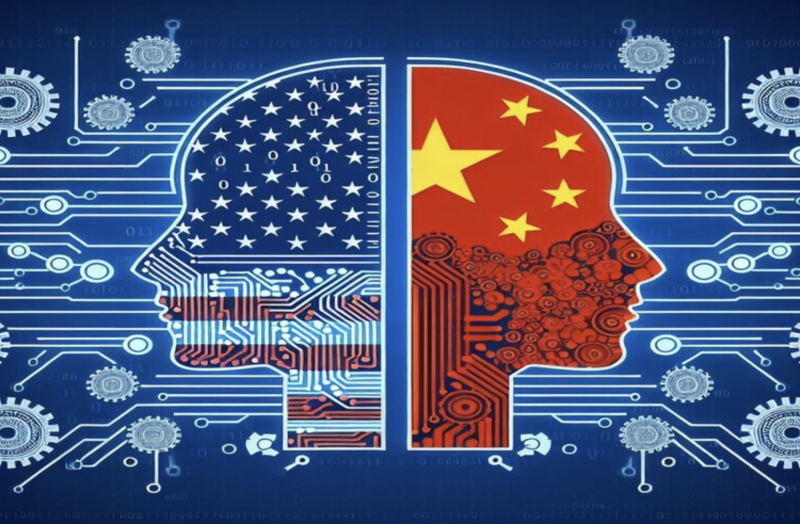

For years, Silicon Valley’s most powerful voices insisted the US was locked in an unwinnable AI arms race with China. Now, as Louise Matsakis for Wired reports, those same executives are warning AI has grown dangerous enough that Washington and Beijing need to cooperate and slow the race down — a message China’s government and AI industry are treating with deep suspicion.
Anthropic CEO Dario Amodei made the case in a blog post titled “We Must Pace the Frontier,” arguing that “global pacing will require cooperation with China, the autocratic country with by far the most advanced AI capabilities.” But he also urged the US to widen its lead first, via steps like cracking down on chip smuggling — a condition critics say undercuts the pitch. “The gulf lies between an Anthropic-led vision that would only subjugate and restrict China first to maximize leverage before talking,” says Kevin Xu, founder of the hedge fund Interconnected Capital. “China would only talk if it’s being treated from a position of equals.”
China’s Ministry of Foreign Affairs responded bluntly, with spokesperson Guo Jiakun calling the proposal “fear-mongering, confrontation, and vicious competition.” Chinese officials aren’t dismissing AI risk outright — they’re worried about different risks. Rather than existential scenarios, Beijing’s minister of state security, Chen Yixin, has warned mainly about AI fueling disinformation, cyberattacks, espionage, and threats to social stability and Communist Party rule.
Industry shares that skepticism. A DeepSeek researcher wrote in a widely shared essay that he fears AI concentrating in a few companies’ hands more than the technology itself: “I do not trust Anthropic or OpenAI to do that. And I especially do not want Anthropic to control the most advanced artificial intelligence or AGI.”




Preliminary US-China safety talks are reportedly underway ahead of Xi Jinping’s planned Washington visit this month. But Kristy Loke of the AI safety nonprofit MATS Research warns Amodei’s rhetoric “is undermining one of the few available levers for reducing the very risks he professes to take seriously.”





















