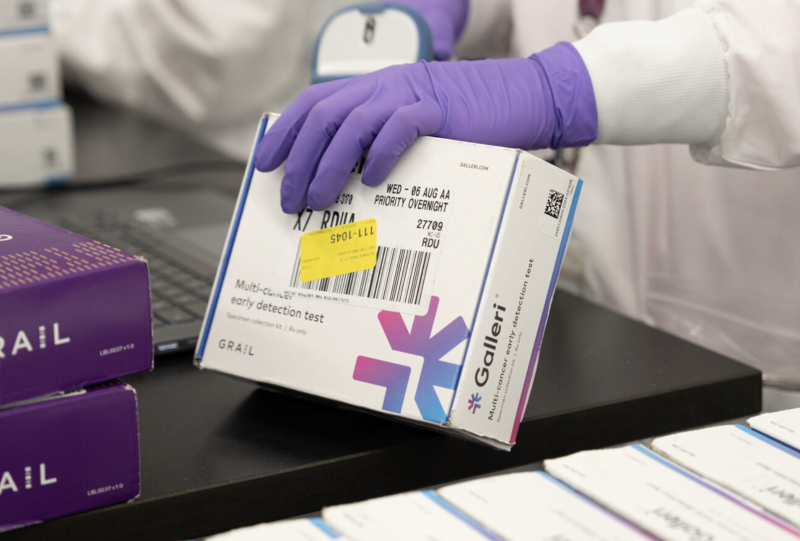

Grail’s Galleri multicancer blood test flunked its own big trial, and an FDA advisory panel recommended approving it anyway. That’s the case made by H. Gilbert Welch, a physician and cancer screening researcher at Brigham and Women’s Hospital’s Center for Surgery and Public Health, in an opinion essay for STAT News.
Galleri was tested in a randomized trial of roughly 140,000 people in England’s National Health Service. The trial measured late-stage cancer detection rather than cancer deaths. “Nevertheless, the Grail/National Health Service trial was negative,” Welch writes, citing the results published in the New England Journal of Medicine.
For Welch, the only metric that matters is whether fewer people die. More screening finds more cancer, including overdiagnosed tumors that would never have caused harm. “And it is always accompanied by longer survival times and thus higher five-year survival rates,” he notes, numbers that can look impressive without anyone living longer.
The stakes are financial, too. The Medicare Multi-Cancer Early Detection Screening Coverage Act would fast-track Medicare coverage after FDA approval, bypassing the U.S. Preventive Services Task Force. Welch estimates that screening the 120 million-plus Americans aged 50 and older, at $500 to $949 per test, could cost $60 billion to $100 billion a year.
He also takes aim at Grail itself: its heavy lobbying, its claims that the test will reduce health disparities, shareholder lawsuits in 2024 and 2026, and its cozy NHS ties, which included former Prime Minister David Cameron as a paid adviser.

Welch sees real promise in the technology for monitoring cancer patients’ response to treatment, but not for mass screening. “Telling more people they have cancer is not progress; progress is having fewer people die from cancer,” he writes. He urges regulators to let the National Cancer Institute’s planned trial measuring cancer deaths run its course: “To the FDA: Don’t approve the test. Test the tests.”