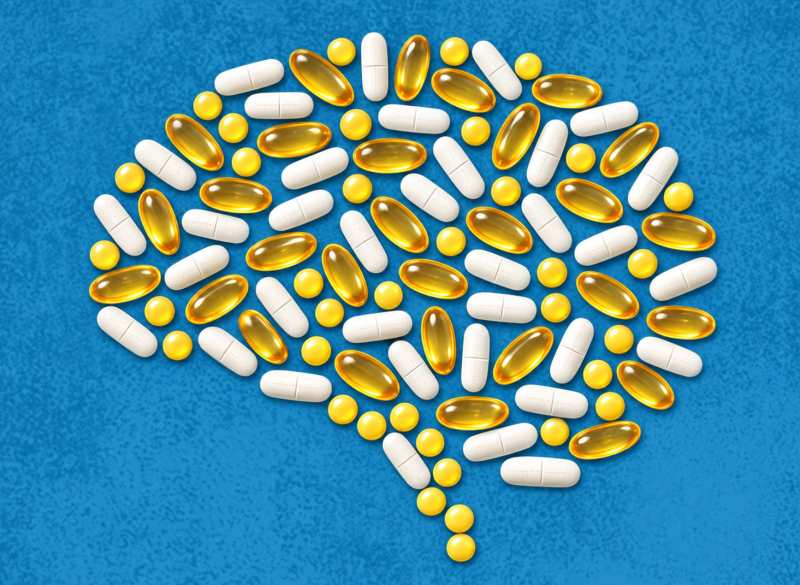

Vitamin D, omega-3 fish oil and glucosamine — three of the most popular supplements among older Americans — may do more harm than good to an aging brain, according to Ariana Eunjung Cha at The Washington Post. Separate studies this year linked each supplement to faster cognitive decline or a higher risk of progressing to dementia in adults 55 and older, raising the question of whether products assumed to be harmless behave differently as the brain ages.
A January study in BMJ Open that tracked 5,065 Americans with a mean age of 67.5 found that vitamin D supplement users who already had normal blood levels showed slightly faster declines in cognition and executive function over six years than those with low levels — possibly because extra vitamin D promotes buildup of amyloid beta plaques, a hallmark of Alzheimer’s.
Omega-3s showed a similar pattern. In an analysis using data from the Alzheimer’s Disease Neuroimaging Initiative, published in the Journal of Prevention of Alzheimer’s Disease, 273 fish-oil users declined faster across three standardized cognitive scales than 546 nonusers over a median five years — an effect partly explained by lower glucose metabolism in brain regions vulnerable to Alzheimer’s. “These findings challenge the prevailing view of omega-3 as uniformly beneficial,” the study’s authors wrote, “and highlight the need for a cautious reassessment of its widespread use for cognitive protection.”
The starkest result involved glucosamine, taken widely for joint pain. University of Florida biochemist Ramon Sun found in mouse models, postmortem brain tissue and health records that glucosamine use was linked to a roughly 25 percent higher likelihood of progressing from mild cognitive impairment to dementia. “I was stunned,” Sun said of the results, published in Nature Metabolism, calling them a “compelling case for glucosamine as a potentially negative driver of neurodegeneration.”




Researchers caution the studies are observational, not proof of cause and effect — evidence, they say, that aging brains may process common supplements differently than younger ones.