


Daily Human Digest

Virtual reality system approved to treat back pain
An immersive virtual reality (VR) system incorporating cognitive behavioral therapy (CBT) and other methods was approved to help treat chronic ...
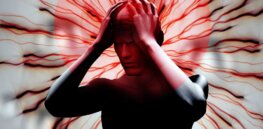
Video: UHI (unexplained health incidents) — What’s the science behind the Havana Syndrome?
In late 2016, United States diplomats working in Cuba began reporting health problems: persistent headaches, vertigo, blurred vision. They were ...

Pregnancy and cannabis: Maternal marijuana use linked to stress, anxiety, aggression and hyperactivity in children
Recent research has shown that heavy cannabis use during pregnancy can harm the fetus. Less clear, however, is the effect ...
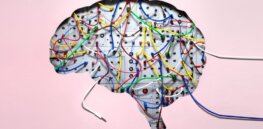
Why brains are excellent ‘prediction machines’
How our brain, a three-pound mass of tissue encased within a bony skull, creates perceptions from sensations is a long-standing ...

How new advances in archaeology are illuminating mysteries of the Hebrew Bible
Far from any city, ancient or modern, Timna is illuminating the time of the Hebrew Bible—and showing just how much ...

‘Critical Race Theory’ critics set sights on suicide prevention programs, claiming they ‘indoctrinate’ students
At a September school board meeting in Southlake, Texas, a parent named Tara Eddins strode to the lectern during the ...

Viewpoint: ‘Embracing pseudoscience’ — Who is Joe Rogan, and why are so many people tuning in for his disinformation?
“A lot of times, we’re drinking or we’re high, you know, and I say stupid shit.” Coming from a teenager, ...
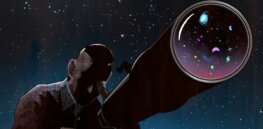
Could humans have evolved on other planets, too?
Could it be that our species is the principal indigenous race in the Universe – that Homo sapiens, or something ...

Taiwan Ironman project: Exoskeleton gives soldiers superstrength
Taiwan says it’s created a battery-powered exoskeleton suit that can allow its soldiers to run faster and carry heavy objects ...
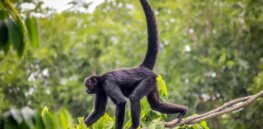
Why don’t humans have tails?
Why did some primates keep their tails, while humans and apes didn't? Tail loss is thought to be part of ...

Cancer might soon be detectable by a simple blood test
Every year, thousands of Americans undergo routine screening to catch cancer in its early stages, while it’s still treatable. But ...

Has Scientific American strayed too far from science?
I’ve written about a dozen posts calling out Scientific American for its fulminating wokeness (give me another word if you ...

This story is crap: A history of human excrement
If there’s one thing we have in common with our ancestors, it’s that they were just as dismayed with their ...
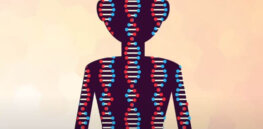
Evolution doesn’t stop: Hundreds of new traits have developed in humans in recent centuries
A new study from Europe has identified 755 traits that have changed in the past 2-3,000 years of human evolution ...
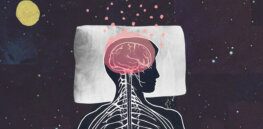
Avoiding cognitive decline: What is considered a ‘good night’s sleep’?
A good night’s sleep is important for many reasons. It helps our body repair itself and function as it should, ...
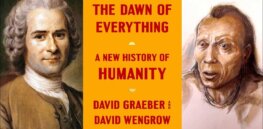
Will ‘The Dawn of Everything’ rewrite human history, as the book’s authors (modestly) claim?
“The Dawn of Everything” — which weighs in at a whopping 704 pages, including a 63-page bibliography — aims to ...
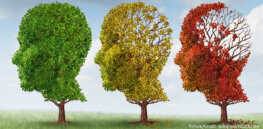
Cognitive resilience: MEF2 genes likely play role in protecting some people from age-related dementia
Cognitive resilience — the absence of dementia despite extensive amyloid and tau pathology — was linked to the myocyte enhancer ...

Could CRISPR gene editing be a solution to antibiotic-resistant superbugs?
The fast rise in antibiotic resistance is one of the world's most concerning health issues. Antibiotic-resistant infections kill about 700,000 ...
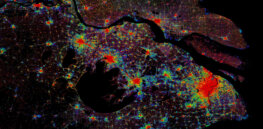
Video: World Settlement Footprint offers unique perspective on human urbanization and ecological danger spots
Urban areas are already home to 55% of the world's population and that figure is expected to grow to 68% ...
Genome sequencing for newborns can save lives. Should governments mandate it?
Genomics England, a government owned company, recently announced a pilot program of whole genome sequencing to screen for genetic diseases ...
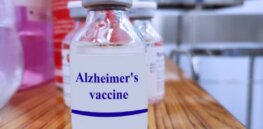
With a prospective vaccine in the pipeline, hope grows that an effective treatment for Alzheimer’s could become reality
A vaccine against Alzheimer’s disease could be on the horizon after scientists carried out successful trials in animals. Researchers from ...

Evolutionary thinking: What would a world without humans look like?
Humanity's fingerprint can be seen across the planet today, from the towering skyscrapers that define our modern metropolises to the ...

Why did Neanderthals lose their battle for survival to modern humans? Here’s a new theory
Our hypotheses surrounding the Neanderthals’ fate have... changed over time. The longest-standing theory is that we outcompeted them: We were ...

The singularity: Futurists ponder coming era of technological explosion
Technology has a habit of running away from us. When a breakthrough occurs or a floodgate opens, explosive, exponential growth ...

What worms and fruit flies can tell us about living past 100
To figure out how to slow (or even stop) ageing, we need to know why our bodies do it in ...
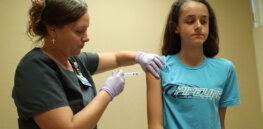
HPV vaccine cuts cervical cancer rate by 87% in UK study
The human papillomavirus (HPV) vaccine reduced cervical cancer cases by 87% among women in the U.K. who received the vaccine ...
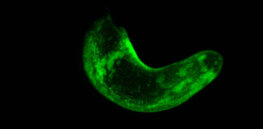
Can humans eventually regenerate limbs? Glow-in-the-dark worms might help us find out
Most animals exhibit some form of regeneration: regrowing hair, for instance, or knitting a fractured bone back together by growing ...
