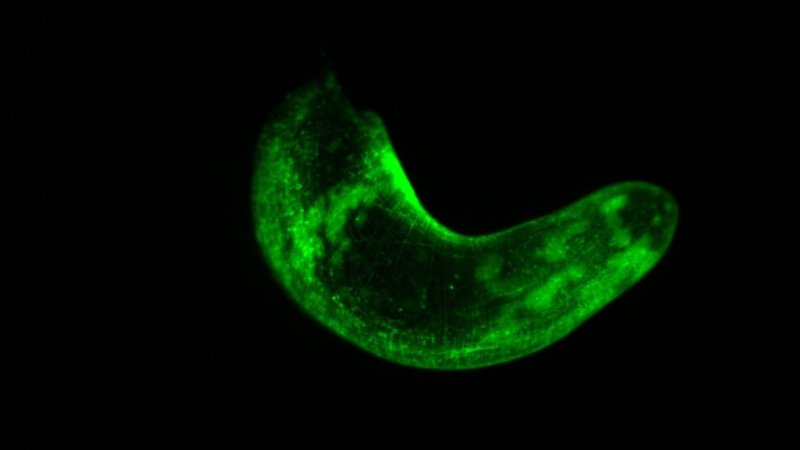

Most animals exhibit some form of regeneration: regrowing hair, for instance, or knitting a fractured bone back together by growing new skin. But some creatures are capable of particularly amazing regenerative feats, and studying the mechanisms by which they accomplish this could have important implications for human aging.
If a panther worm is cut into three parts, each part will generate into a fully formed worm within eight weeks or so. These worms are found primarily in the Caribbean, Bahamas, and Bermuda, as well as Japan, and they are voracious predators, not above taking a few bites out of their fellow panther worms if they’re hungry enough and can’t find other prey. They offer a promising new model for studying the mechanics of regeneration.
…



In 2019, [researcher Mansi] Srivastava and her lab released the full genome sequence of the panther worm, as well as their identification of a number of “DNA switches” that appear to control the genes for whole-body regeneration. Specifically, they pinpointed a section of noncoding DNA that controls whether or not a kind of “master control gene” for regeneration, known as early growth response (EGR), is activated.