Is organic farming really more sustainable? 100 recent studies say ‘no’

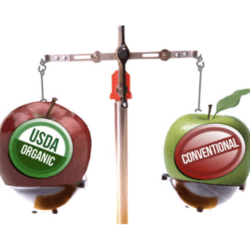
Organic produce may wear a green halo, but it doesn’t earn a clear climate advantage. Organic and conventional farming come out roughly even on greenhouse gas emissions and water pollution per kilogram of food, while organic needs far more land to grow the same harvest, as Vismay Basu reports for The New Indian Express.

The findings draw on a meta-analysis of 100 comparative studies, published in Communications Earth & Environment by Fatemeh Hashemi and colleagues. Researcher Hannah Ritchie turned the results into a scorecard at Our World in Data: organic wins on ecotoxicity and local biodiversity, conventional wins on land efficiency, and climate emissions and water pollution end in a draw.

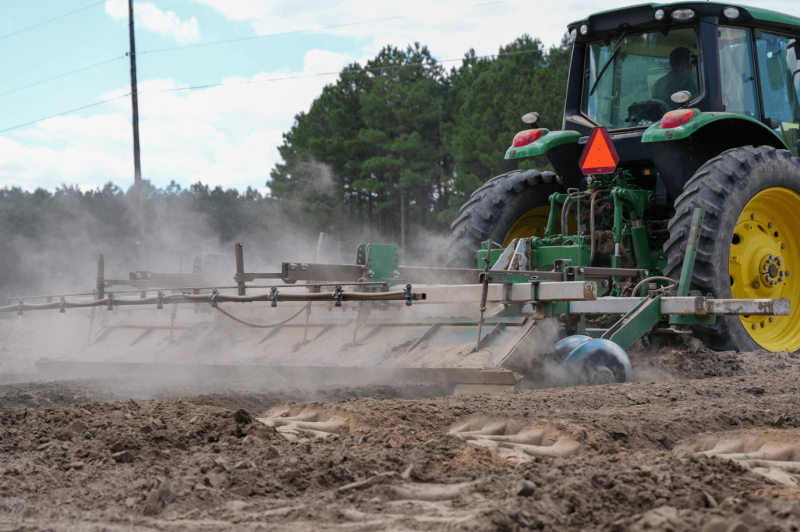
The catch is yield. Relying on natural inputs and mechanical weed control, organic farms needed a median of 64 percent more land to produce the same amount of food. That matters, because conventional farming’s higher yields spare land that would otherwise be converted to agriculture.

Mis- and disinformation are distorting science and public policy. Subscribe to our Daily and Weekly Digests for incisive coverage of ‘disruptive’ innovations in AI, agricultural biotechnology, food, chemicals, nuclear energy, vaccines, and other disruptive innovations.

On emissions, neither system has the edge. Making synthetic fertilizer is energy-intensive, and it releases nitrous oxide once applied. But organic farming’s manure, compost and cover crops release nitrous oxide too, while demanding more land and fuel-hungry tillage.
Either way, the organic-versus-conventional gap, typically 5 to 50 percent, is dwarfed by what ends up on the plate. A kilogram of beef from a beef herd generates nearly 100 kilograms of greenhouse gas equivalents; a kilogram of peas, less than one.


Read the original article here

Related Articles

Infographic: Global regulatory and health research agencies on whether glyphosate causes cancer

Infographic: Global regulatory and health research agencies on whether glyphosate causes cancer

Does glyphosate—the world's most heavily-used herbicide—pose serious harm to humans? Is it carcinogenic? Those issues are of both legal and ...

Most Popular

ChatGPT-Image-Mar-10-2026-01_39_01-PM
Viewpoint—“Miracle molecule” debunked: Why acemannan supplements don’t work
Wave Crest Over Red Cross
Viewpoint: Here are the election-inspired Trump administration healthcare policy reversals expected in the coming months
Bayer Crop Circle in Golden Wheat
Making fertilizer from thin air: Bayer’s gene-editing innovation could dramatically cut chemical fertilizer use in growing food
Aerial Sprayer Over Gradient Fields
Farming, food, and chemicals: Post-midterms, the MAHA alliance between Democrats and MAGA Republicans is bruised but not cowed. What comes next?
Democratic Donkey Plowing at Sunset
Viewpoint: Democratic tsunami: As the red tide recedes, here are the most likely shifts in food and agricultural policy
Blue Checklist in Centered Hand
Viewpoint: From Medicaid cuts to MAHA-backed anti-vaccine and chemical hysteria, voters reject Republicans’ science-skeptical agenda
ChatGPT-Image-Sep-2-2026-02_03_32-PM
How much of a problem is AI’s water use?
glp menu logo outlined

Get news on human & agricultural genetics and biotechnology delivered to your inbox.