Concerns about pesticides were a factor in the 2026 midterm elections, but they primarily acted as a winning issue for Democrats who framed pesticide exposure through the lens of corporate accountability, public health and water safety – not blanket product bans. While the “Make America Healthy Again” (MAHA) movement’s prominent Republican champions failed to secure victories, a parallel progressive focus on environmental toxins successfully resonated with voters in several competitive races.
The “Water Quality and Cancer” Flashpoint in Iowa
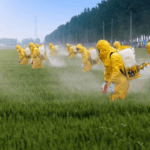
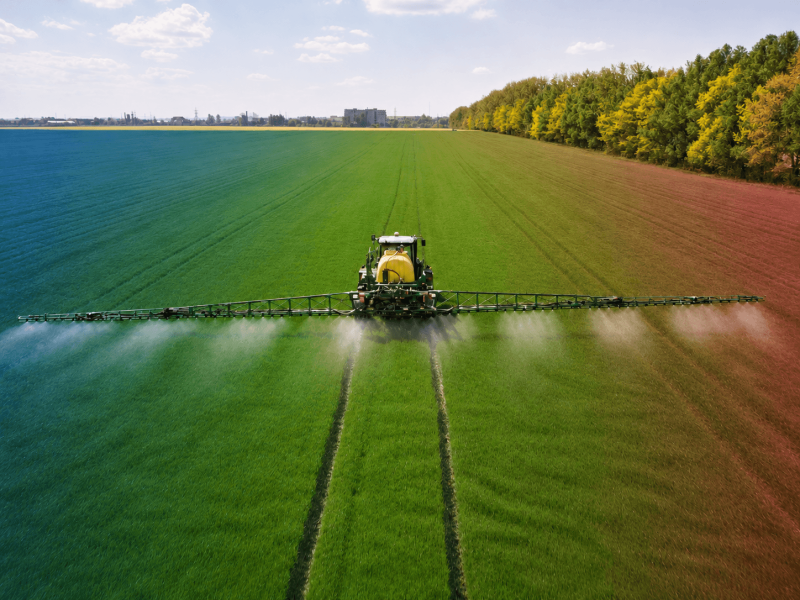
Pesticide drift and agricultural runoff became explosive, central themes in Iowa due to a heavily publicized crisis over the state’s rising cancer rates—the second highest in the nation.
- The Winning Race: In the highly competitive race for Iowa Agriculture Secretary, the Republican incumbent Mike Naig rejected the MAHA agenda and won with 53 percent of the vote. Naig favored industry-preferred voluntary conservation programs. MAHA’s supporting Democrat challenger Chris Jones lost by leaning heavily into aggressive pesticide regulation. Jones campaigned directly on enforcing stricter rules against pesticide drift and farm chemical runoff.
- In contrast, the MAHA-supported Republican gubernatorial candidate Zach Lahn also focused on pesticides in a state where voters favored the more moderate Democrat approach to heavy-handed environmental regulation over the MAHA platform, helping power Democrat Rob Sand to the governor’s mansion.
Minnesota Democratic Farmer Labor Party
The Minnesota Democratic-Farmer-Labor (DFL) Party achieved a sweeping victory in the 2026 midterm elections, capturing every major statewide office and securing a legislative “trifecta.” While the party’s local platform called for pesticide reduction while supporting policies to reduce or eliminate the use of unsafe pesticides—specifically naming glyphosate, neonicotinoids, and chlorpyrifos. Their candidates, however, focused more on broader water and environmental safety issues than calls for specific bans. None of the top-of-the-ticket winners, governor, senator, and state attorney general, made glyphosate or pesticide bans a campaign issue. State AG Keith Ellison did not run on a platform to ban or restrict glyphosate or other pesticides, but he made pesticide manufacturers a focal point of his campaign from an antitrust perspective.
Defending the Right to Sue Chemical Giants
Pesticides also played a quiet but significant role in some key non-farm state congressional and Senate races, specifically surrounding a controversial provision in the federal Farm Bill. The chemical industry lobbied for language that would shield pesticide manufacturers (like Bayer/Monsanto) from state-level lawsuits regarding safety and labeling.
- Democratic Winners: High-profile Democrats who won their races, including Senator Cory Booker (NJ) and Representative Chris Pappas (NH), heavily campaigned on their active opposition to this corporate shield law. Booker explicitly ran on his legislative work defending cancer victims’ rights to sue over Roundup exposure, a stance that earned him cross-partisan endorsements from anti-pesticide grassroots groups like Moms Across America. [12, 26]
Where the Anti-Pesticide Message Lost: Right-Wing Inverse
In a bizarre flip of traditional party platforms, some conservative MAHA candidates ran on anti-chemical platforms but were entirely rejected by voters:
- Texas Agriculture Commissioner: Republican nominee Nate Sheets made reducing chemical exposure a core tenet, going so far as to oppose using a standard pesticide-based eradication system against the New World screwworm. He was defeated by Democrat Clayton Tucker, who argued that while non-chemical alternatives are great, farmers could not afford to take critical eradication tools off the table.
Ultimately, while the public’s anxiety over pesticides, food safety, and chronic disease was higher than ever during this cycle, the issue only became a winning ticket for mainstream Democrats who tied chemical regulations to broader environmental and healthcare safety nets. In the 2026 farm-state races where Democrats defeated incumbent or prominent Republicans, the winning candidates carefully calculated their messaging on glyphosate (Roundup) and pesticide bans, balancing public health and water quality concerns against the economic realities of their agricultural bases. Rather than advocating for outright, immediate bans on glyphosate—which would have deeply alienated conventional corn and soybean farmers—these winning Democrats focused their platforms on holding corporate chemical manufacturers legally accountable, increasing independent state safety testing, and aggressively regulating pesticide drift and runoff.
Iowa Governor: Rob Sand vs. Zach Lahn
In the nation’s most heavily watched agricultural race, Democrat Rob Sand defeated MAHA-backed Republican Zach Lahn. The race took place against the backdrop of an Iowa health crisis involving the nation’s second-highest and fastest-growing cancer incidence rate, which many voters publicly linked to the heavy agricultural use of glyphosate.
- Position on Glyphosate and Bans: Sand did not campaign on a total state ban of glyphosate, recognizing that Iowa’s millions of acres of conventional crops rely heavily on the herbicide. Instead, he framed the issue around public accountability, consumer protection, and corporate litigation.
- The “Corporate Shield” Lawsuits: Sand explicitly campaigned against a highly controversial, industry-backed piece of legislation that sought to grant chemical giants like Bayer/Monsanto a shield from state-level lawsuits over pesticide exposure and labeling failures. He prioritized the rights of cancer victims to sue chemical companies.
- The Cancer Task Force Alternative: Rather than unilaterally blacklisting chemicals, Sand pledged to form an independent Cancer Task Force. His platform prioritized stepping up water monitoring for farm runoff, investing in household water filtration systems, and forcing “Big Ag” to account for chemical leaching without taking critical tools completely out of production.
Kansas Senate: Adam Hamilton vs. Roger Marshall
In another historic upset, Democrat Adam Hamilton defeated incumbent Republican Senator Roger Marshall, the chair of the congressional MAHA Caucus.



- Position on Glyphosate and Bans: As a Methodist minister running in a deep-red farm state, Hamilton heavily rejected the broad anti-chemical label. He did not endorse a federal ban on glyphosate. In fact, Hamilton strategically aligned himself with the bipartisan framework of the Senate Agriculture Committee’s Farm Bill, endorsing key agricultural provisions to signal to Kansas farmers that he would protect their livelihoods.
- The “Environmental Stewardship” Pivot: Instead of chemical bans, Hamilton relied on a platform of incentivized conservation and crop diversification. He advocated for low-input alternative crops (such as industrial hemp) that naturally require far fewer fertilizers, herbicides, and pesticides, thereby organically lowering state-wide dependence on glyphosate through market diversification rather than federal restrictions.
Iowa: Where Aggressive Ban Rhetoric Fell Short
In the Iowa Agriculture Secretary race, Democratic challenger Chris Jones, whose campaign staff included former Kennedy political advisors, ran the most aggressive anti-pesticide, anti-chemical campaign ever seen in statewide Iowa history, explicitly calling to shrink the state’s corn and soybean footprint to curb chemical runoff. Jones was defeated by Republican incumbent Mike Naig (53% to 47%). Voters ultimately favored mainstream Democrats like Sand, who sought to regulate chemical giants and protect water quality without implementing the sweeping chemical bans advocated by both the far left and the MAHA right.
Conventional Agriculture Critics
The sweeping 2026 midterm election results have fundamentally shifted the political landscape for alternative agricultural and health advocates. With Democrats reclaiming majorities in both the House and the Senate, the strategies of the MAHA movement, organic coalitions, and agroecology advocates are pivoting away from executive-branch reliance and moving toward legislative defense, grassroots restructuring, and corporate accountability. Accountability measures, led by Democrat MAHA allies and supported by many MAGA Republicans, will likely include putting failure-to-warn federal preemption back into Farm Bill or similar legislative vehicles. Newly elected farm state democrats will be more likely to block efforts to circumvent federal regulatory oversight to ban specific pesticides like glyphosate, while pressuring the U.S. EPA to address voter concerns about sound science-based regulations of agricultural inputs.
MAHA Movement: Institutional Retreat & Corporate Litigation
Having suffered severe losses among its primary Republican champions, the “Make America Healthy Again” movement faces an identity crisis and a steep uphill battle in Washington.
- Post-election claims will attempt to reframe results as vindication of the MAHA agenda on food and agriculture issues despite lack of supporting evidence.
- A Shift to the Courts: With Robert F. Kennedy Jr.’s legislative leverage severely diminished by a Democratic Congress, expect the movement to lean heavily into executive rulemaking and state-level litigation. Rather than passing sweeping food safety bills, MAHA-aligned groups will likely attempt to use the judicial system to challenge FDA approvals, corporate chemical safety claims, and industrial food additives. This will likely also perpetuate and ramp up the existing ties and campaign coordination with MAHA stakeholders between Kennedy-linked mass tort industry litigators’ lobbying and consumer advertising to sustain ‘nuclear verdict’ class actions targeting pesticides. Opposing litigation shields for manufacturers and failure-to-warn claims will remain a MAHA priority.
- Fracturing or Bipartisan Realignment: The movement is likely to split. Grassroots anti-pesticide and clean-food advocates are already drifting away from the partisan MAGA alliance, choosing instead to build issue-specific coalitions with progressive Democrats who share their distrust of corporate agriculture.
- The “Defensive” Executive Stance: Kennedy and administration officials will likely face aggressive oversight, public hearings, and funding blocks from newly empowered Democratic committee chairs. MAHA advocates will be forced to play defense to protect their administrative appointments rather than advancing new policy. Political analysts are predicting President Trump will retain, but continue to rein in, Kennedy’s power to affect food and agriculture policies.
Organic Agriculture: Leveraging Democratic Farm Bill
Traditional organic advocacy groups are potential political winners of this electoral shift, stepping into a position of significant legislative strength.
- Restoring Conservation Funding: Organic coalitions like the National Sustainable Agriculture Coalition (NSAC) may successfully pressure the new Democratic majorities to restore and protect the “green indexing” of agriculture funds. Expect them to successfully block any Republican attempts to divert Inflation Reduction Act (IRA) conservation funds into conventional commodity programs.
- Fixing the Organic Cost-Share Program: A top priority for the incoming House and Senate Agriculture Committees will be resolving the bureaucratic backlogs that froze organic certification funding. Advocates will secure mandatory, protected funding for the National Organic Certification Cost-Share Program to relieve financial pressure on small farmers.
- Banning the “Corporate Shield”: Organic and food safety advocates will likely kill the controversial Farm Bill provision that aimed to protect chemical manufacturers from state-level lawsuits over pesticide labeling.
Agroecology: Hyper-Localism and Water Quality Pivot
Because explicit, systemic agroecological overhauls (like shrinking the corn footprint) proved to be an electoral loser in the heartland, advocates are likely re-strategizing.
- The “Water Quality” Trojan Horse: Agroecology and organic advocates will drop academic, systemic rhetoric and instead frame their goals entirely around clean drinking water, public health, and localized cancer clusters. By focusing on the tangible symptoms of industrial runoff rather than abstract ecological theory, they can build broader public support.
- State and Municipal Focus: Realizing that federal agricultural policy remains heavily beholden to conventional commodities, agroecology political networks will shift their resources to state-level fights. Expect intensified lobbying for local restrictions on pesticide drift, municipal water-monitoring mandates, and state-funded incentives for watershed protection.
- Public-Private Supply Chains: Advocates will increasingly bypass Washington altogether, working directly with consumer brands, regional food hubs, and universities to build dedicated, non-industrial supply chains that reward agroecological practices through market demand rather than government subsidies.