



Climate change isn’t just stressing crops — it’s giving the insects that eat them a leg up. Warmer temperatures are expanding pests’ ranges, lengthening their breeding seasons and, in some cases, helping them shrug off the very pesticides meant to kill them, as Yale Climate Connections’ Sanket Jain reports.
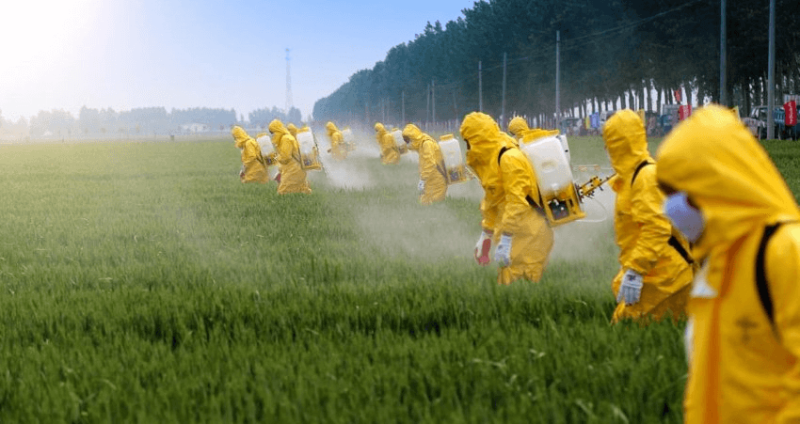
Farmers are responding by spraying more: global agricultural pesticide use more than doubled between 1990 and 2024, according to the UN’s Food and Agriculture Organization.
The biology helps explain why. Faster-maturing insects pack more generations into a year, giving resistant individuals more chances to survive spraying and pass on their traits. Some genes may govern both heat tolerance and insecticide resistance.
“Environmental change can cause populations to be more resistant to an insecticide, or it can also cause populations to be more susceptible,” said Henry Chung, an evolutionary biologist and associate professor at Michigan State University.
Take the diamondback moth, a notorious cabbage pest. According to a study published in Nature Communications, 50 years of warming expanded the area where it can survive winter by about 2.4 million square kilometers — and resistance levels were 158 times higher where it overwinters than where it appears only seasonally.
In Brazil, researchers found that resistant fall armyworms needed a spinetoram concentration 340 times higher than susceptible insects to reach the same mortality at 28°C — and nearly 590 times higher at 32°C.





“In regions experiencing frequent heat waves, we could certainly see a decline in insecticide efficacy over time,” said study co-author Aline Guidolin, an entomologist and professor at the University of São Paulo’s Luiz de Queiroz College of Agriculture.
Experts recommend integrated pest management — monitoring fields, rotating chemicals, enlisting natural predators — but that’s a tough sell for smallholders like Laxman Mane, who farms just under two acres in western India.
“Poor farmers like me are left with no resort but to keep spraying,” Mane said.























