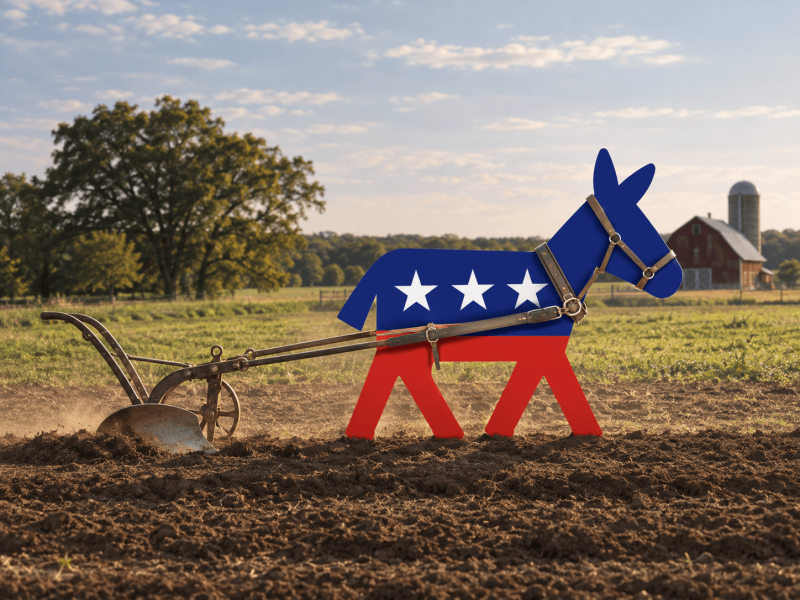

Democrats retook both the House and Senate in Tuesday’s midterms, and the shift could ripple from the farm bill to the grocery aisle, as Civil Eats’ Lisa Held reports. “Tariffs, diesel, fertilizer, farm labor, and grocery bills were all on the ballot,” said David Ortega, a professor of food economics and policy at Michigan State University. “The question now is what those results change about food and farm policy.”
Some of the biggest farm-cost levers sit outside agriculture entirely. Rep. Hakeem Jeffries, expected to become House Speaker, said Democrats will press President Trump to end the war with Iran, a move that could ease diesel and fertilizer prices. Democrats also want to expand Medicaid and restore Affordable Care Act subsidies that many farmers rely on.
Then there’s the farm bill, now roughly three years overdue and stalled in the Senate over Republican changes to SNAP, the federal food assistance program. Sen. Michael Bennet (D-Colorado), the likely Senate Agriculture Committee chair, said he’s “committed to go back and to try to make sure that we get this farm bill passed,” with the goal of improving SNAP rather than merely reversing cuts.
Sen. Sherrod Brown (D-Ohio) could also claim that gavel on seniority, while Reps. Shontel Brown and Jim Costa vie for the top House Agriculture seat. And with Democrats controlling most state governments for the first time since 2010, they’ll have real sway over how SNAP changes play out on the ground.




Meanwhile, candidates backed by Health Secretary Robert F. Kennedy Jr.’s Make America Healthy Again (MAHA) movement stumbled: Zach Lahn lost Iowa’s governor’s race, and Ken Paxton lost the Texas Senate race. Farm Action Fund President Joe Maxwell read the results as a populist message. “Rural America didn’t vote red or blue last night. It voted in support of independent farmers,” he said.