


Daily Human Digest

Aligned with views of new House Speaker Mike Johnson, 60% of Americans believe Biblical creation myth or that God guided evolution
A majority of Republicans say divine creation created humans; just under half of Democrats say that there was no divine ...
A CRISPR gene-editing tool has been added to three people with HIV, the virus that causes AIDS. Is it working?
CRISPR is being used in an experimental effort to eliminate the virus that causes AIDS. The result is unknown ...

There are already 175,000 gene-based health tests available of uneven value. How do patients, doctors and insurance companies separate the wheat from the chaff?
New technology has a history of overwhelming systems that try to manage it, and it’s proving to be the case ...

LSD is fast-emerging as a treatment for depression. Does it work?
Researchers state MDMA and 'magic' mushrooms also have shown promise in treating conditions like anxiety and PTSD ...

Defining death: Does cessation of consciousness or the failure of key organs mark the end of life?
Where is the line between life and death? Does the answer change if the person asking is not a philosopher ...

The serotonin effect: Here’s an intriguing explanation for the mystery of long COVID
Researchers at the University of Pennsylvania suggest that serotonin reduction is triggered by remnants of the virus lingering in the ...
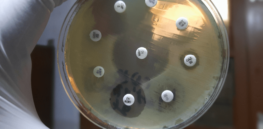
Antibiotic resistance is rising and seems unstoppable. CRISPR-designed molecules might offer an answer
Antibiotics drive bacteria toward drug resistance, so scientists are looking to viruses, CRISPR, and designer molecules for better treatments ...

Meet the Annihilator: Could this technology rid the environment of PFAS ‘forever chemicals’?
PFAS stands for “per- and polyfluoroalkyl substances,” human-made and incredibly durable chemical compounds that have been used for decades ...
Speed of breakthroughs spurred by gene editing is outpacing ethical constraints. These could be the consequences
The Chinese researcher He Jiankui was jailed for creating customized babies. Some observers argue that the real problem wasn’t him—it ...

What might our pre-human ape ancestors have looked like? This 12-million-year-old reconstructed face may provide clues
Skull and bones of European ape were found together and could be one of the earliest relatives of human race ...
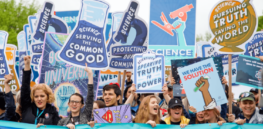
‘Crime of insincerity’: What happens when researchers publish scientific results they don’t believe in?
Scientific publication can be a constraining, flattening, and maddening process—but that’s not necessarily a bad thing ...

Why is it easy for our brains to estimate four things, but not five or more?
Your Brain: Humans can size up a grouping of four or fewer items in an instant, but larger quantities pose ...

Longtermism and AI: How Silicon Valley has shaped the debate on artificial intelligence around fears of human extinction
Silicon Valley's favourite philosophy, longtermism, has helped to frame the debate on artificial intelligence around the idea of extinction ...

Pangaea Ultima: What geologists think landmasses of the world might look like in 250 million years
Only a fraction of the planet’s surface will be habitable to mammals when the next supercontinent, Pangaea Ultima, forms ...

Are you a mosquito magnet? Here’s why mosquitoes like some people more than others
Mosquito bites are annoying, unpleasant, sometimes painful, often the cause of allergic reactions – but also potentially deadly ...

How plastic-eating bacteria could help us make a dent in massive Pacific trash vortex
The Pacific trash vortex, is a massive collection of debris in the North Pacific Ocean, the main components are tiny ...

Viewpoint: How genetics shapes human differences and why we shouldn’t avoid talking about this taboo
There’s a long history of people misusing genetics research to justify societal inequalities; many people have chosen to ignore it ...

Viewpoint: Young far-right activists embrace ‘scientific racism’
Viewpoint: The pseudoscience of race provides both a justification of hierarchies and an enemy to rail against ...
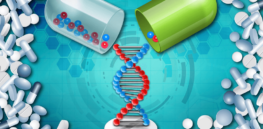
AI drug development breakthroughs open up possibility of faster, cheaper pharmaceutical production. Do these medications work?
Today, on average, it takes more than 10 years and billions of dollars to develop a new drug. The vision ...
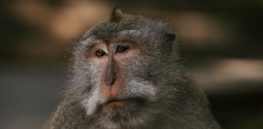
Monkey kept alive for two years with a genetically engineered pig kidney suggests pathway to developing organs for humans
Harvard-affiliated scientists say they have been able to keep a monkey alive for two years with a genetically engineered pig ...

It’s Halloween horror movie time. Why do some people love to be scared while others are squeamish?
Scary play lets people—and other animals—rehearse coping skills for disturbing challenges in the real world ...
Viewpoint: In the name of equity, Democrats try to limit drug patent rights. Here’s why that could derail US bioinnovation and hurt the most vulnerable
When it comes to our currently world-leading biotechnology industry, our leaders are repeating many of the same mistakes ...
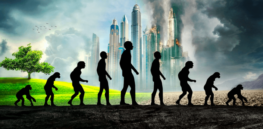
Neanderthals are in all of us: Genetic legacy of our Pleistocene ancestors broadens understanding of disease and survival
Scientists are finding that traits inherited from our ancient cousins are still with us now, affecting our fertility, our immune ...

Making the case for finding alien life sooner rather than later
Nasa's James Webb Space Telescope (JWST) recently detected tantalising hints at life on a planet outside our Solar System ...

Does same-sex bonding in animals provide insight into sexual orientation in humans?
Apes branched off from other primates about 25 million years ago and evolved a much higher rate of same-sex sexual ...

How brainless jellyfish are capable of learning
Cnidarians -- the animal group which includes jellyfish, sea anemones and coral -- are brainless, instead getting by with a ...

The evolution of cuteness (or why Ryan Gosling’s Ken has captured so many hearts worldwide)
The big idea: The question of how to trigger the cuteness response has implications beyond toys and movies ...
