


Daily Food & Ag Digest

Could the end of Monsanto signal a new beginning for GMOs and crop science?
Putting Monsanto out of its misery could mean future debate about genetically-modified crops will be based on facts rather than ...

Anti-biotech groups claim agrochemical industry consolidation endangers food security
Just 20 years ago, about 600 companies were manufacturing seeds, fertilizer and pesticides, according to the watchdog ETC Group. Now, ...
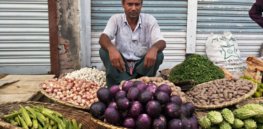
Anti-GMO activists can’t admit success of Bangladesh’s insect-resistant GMO eggplant
For more than a decade controversy has raged in the world’s media about whether genetically engineered crops are dangerous, as ...
Australia’s GMO canola ban was huge loss for farmers, environment
[Canadian] farmers started growing GM canola in 1997. By 2004, 75% of canola farmers in Canada were growing GM varieties. After a decade ...

EU regulations contributing to consolidation in biotech, agrochemicals industries
Bayer AG’s big push into the U.S. agrochemical market with its planned acquisition of Monsanto Co. could help it offset a growing problem on its home ...
With Bayer acquiring ‘Monsatan’, anti-GMO activists need new bogeyman
The German conglomerate Bayer has agreed to buy Monsanto ... Now the speculation has turned to American anti-science groups and how ...
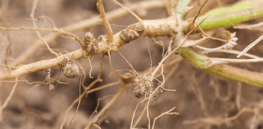
Genetically engineered self-fertilizing crops in development
A handful of biologists are working to endow major crops with the ability to "fix" nitrogen from the air into ...
Burkina Faso’s switch from GMO to conventional cotton increases pesticide use, cuts yield
[F]armer Elie Gnoumou scanned his cotton field in the south of Burkina Faso... with visible relief. ...“I’ve had to do ...
Gene-edited animals should be covered by same regulations as gene-edited plants
In vivo gene editing techniques have attracted great interest, not only in the scientific community, but also among regulatory agencies ...
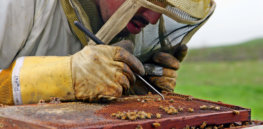
Insecticides and fungicides—not neonicotinoids—contribute most to bee mortality, study says
The impact of pesticides on pollinators remains an ongoing concern, especially as new research highlights the complex web of pesticide ...
IARC assessment of glyphosate only served to confuse policy makers, public
On March 20, 2015, the International Agency for Research on Cancer (IARC) labeled glyphosate, the most commonly used herbicide in the world, ...

AAAS editorial: Shift GMO regulations to focus on “consequences of doing nothing”
In Canada, a trait-based regulatory system is used in which the actual trait, such as drought or disease resistance, rather ...
Indian regulation of GMO cotton traits benefits seed companies, not farmers
Nothing assures Monsanto of a steady income stream other than offering products that farmers want to use at a price ...
Will GMO labeling help public recognize benefits of biotech, build trust?
Transparency is the best way to overcome people's opposition to genetically-modified organisms (GMOs), says Jack Bobo, a keynote speaker at ...
EU authorizes 11 varieties of GMO corn for food and livestock feed but not cultivation
The European Commission said [Sept. 16] it had authorized 11 varieties of genetically modified maize produced by Syngenta... for use as ...
South American farmers increasing acreage of Monsanto’s new GMO soy
South American farmers are expected to sow 57 percent more area with Monsanto Co's second-generation, genetically modified soybean seed Intacta ...

Glyphosate found in US honey
The Food and Drug Administration, under public pressure to start testing samples of U.S. food for the presence of a ...
GMO yeast could make flavorful home-brews less expensive
Ginkgo Bioworks [is] a Boston company that tinkers with the genes in microorganisms, transforming everyday yeast and bacteria into living factories capable of pumping ...
Middle income nations investing more than high income ones in agricultural research
The geographical distribution of food and agricultural research and development (AgR&D) is changing. Our analysis of more than 50 years ...
Is the GMO crop boom over?
Behind a wave of multibillion-dollar mergers in the agriculture business is a moment of change in American farming. The dominance ...
High-elevation maize genes may hold keys to help crops adapt to changing climate
With the onset of climate change and changes in irrigation, adapting food crops to grow in diverse environments could help ...
Insect resistant ferns could hold key to developing next generation GMO crops
Genetic modification to common crops... has significantly reduced damage caused by insects that feed off plant leaves, but it has ...
Monsanto-Bayer deal reduces players in consolidating seed, pesticide industries
Monsanto Co.’s agreement to a takeover by Bayer AG... caps a whirlwind year and a half of deal making that has reshaped... seed and pesticide sector ...
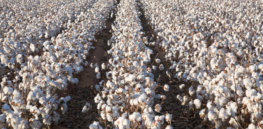
US regulators likely to demand Bayer-Monsanto scale back domination of GMO cotton market
Bayer AG’s plan to acquire Monsanto Co. is likely to spur U.S. regulators to demand the sale of some cottonseed ...
GMOs can address animal welfare, environmental, ethical challenges
[H]orns are dangerous, to both farmers and other cows. And so, for safety, millions of calves are de-horned each year, using a ...

Delayed by IARC designation, EPA glyphosate reassessment punted to next administration
For anyone who thought EPA’s glyphosate risk assessment would arrive sometime soon, think again. The new target is for the ...

Harvard’s Calestuous Juma’s book addresses why humans resist beneficial innovations like GMOs
From coffee to... genetically altered food, history is littered with innovations that sparked resistance before becoming fixtures in everyday life... ...[H]umans often oppose ...
