


Science Literacy Project Daily Digest
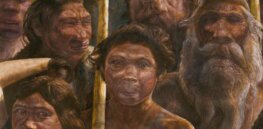
Hominids have existed on earth for two million years. What makes us human?
The distinction between ourselves and other animals is, arguably, artificial. Animals are more like humans than we might think – ...

Xenobots: Are organic robots programmed to find cancer cells the future of regenerative medicine?
Scientists say they've witnessed a never-before-seen type of replication in organic robots created in the lab using frog cells. Among ...

How artificial intelligence (AI) alters human behavior
For decades, humans have been building and modifying machine learning models to perform a variety of tasks. But while we’ve ...

Do hormonal factors protect women against cardiovascular disease?
Several lines of evidence support the idea that cardiovascular disease is linked to variations in female hormones. First, women develop ...
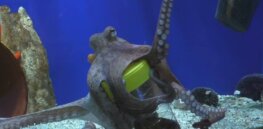
How did intelligent problem-solving behavior come to exist?
How can a biological system ever generate coherent and goal-oriented behavior from the bottom up when there is no external ...
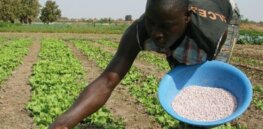
Viewpoint: ‘Lower food prices, limiting exposure to toxins, fewer diseases in crops.’ These are the advances missed by countries that reject GM technology
Two new papers aim to quantify the social welfare and economic costs that countries inflict upon themselves by restricting the ...
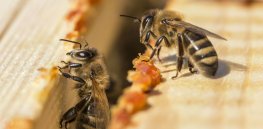
The biggest threat to honeybees is not pesticides but Varroa mites — and beekeepers may have accidentally fueled the plague
Propolis is a sticky material that bees make from a mixture of wax and resins gathered from a wide variety ...

Viewpoint: No more Christmas trees? Why proposed bans on neonicotinoids won’t protect bees but will threaten many other plants
With Christmas so close, many of us in Michigan have enjoyed a common holiday tradition this year: finding the perfect ...
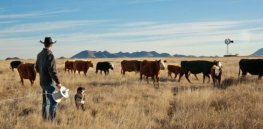
Viewpoint: Environmental Working Group on the wrong side of science with simplistic attack on animal agriculture’s impact on climate
With Christmas just around the corner, you're probably finalizing your dinner plans and wrapping those last few presents before sticking ...
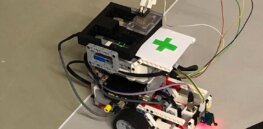
Video: A-maze-ing — How a robot used ‘smart polymers’ to teach itself to navigate labyrinths
Machine learning and neural networks have become all the rage in recent years, and quite understandably so, considering their many ...
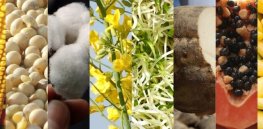
Viewpoint: With more than 70 countries producing GM foods, it’s time to get beyond tired debate over technology and embrace innovation
Transgenics began nearly three decades ago in world agriculture with the aim of increasing agricultural productivity. In other words, produce ...

Yet another patient was naturally cured of HIV
Researchers have identified a second HIV-positive person whose body might have naturally cleared the infection — sparking hope that studying ...

Podcast: Why do people donate kidneys to strangers? Is altruism an evolved human trait?
Penny Lane gave up months of wages and weeks of her life to have her kidney cut out and given ...
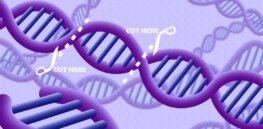
CRISPR gene therapy shows great promise — but evidence suggests caution about unintended consequences is warranted
CRISPR-Cas9 works by creating double-stranded DNA breaks at specific points in a DNA sequence, allowing scientists to target and edit ...
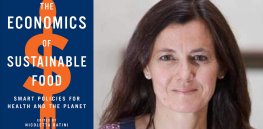
How can we produce more food with less environmental impact: Book review of ‘The Economics of Sustainable Food’
Aimed at the army of advocates, activists, and policymakers engaged with food and agricultural politics, [Nicoletta] Batini hopes that The ...
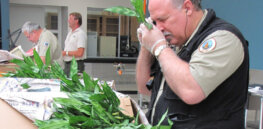
Viewpoint: Are the EPA and other regulatory agencies dragging their feet by not restricting glyphosate weedkiller?
Are the EPA and big agricultural groups defending glyphosate because they need to maintain business as usual? Should the public ...

A second Green Revolution: How gene editing could revolutionize photosynthesis and transform agriculture
Stephen Long is a professor of plant biology and crop sciences at the University of Illinois Urbana-Champaign and the director ...
Genetic screening can reveal your likelihood of suffering from a deadly disease — but that doesn’t mean you can’t change the odds
Ruby had inherited a faulty gene from her father, the one that had caused his death aged 36 from a ...

Higher resting heart rate linked to increased risk of dementia
Higher resting heart rate (RHR) was linked to greater dementia risk and faster cognitive decline independent of cardiovascular disease in ...
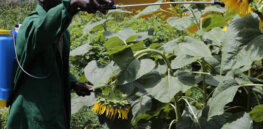
Viewpoint: If Kenya relents to activist pressure and bans pesticides, coffee, maize and wheat farmers could lose up to 90% of crops
Coffee, maize and wheat farmers could suffer up to 90 per cent in yield losses if the government bans popular ...

Viewpoint: ‘Slow food’ movement remains an aesthetic model for the elite — and doesn’t produce a sustainable food system
There is something especially sinister about telling people that the way to eat healthfully, morally, and sustainably requires more work — especially ...
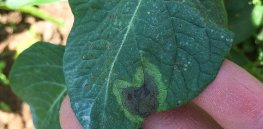
‘It will be a wonderful day when these potatoes get into the hands of farmers’: Uganda develops genetically engineered disease-resistant version of the country’s most important crop
Late potato blight is the most destructive potato disease in the world costing developing countries USD 10 billion every year. This CIP@50 story digs into a new rapid-fire approach to potato breeding that makes farmer-favorite ...
3 years ago, CRISPR was used to alter the genes of two babies in China. How are they faring now?
Three years after the ‘CRISPR babies’ burst into the public eye and caused outrage, their fate remains shrouded in secrecy ...

Who shares fake news? This personality type is most likely fall for misinformation
To find solutions to this misinformation crisis, our society needs a clear-eyed assessment of who and what drives the spread ...
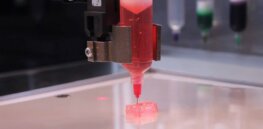
It’s alive! 3-D printers can produce biological blobs for medical and industrial uses
In a new study, scientists have outlined a new type of 'living ink' or bioink made from programmed Escherichia coli ...

The science of bad breath
Though everyone has likely experienced some bad breath at one point or another, Colgate reports that one in four people ...

Many people experience visions and strange dreams before they die
Old age. Cancer. A rare disease of the nervous system. Whatever the reason, the fact remains: A life is about ...
