


Science Literacy Project Daily Digest

What does it mean for AI to ‘understand’? What are the limits of artificial intelligence?
How can we determine in practice whether a machine can understand? In 1950, the computing pioneer Alan Turing tried to ...

‘You act like a Neanderthal’? Consensus view changes — Homo Sapiens no smarter than our extinct cousins
We’ve long thought that humans must have survived because we were intelligent enough to outsmart our own extinction; meanwhile the ...

Viewpoint: In Roundup-cancer cases, juries are often swayed by emotional arguments — but the facts are in glyphosate’s favor
A jury in San Bernardino can't believe that Donnetta Stephens’ cancer was caused because she used Roundup. In a post-COVID-19 ...

‘Organic utopia didn’t materialize’: ‘Science wins’, say farmers, as Boulder County, Colorado repeals ban on GMO crops
Boulder County long ago decided to preserve more than 25,000 acres of Open Space lands and world class views by ...

What are the evolutionary origins of modern-day marijuana?
The cultivation of marijuana has much longer roots than we previously understood, according to [a new] study — including evidence ...
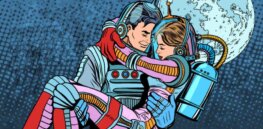
The 62-mile-high club: As space tourism launches, NASA urged to explore ‘space sexology’
According to NASA, no humans have ever had sex in space, but with the swift ascent of private space tourism, ...

How a fascination with telepathy pseudoscience laid the groundwork for modern brain research
A brush with death led Hans Berger to invent a machine that could eavesdrop on the brain. In 1893, when ...
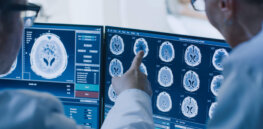
Cancerland? A wider array of cancer pre-screening and hyper-early detection methods are arriving. Here’s why that’s problematic
Cancer is appropriately perceived as a disease of risk: genetic or heritable risks, lifestyle risks and the unknown risks of ...
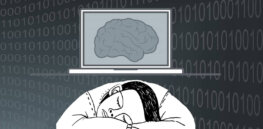
Just like in humans, allowing artificial intelligence (AI) programs to ‘sleep’ in between tasks reduces mistakes
What our brains do when our eyes are closed and our visual cortex isn’t processing the outside world may be ...

‘An increase in food production does not necessarily result in less hunger’: Why we need a second Green Revolution embracing genetics and organic farming
Most people believe hunger is caused by food scarcity, however this is wrong. There is currently more than enough food ...

AI and lasers might replace conventional weed killing techniques in some applications
Like "The Terminator" for weeds, the Carbon Robotics machine, dubbed “Bud,” rolls through farm fields using artificial intelligence to discern ...

GMO purple tomatoes with more antioxidants poised for spring US rollout
Genetically-modified (GM) purple tomatoes with high levels of health-giving antioxidants - developed by Norwich scientists - could be available in the USA from ...
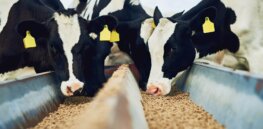
‘Natural compounds to replace antibiotics?’ Soy-derived cow feed supplement could slow the rise of superbugs
South Dakota State University scientists are researching ways to help animals stay healthy using an antimicrobial compound produced by soybean ...

What causes obesity? Debate rages between ‘what you eat’ and ‘how much you eat’ factions
The usual way of thinking considers obesity a problem of energy balance. Take in more calories than you expend—in other ...
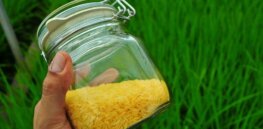
Viewpoint: ‘Unnecessary delays’ — Activist maneuvers slow rollouts of nutritionally-enhanced Golden Rice
The consumption of the genetically modified rice variety known as Golden Rice (GR) offers a potent and cost-effective strategy to ...

Viewpoint: 10 stupid agriculture and food truisms that need to die
In the spirit of moving forward into the new year and helping to stop the spread of misinformation, here are ...

The twilight zone of sleep: That’s a sweet spot for human creativity
People who recently drifted off into a light sleep later had problem-solving power, scientists report December 8 in Science Advances ...

Viewpoint: What is ‘scientism’ — and why does that worldview fail us?
Over the last 15 years of being a scientist who writes about science in a variety of forums, I have ...
Bioeconomy: How synthetic biology can tackle manufacturing and disease challenges
The bioeconomy covers all sectors and systems that rely on biological resources (animals, plants, microorganisms, and derived biomass, including organic ...

What is a human being? The evolution of ‘personhood’
It is at the intersection between psychology and the social sciences (as well as humanities and philosophy) that we find ...
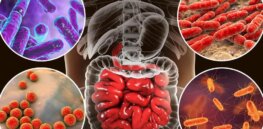
CRISPR gene-editing techniques could prevent illness by reprogramming gut bacteria
To date, CRISPR enzymes have been used to edit the genomes of one type of cell at a time: They ...
Synthetic biology innovations that rewire human cells poised to tackle complex diseases
Let’s recognize that synthetic biology can make the impossible happen in many areas besides food production. For example, synthetic biology ...

Why geneticists are moving away from using the term ‘race’ — but not its meaning
Geneticists are moving away from using the term "race" in their papers, but the meaning of replacement descriptors such as ...

Bill Nye reaffirms belief that foods from GMO seeds are safe and can be beneficial
In an exclusive interview with Mashed, [Bill Nye talked about] issues that mean so much to him — including GMOs ...
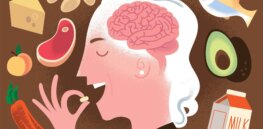
Does what we eat affect brain performance and health?
Food plays an important role in brain performance and health. In our review “Brain foods – the role of diet ...
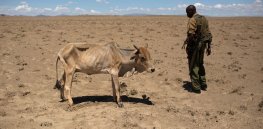
How gene editing livestock protects farmers from climate change
In temperate regions such as Europe, cows are able to lose excess heat to the environment, as certain cattle breeds ...

Viewpoint: How ‘bad faith’ journalists corrupt our understanding of crop biotechnology and undermine science
In a column published in the newspaper Le Monde, the journalist Stéphane Foucart, explains that GMO technology has not significantly ...
