


Science Literacy Project Daily Digest

What’s on the alternative meat UK menu: Plant-based proteins, cultivated meat and edible insects
New research from the Food Standards Agency is investigating how willing consumers are to taste test alternative protein products. The ...

Viewpoint: ‘Pesticide toxicity has plunged by 98%’ — Misplaced campaign targeting synthetic farm chemicals ignores sustainable advances
Modern agricultural technologies, including genetic modifications, synthetic fertilizers, and pesticides to control crop killers are increasing productivity. As a result, ...

Pass on only the positive traits? How IVF can stop genetic diseases from reaching offspring
In vitro fertilization (IVF), widely known as a way to help infertile couples have babies, has taken on another remarkable ...

CRISPR’s biggest challenge is addressing complex hereditary ailments like cystic fibrosis — but progress is being made
Treatments based on the Nobel-prize winning Crispr gene-editing approach can make permanent changes to a genetic flaw— but those edits ...

Fourth industrial revolution: How biotechnology is driving lightning fast change
What makes the fourth industrial revolution so different from previous industrial revolutions is the convergence and interaction between multiple technology ...

Video: How Israeli scientists trained a goldfish to ‘drive’
Picture this: A goldfish swimming in a square tank on wheels as it rolls deliberately from one side of a ...

Maps of the neural ‘wiring’ in our brains could unravel secrets of behavior
Last summer a group of Harvard University neuroscientists and Google engineers released the first wiring diagram of a piece of ...

‘Double sleeping’: Did the industrial revolution end humans’ proclivity to sleep in two shifts?
In the 17th Century, a night of sleep went something like this. From as early as 21:00 to 23:00, those ...

Sugar high? How and why we genetically crave sweetness
A fundamental challenge for our ancient ancestors was getting enough to eat. The basic activities of day-to-day life, such as ...

Nanocontraception: How heated nanoparticles injected in testicles might be a viable method of male birth control
Nanocontraception is based on the idea that nanoparticles — here, about 100 nanometres in diameter, or roughly one-thousandth the width ...

Remaking meat: On the cusp of a new era of plant-based protein products
Exciting up-and-coming plant-based startups across the world are quietly amassing millions of dollars, innovating on novel technologies and getting ready ...

‘Sweet and mild’: Non-GMO ‘tearless’ onion goes on sale in the UK after decades in development
The Sunion onion is perfect for those with sensitive eyes as well as for cooking in the kitchen with children, ...
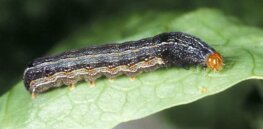
Reducing insecticide use with CRISPR: Gene editing could naturally rollback pesticide resistance evolution in disease-carrying insects
Insecticides play a central role in efforts to counter global impacts of mosquito-spread malaria and other diseases, which cause an ...
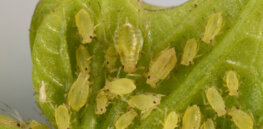
England authorizes emergency neonicotinoid use to protect threatened 2022 sugarbeet crops
Defra has [January 14] approved an emergency temporary authorisation for the use of a neonicotinoid pesticide treatment on the 2022 sugar ...

5 ways gene editing is making crops climate-resilient
Our world is undergoing climate changes that have triggered a spate of calamitous disruptions on agricultural production and overall food ...

How climate change is roiling the global insect population
The climate crisis is set to profoundly alter the world around us. Humans will not be the only species to ...

Viewpoint: Why aren’t Canada and the United States growing sustainable, genetically modified wheat?
It’s safe. It would help farmers deal with drought, support biodiversity, protect the environment and decrease a farms carbon footprint ...
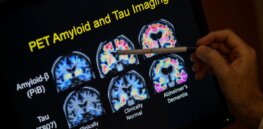
Are plaque deposits in the brain the true cause of Alzheimer’s disease?
Alzheimer’s disease was to be defined by the presence of plaques. Yet plaques are a feature that is not present ...

Ethical concerns drive embrace of plant-based proteins — but not cultivated meat
The ultimate success of cell-cultured meat depends on consumer acceptance. What factors are driving, or hindering, uptake? Consumer studies indicated ...

How DNA floating in the air can help us protect animal biodiversity
Two new studies published [January 6] in the journal Current Biology show that environmental DNA (eDNA) collected from air can be ...

Viewpoint: Bayer Roundup cancer case nearing SCOTUS poses test for Biden Administration. Will it stick to science and prior EPA rulings or cave to trial lawyer interests?
[T]he Supreme Court recently asked for the Biden Department of Justice to weigh in on a case involving a golden ...

The social history of the concept of the mixed-race mestizo
In Mexico [most people] think of themselves as mestizos, a term that emerged during the colonial period to explain the ...

How our perception of ‘disgust’ shapes our behavior
Disgust shapes our behavior, our technology, our relationships. It is the reason we wear deodorant, use the bathroom in private ...

Sí or Oui? Brain imagery shows dogs can differentiate among languages
[Brain researcher Laura Cuaya] and her colleagues designed an experiment with 18 volunteer dogs — including her two border collies ...

Olive oil and disease: Another study reaffirms daily consumption helps stave off heart disease, cancer, and neurodegenerative diseases
Swapping out the butter or other artery-clogging fats in your diet for heart-healthy olive oil may add years to your ...
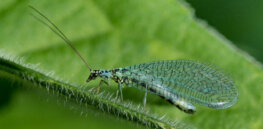
Insecticides based on RNA technology could poised to be a low impact way to control plant pests
A novel insecticide targets a specific gene in a pest, killing only that bug species on crops and avoiding collateral ...

Viewpoint: Glyphosate class action cases — Will the Supreme Court rein in California’s lax rules on junk science?
One tactic California trial lawyers finessed is the use of questionable scientific evidence in trials, sometimes called “junk science.” Now, ...
