


Science Literacy Project Daily Digest

Viewpoint: How European activists’ opposition to cutting edge crop technologies undermines global sustainability efforts
Well-funded non-governmental organizations (NGOs) — both in the EU and the U.S. — regularly pour millions of dollars into lobbying ...

‘Golden blood’ is incredibly important to medicine — but for the 43 people worldwide known to have it, it poses a unique danger
Golden blood is actually the nickname for Rh-null, the world’s rarest blood type. As Mosaic reported, the type is so rare that ...

A highly effective sports performance enhancing drug is…. caffeine
Late last year, a team of scientists from Brazil published the results of a study exploring the effects of a ...

Going bald? Scientists have reprogrammed cells to grow hair on mice. Are humans next?
Biologists at several startups are applying the latest advances in genetic engineering to the age-old problem of baldness, creating new ...

‘Contemporary evolution’: How pollution and human interventions are speeding up evolution
Wild populations must continuously adapt to environmental changes or risk extinction. For more than fifty years, scientists have described instances ...
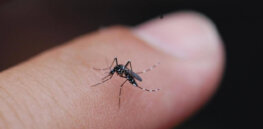
‘100 peer reviewed safety studies’: Here’s the skinny on eradicating disease-carrying insects with ‘self-limiting’ genetic technology
Oxitec’s Friendly male mosquitoes are engineered using precise genetic tools; they are just like their wild relatives — but with ...

How GMO food labels impact consumer choices
Researchers from Neoma Business School, Concordia University, and University of Wisconsin-Madison published a new paper in the Journal of Marketing that examines how ...

‘Paying the price for productivity’: Studying ancient barley, safflower and lentil grains can help us recover lost nutrients
What can we learn from the past to address modern problems in food quality and nutrition? This is the question ...

Removing cataracts appears to reduce the risk of dementia
Undergoing cataract removal was associated with a lower risk of developing dementia among older adults, according to a new study, ...

Viewpoint: Did the New York Times blunder in its analysis of non-invasive prenatal blood test (NIPT) limitations?
On January 1st, The New York Times website prominently featured a substantial piece of investigative journalism about a relatively new ...
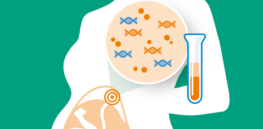
Viewpoint: Do NIPTs — non-invasive prenatal blood tests to find rare disorders — work? New York Times investigation raises doubts
Silicon Valley technology has made [a wondrous promise] to expectant mothers: that a few vials of their blood, drawn in ...
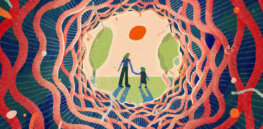
Infographic: Is Huntington’s an ‘incurable’ brain disease? New gene therapies offer hope
Huntington’s disease (HD) is an inherited condition that causes widespread deterioration in the brain and disrupts thinking, behaviour, emotion and ...

Meet the next generation of California farmers: Robots
In California, the breadbasket of America, more than half of farmers there told a survey that they were unable to ...

Podcast: Could the food we eat be fueling a surge in autoimmune diseases?
Could the food we eat and the air we breathe be damaging our immune systems? The number of people with ...
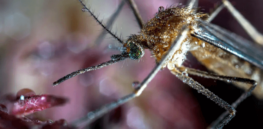
How CRISPR gene editing technology can eliminate disease-spreading mosquitoes
Scientists have uncovered a new technique they call the “precision-guided sterile insect technique,” or pgSIT. While most CRISPR procedures affect ...

Viewpoint: Plight of the honeybees? ‘Not only are they not in need of saving, they could be causing problems for native pollinators who are’
I’d first read about the plight of bees in 2006, when people started noticing that honeybees were dying in large ...

‘No simple answer’: Will cell-based meat and fish gain acceptance as Halal or Kosher?
As cultured animal proteins begin to hit markets worldwide, consumers are looking to religious authorities for answers on whether lab-grown ...

Finding genetic disorders in patients during studies presents prickly ethical questions
Back in 2020, Cristen Willer, a professor of cardiovascular medicine at the University of Michigan in Ann Arbor, was leading ...

‘Foundations of lifelong health’ are built in early childhood — and racial inequality plays a huge part
The scientific evidence is crystal clear: Early experiences literally shape the architecture of the developing brain.... But here’s something that’s ...
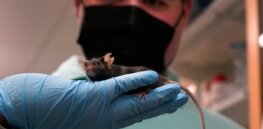
How a teenager’s blood and genetically modified mice are key tools in pioneering potential autism treatments
Jake Litvag leaned in for a closer look as a lab mouse scurried around an enclosure, stopping to sniff a ...

Quest for agelessness: A host of drugs and therapies are under review, but expectations are low
Will people eventually routinely live—and live healthily—longer? That’s the vision of the burgeoning field of aging research, where scientists are ...

A million animal and plant species are at risk of extinction. Could we tweak their genes to help them adapt to a changing world?
The United Nations has warned that about a million animal and plant species are at risk of extinction. In response, conservation breeding ...

‘Stretched to a breaking point’: UN report outlines sustainable farming roadmap to address climate change and environmental challenges
Almost 10% of the 8 billion people on earth are already undernourished with 3 billion lacking healthy diets, and the ...

Famed Israeli food critic was challenged to a taste test to choose between cell-grown and natural chicken. Here’s what happened
Renowned Israeli gastronome Michal Ansky knows her food. She’s a professional taster and a Master Chef judge. So when she was invited ...
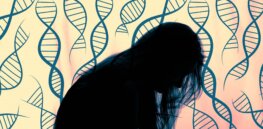
Women are twice as likely as men to suffer depression. Here is a key genetic factor
Gender differences in the prevalence of major depression and the manifestation of symptoms are well-documented, but scientists are still investigating ...

Transgender people who start transitioning as teenagers have better mental health, study finds
For transgender people, starting gender-affirming hormone treatment in adolescence is linked to better mental health than waiting until adulthood, according ...

‘The seductive allure of neuroscience’: Why psychology is not the sum of your brain parts
Few of us care for the technical details of how molecules and electrical charges in the brain give rise to ...
