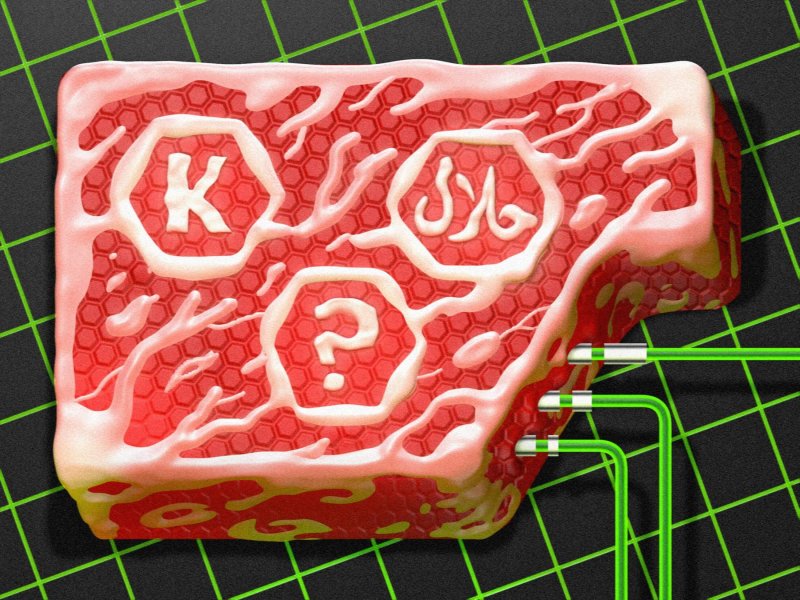

As cultured animal proteins begin to hit markets worldwide, consumers are looking to religious authorities for answers on whether lab-grown meat products will ever be accepted as Halal or Kosher.
Cell-based meat innovators say slaughter-free production methods could hold the key to reducing greenhouse gas (GHG) emissions associated with animal farming. However, adherents of Judaism and Islam – who make up over 2 billion of the world’s population – will require permission from ruling religious officials on whether lab-meat can be compatible with their diets.
“A number of questions would need to be addressed in order to determine whether cultivated meat is Halal and Kosher, including the origin of the cells, how the animal from which the cells were taken was raised and slaughtered and whether the production process and ingredients used are Halal and Kashrut compliant.” [says SuperMeat’s Osnat Shostak.]
…




One easier area is for the seafood market. All fish from the sea is considered Halal, and Kosher fish is defined generally as any fish with fins and scales. Nomad Foods recently partnered with BlueNalu, a cultured seafood startup from California. A spokesperson from the company asserts this area should make passing regulation and consumer acceptance far easier when compared to other meats.