
Most Americans say it’s important to be healthy, but fewer think they are doing a good job at managing their own health. They also report significant challenges figuring out the best way to reach their health goals: Around half of the public says they struggle to know which health information is accurate, and most have encountered conflicting advice about their health.
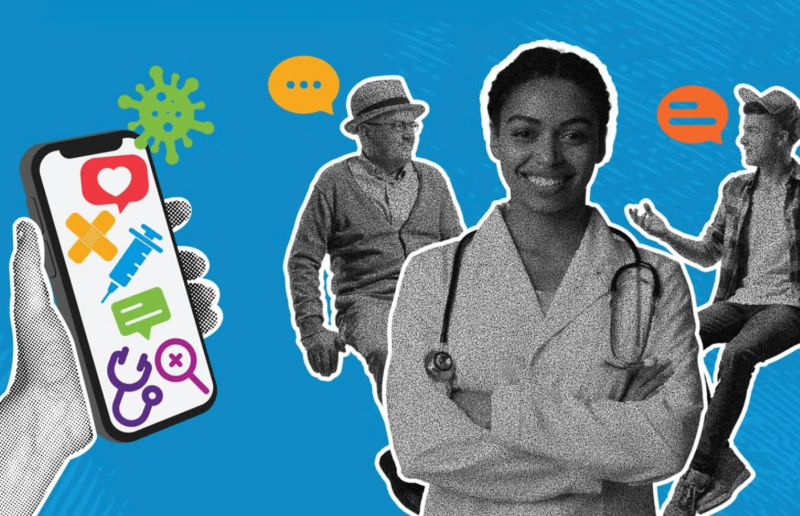
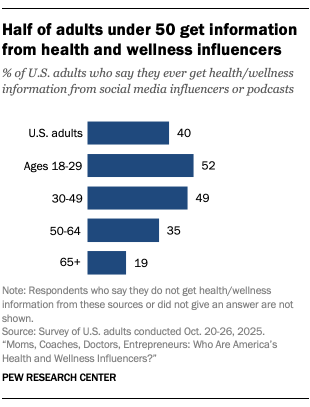
The vast majority of U.S. adults turn to health care providers for guidance through this confusing landscape. But four-in-ten U.S. adults (and half of those under 50) now get health and wellness information from social media influencers and podcasts.
To learn more about who these influencers are and how they present themselves to the world, we identified 6,828 individuals with at least 100,000 followers on YouTube, TikTok or Instagram that regularly post about health and wellness and analyzed their social media profiles. We paired this analysis with two surveys of U.S. adults that asked about their experiences with health and wellness influencers. Some of the key findings:
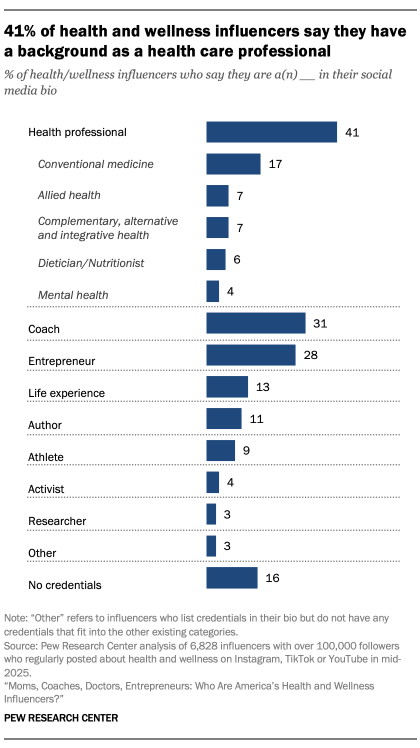
- Health and wellness influencers claim a wide range of backgrounds from inside and outside the world of medicine: 41% describe themselves as some sort of health care professional, and around three-in-ten each say they are coaches (31%) or entrepreneurs (28%).
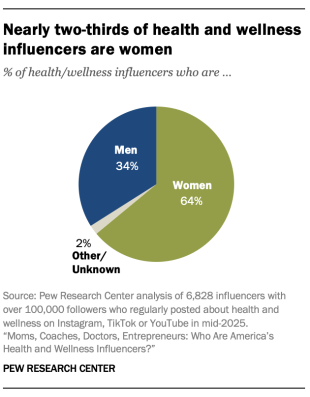
- Around two-thirds of these influencers are women. But men are more heavily represented for certain backgrounds (like doctors) and among the most popular health and wellness influencers.
- Many draw on their life experiences. Health and wellness influencers who are women are especially likely to cite their background as a parent.
Who gets health and wellness information from influencers?
Four-in-ten U.S. adults – and half of those under the age of 50 – say they get health and wellness information from social media influencers or podcasts. This is similar to the share who at least sometimes gets health information from social media in general.
Certain groups are particularly likely to say they get health and wellness information from these influencers, including adults under 50; Black, Hispanic and Asian Americans; and those without health insurance.
Where are health and wellness influencers found online?
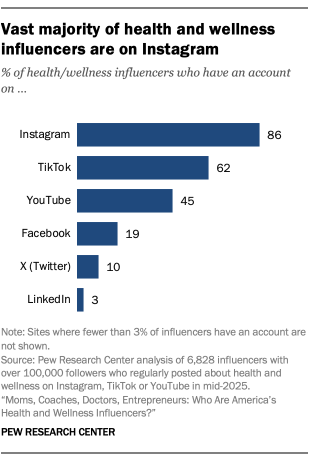
Health and wellness influencers tend to congregate on social media sites that are centered around images or videos, rather than text.
Nearly all of the influencers we studied have an account on Instagram (86%), and substantial shares have accounts on video-focused sites like TikTok (62%) and YouTube (45%).
These influencers are less likely to be on other sites. About one-in-five are on Facebook (19%) and one-in-ten are on X (formerly Twitter). A number of other sites contain small shares of them (3% or less each). Most health and wellness influencers don’t maintain a particularly broad presence: The accounts we looked at for this study maintain an account on just two social media sites on average.
This reflects a different outreach strategy than the one many news influencers follow. A 2024 Pew Research Center study found that 85% of those influencers were on X, while 50% were on Instagram and 44% were on YouTube.
Of course, social media aren’t the only way for an influencer to reach their audience. About one-in-ten (12%) host a podcast, and 2% have a Substack or Medium newsletter.
How do health and wellness influencers on social media describe their expertise?
Most Americans who get health and wellness information from social media influencers say they typically come across this content rather than actively seek it out. When encountering a post in this way, viewers may wonder: Who is this person? Do they know what they’re talking about? Why should I trust them?
One way to answer these questions is to click through to the profile of the person who created the post. In that limited space, the creator can share a bit about themselves: information like their training (if any), what they do for a living or the kinds of life experiences they have. Some influencers offer a lot of information about themselves, while others simply describe the type of content they make.
Our analysis finds that many health and wellness influencers describe themselves as some sort of health care professional – but a majority do not. Some 41% mention a health care profession in their profile.
This category includes a range of specialties, some of which are outside the traditional Western medical establishment. And some influencers are included in more than one of these specialties:
- Conventional medical professionals like doctors, dentists and nurses. (17% of influencers fall into this category.)
- Allied health professionals like physical therapists or pharmacists (7%)
- Complementary, alternative and integrative health professionals, such as functional medical practitioners, naturopaths, chiropractors or massage therapists (7%)
- Dieticians and nutritionists (6%)
- Mental health professionals, including psychiatrists and social workers (4%)
Health care professional is the most common profession or background we found in these influencer profiles. But other types of expertise are common as well:
- Coaches: 31% of these influencers describe themselves as coaches, such as diet, fitness and/or life coaches. Many offer one-on-one services or guides.
- Entrepreneurs: 28% are entrepreneurs or business owners. These accounts typically mention a wellness studio or medical practice they own or the licensed products or treatments they offer.
- Those who cite their life history or experience: 13% mention things like a medical condition they have or have had, their journey to lose weight or improve their fitness, or their experience as a caregiver.
An influencer’s profession can be a reason for their audience to trust them, but 16% of health and wellness influencers on social media do not mention anything about their background or expertise in their bios. Many of these profiles contain very little text or include descriptions of the content they post rather than listing credentials.
What share of health and wellness influencers are men or women?
Women are huge drivers of health care spending decisions in America compared with men. Health and wellness influencers reflect that gender dynamic: 64% of these influencers are women, while 34% are men. This is nearly the opposite of the gender split in a 2024 Center study of news influencers (63% of whom were men).
How men and women signal their expertise
There are relatively few differences in how men and women who are health and wellness influencers describe their backgrounds and expertise. However, there are some differences around certain categories.
Women are especially likely to cite their life experiences in their social media account bios. Some 16% of health and wellness influencers who are women do this, nearly double the share among men (9%).
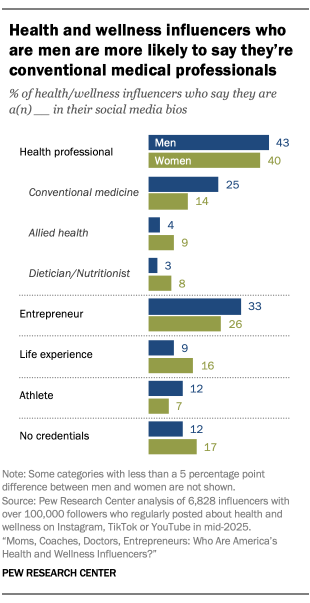
Specifically, references to parenthood are a common differentiator between men and women. Women are about three times as likely to describe themselves as some variation of “mom” or “mother” (17%) than men are to mention their role as a father (6%). This includes both generic references to being a parent (“Mom of two”) as well as references that connect parenthood to their expertise in a particular field or topic (“ADHD mom”).
In contrast, health and wellness influencers who are men are more likely to say they are a conventional medical professional (such as a doctor). Among these social media influencers, 25% of men mention these credentials, 11 percentage points higher than the share among women (14%). Slightly larger shares of men than women also mention their experience as an athlete or entrepreneur.
Beyond the broad category of conventional medical professional, health and wellness influencers who are men are more likely to describe themselves using specific terms like “doctor” (14% of men vs. 6% of women mention these in their bios) or “surgeon” (8% vs. 1%). Plastic surgeons particularly stand out in this regard: Of all the accounts that mention plastic surgeon in their bios, 85% are men.
How many followers do popular health and wellness influencers have?
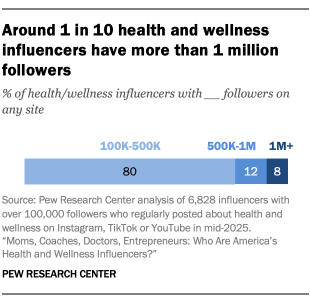
All of the social media influencers included in this analysis have at least 100,000 followers on Instagram, TikTok or YouTube. But a notable share has attracted an even wider audience. Some 8% have at least 1 million followers on their most-followed account.
Just under half of these high-follower influencers are men (46%), which is more than the share of men among all health and wellness influencers (34%).
Some 40% of U.S. adults say they get health and wellness information from social media influencers or podcasts. This analysis takes a deeper dive into the reasons Americans do this, how they come across these influencers and how they view the information these influencers offer.
Some of the key takeaways:
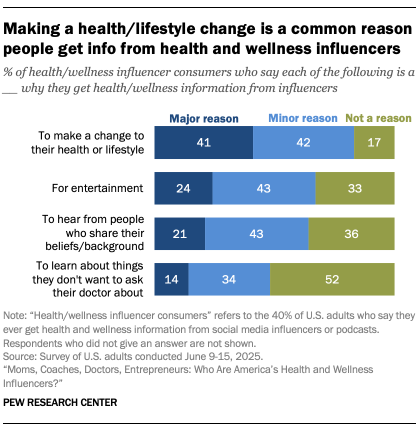
- The desire to make a health or lifestyle change is a key motivating factor. Some 41% of Americans who get health and wellness information from influencers say this is a major reason for doing so.
- Young adults are particularly likely to tune in to health and wellness influencers for entertainment. One-third of these consumers ages 18 to 29 say that entertainment is a major factor for them.
- Most get this information because they happen to come across it. Two-thirds of these consumers say they mostly get information from health and wellness influencers because they happen to come across it, double the share who says they are usually looking for it.
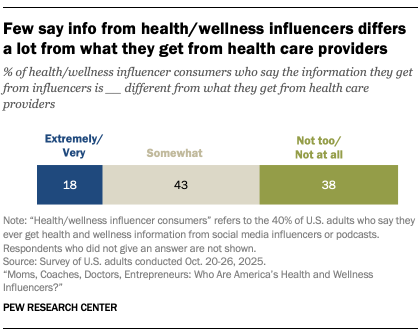
- About one-in-five say the information they get from these influencers is extremely or very different than what they get from health care providers. About twice as many (38%) say it’s not too or not at all different.
Other parts of this study look at the characteristics of health and wellness influencers themselves, the topics people say they learn about from them and how much people trust the information they provide.
In our survey, we asked whether Americans ever get health and wellness information from social media influencers or from podcasts. In discussing the findings, we use “health and wellness influencers” to refer to these two sources. We also use “health and wellness influencer consumer” to refer to U.S. adults who say they ever get information about health and wellness from social media influencers or podcasts.
Why people get health and wellness information from influencers and podcasts
Our June survey asked about several reasons why people might get health and wellness information from social media influencers.
The desire to make a change in one’s health or lifestyle is the most prominent. Some 41% say this is a major reason why they turn to these influencers, and a similar share says it is a minor reason.
Around a quarter say entertainment is a major reason they get health information from these influencers, and around one-in-five say that hearing from someone who shares similar personal beliefs or background is a major reason.
Entertainment is especially relevant to younger adults. One-third of health and wellness influencer consumers ages 18 to 29 say this is a major reason for them. That share drops to 26% among those ages 30 to 49 and to 13% among those 50 and older.
Of those who get health and wellness information from these influencers, 14% say that learning about things they don’t want to ask their doctor about is a major reason they turn to influencers, which is the lowest share among the reasons we asked about. But this is not uniform across all groups. For example, around 20% of Black, Hispanic and Asian health and wellness influencer consumers each say this is a major reason for them, compared with 10% of White consumers.
Do people seek out information from health and wellness influencers or just come across it?
Two-thirds of health and wellness influencer consumers (67%) say they mostly get that information because they happen to come across it. Fewer (33%) say they mostly get it because they are directly looking for it.
This reflects broader trends in the information environment. A recent study of news habits around news influencers found virtually the same share (69%) gets news from news influencers because they come across it, while 31% seek it out.
Do health and wellness influencers offer different information than health care providers?
When they get health-related information from health or wellness influencers, consumers are more likely to say that information is similar to what they get from health care providers than to say it is different.

About one-in-five of these consumers (18%) say the information these influencers provide is extremely or very different from the information they get from health care providers. Around twice that share – 38% – say this information is not too or not at all different. Another 43% are in the middle and say this information is somewhat different.
Across demographic groups, few health and wellness influencer consumers say the information they get from these influencers is extremely or very different from what they get from traditional health care providers.
But a slightly larger share of Black health and wellness influencer consumers say this information is extremely or very different (24%) relative to White (16%) or Asian consumers (14%). And 23% of those with lower incomes say this, compared with 13% of upper-income consumers.
Some 40% of U.S. adults say they get health and wellness information from social media influencers or podcasts. This analysis takes a deeper dive into these Americans’ experiences with these influencers – how much they trust them, what they learn, and how the information they get makes them feel about their health.
Some of the key takeaways:
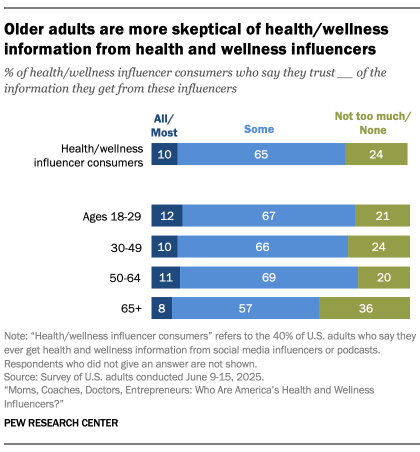
- Those who get health and wellness information from these influencers are mixed on how much to trust it: 10% say they trust all or most of the information they get from these influencers, but 24% say they trust not too much or none of it. The largest share (65%) falls somewhere in the middle and says they trust some of it.
- Around half of these consumers say these influencers help them better understand how to be healthy. And young adults stand out as the age group most likely to say the information they get from these influencers makes them more worried about their overall health.
Other parts of this study look at the characteristics of health and wellness influencers themselves, why people follow these influencers and how they find them, and the topics they learn about from them.Key terms used on this page
In our survey, we asked whether Americans ever get health and wellness information from social media influencers or from podcasts. In discussing the findings, we use “health and wellness influencers” to refer to these two sources. We also use “health and wellness influencer consumer” to refer to U.S. adults who say they ever get information about health and wellness from social media influencers or podcasts.
How much people trust information from health and wellness influencers
Just one-in-ten health and wellness influencer consumers say they trust all or most of the information they get from these influencers. More than twice that share (24%) say they trust not too much or none of it.
The largest share – around two-thirds – is in the middle, saying they trust some of this information.
Older adults express more skepticism of the information they get from these influencers than younger age groups. Some 36% of health and wellness influencer consumers ages 65 and older say they trust not too much or none of that information.
Other research by the Pew Research Center has found that those 65 and older are consistently less likely to trust the information they get on social media relative to younger age groups.
How information from health and wellness influencers makes people feel about their health
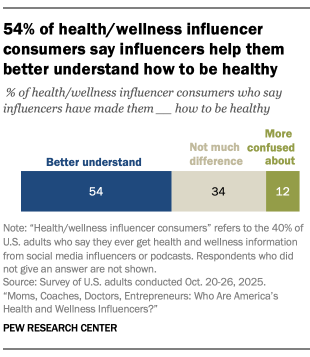
Many find these influencers to be helpful: 54% of those who get health and wellness information from social media influencers or podcasts say it has helped them better understand how to be healthy. Far fewer (12%) say it has made them more confused about how to be healthy, and 34% say it hasn’t made much difference either way. This pattern tends to show up across demographic groups.
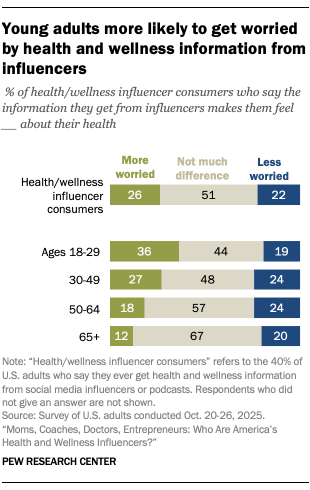
Meanwhile, 26% of these consumers say this information has made them more worried about their overall health. A similar share (22%) says it has made them less worried. About half say it hasn’t made much difference either way.
Younger adults are especially likely to say that information from these influencers makes them feel more worried about their overall health. Some 36% of health and wellness influencer consumers ages 18 to 29 say this.
Some 40% of U.S. adults say they get health information from social media influencers or podcasts. This analysis looks at some of the specific topics Americans get from these influencers.
Some of the key takeaways:
- Those who get health and wellness information from social media influencers hear about a wide range of topics. Around a third or more say they often hear about topics like fitness, weight loss and personal appearance.
- Younger adults and women are especially likely to hear about certain topics. Those ages 18 to 29 are especially likely to hear about topics like fitness or mental health, and larger shares of women than men hear about beauty and personal appearance.
Other parts of this study look at the characteristics of health and wellness influencers themselves, why people follow them and how they find them, and how much people trust the information they provide.
In our survey, we asked whether Americans ever get health and wellness information from social media influencers or from podcasts. In discussing the findings, we use “health and wellness influencers” to refer to these two sources. We also use “health and wellness influencer consumer” to refer to U.S. adults who say they ever get information about health and wellness from social media influencers or podcasts.
The topics health and wellness influencer consumers say they hear about often
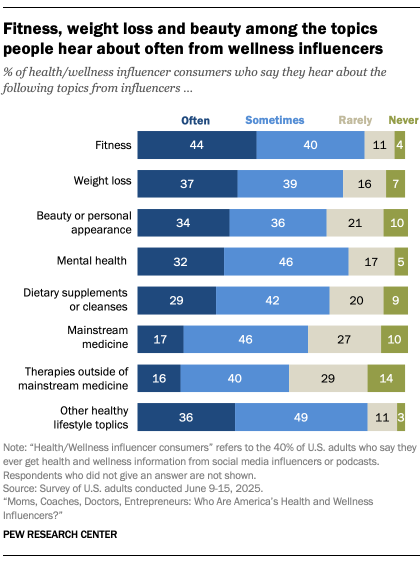
There are many topics that health and wellness influencers might talk about, but what do audiences actually get? We asked these consumers how much they are hearing about seven different health topics.
Their responses highlight the broad range of topics that these influencers discuss.
A majority of wellness influencer consumers say they hear about each of seven topics asked about at least sometimes.
But certain topics are especially common. Notably, a third or more of health and wellness influencer consumers say they often hear about topics like fitness, weight loss and beauty or personal appearance. And 19% say they often hear about all three of these topics.
This just scratches the surface though: 85% of these users say they at least sometimes hear about topics related to living a healthy lifestyle other than the seven we included in the survey. Around a third say they hear about these other topics often.
Differences by age
Younger health and wellness influencer consumers are especially likely to encounter some of these topics. For instance, 51% of these younger consumers often get content related to fitness.
Mental health is also a topic that younger adults encounter more frequently. Some 39% of these consumers ages 18 to 29 say they hear about mental health and well-being often. That share falls to 25% among those 50 to 64 and 21% among those 65 and older. In Pew Research Center’s recent study on health information and trust, younger adults were especially likely to rate their mental health as fair or poor.
Differences by gender
Half or more of both men and women who get health and wellness information from influencers say they at least sometimes encounter all of the topics we asked about in the survey. But there are certain topics that women get much more frequently than men. Most notably, women are around twice as likely as men to say they often hear about beauty and personal appearance from wellness influencers (44% vs. 20%).
Galen Stocking is the associate director of research on the Science and Society Team at Pew Research Center. Find Galen on LinkedIn
Regina Widjaya is a computational social scientist at Pew Research Center. Find Regina on X @rlwidjaya
Anna Lieb is a computational social science assistant at Pew Research Center. Find Anna on LinkedIn
Kaitlyn Radde is a computational social science assistant at Pew Research Center. Find Kaitlyn on LinkedIn
Aaron Smith is the director of Data Labs at Pew Research Center. Find Aaron on X @aaron_w_smith
Eileen Yam is the director of science and society research at Pew Research Center. Find Eileen on X @eileenyam
A version of this article was originally posted at Pew Research Center and is reposted here with permission. Any reposting should credit both the GLP and original article. Find Pew Research Center on X @pewresearch