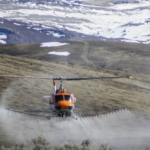
642 separate Bioengineered (aka, GM/GMO, recombinant DNA) events, of 42 traits, in 32 different crops or plants have received regulatory approval in one or more countries, according to the ISAAA GM approval database (https://www.isaaa.org). 225 of these events have also been approved in the US, most in the important agricultural crops of maize, soy, cotton, canola and potato. However, an Excel file from USDA Biotechnology Regulatory Services (BRS) of requests for field trial permits of bioengineered events, from April 1985 thru February 2023, has 54,905 entries. Although many of the requests were repeats or were for gene components, it is striking that, since first commercialized in 1996 (30 years ago), with unprecedented acceptance by growers, so few events and traits have been commercialized in the US.
Much of the reason cited for so few trait event approvals and commercialization is the high cost of the regulatory approval process, and based on my experience in international regulatory and government affairs, this is true. But another significant reason, especially for small market, fresh use crops is public acceptance. I am developing a program I call “Gene Gleaning”, which proposes to identify genes and gene components that have been cloned but not commercialized, or have only been commercialized in world market crops, e.g., maize, soy, cotton. The cost of regulatory approvals for small or single market crops is significantly less because international approvals may not be needed, and if already approved in the US, approval of the same gene in another crop is easier and less expensive. Consortia of universities, small and/or larger companies, possibly with regulatory consultants, could be put together to sublicense, as needed (the patents on many are expired), to re-clone and/or transform gene constructs into new crops.
This article proposes a project that highlights the benefits of such a program and also addresses an issue that many universities are now facing, including my alma mater, the University of Minnesota (UMN): financial support for research. UMN’s apple breeding program had developed the Honeycrisp apple, arguably, the most popular fresh market apple in the US; but the Honeycrisp, as well other apples, must be sprayed with insecticides for most of the growing season and are an annual entry the Environmental Working Group’s (EWG) Dirty Dozen list. But not all these sprays should be needed. Bacillus thuringiensis (Bt) genes, providing insect protection against all 3 major apple insect pests, have been cloned, and 2 have already been approved and commercialized in other crops in the US, so – Why Not Bioengineered Honeycrisp Apple?
Main text:
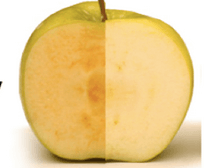
Figure 1, above, shows a beautiful looking apple. No blemishes from insect damage – as the grocery shopper would expect to be produced by the grower and offered for sale by the grocer. BUT do you know WHY there is no insect damage on this apple? It is because the apple grower sprayed it with insecticides from right after petal fall in spring until just before harvest in autumn.
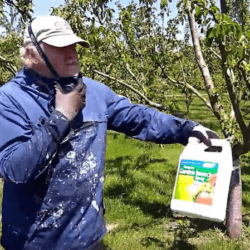
As a scientist, who worked with EPA, USDA and FDA, as well as regulatory agencies worldwide, I feel comfortable that the insecticides used by apple growers are safe for human consumption when used as directed. However, it is not practically possible to completely prevent overspray of the insecticides used; thus, if there are nearby apple trees that are still flowering or there are other flowering plants nearby, insect pollinators, like bees and butterflies, including Monarchs, may be killed. Additionally, any beneficial insects, like parasitoid wasps and mites, on the apple trees may be killed.

Figure 2 shows the activity of common insect pests and diseases of apples in Minnesota (MN). It indicates the extent of pesticide spraying needed to deal with insects and diseases. Although it lists a number of insect pest, there are three that cause the great majority of apple damage over the growing season. These are codling moth, a lepidopteran, plum curculio, a coleopteran, and apple maggot, a dipteran.

Figure 3 shows a codling moth larvae on an apple with feeding damage. Preventing this damage requires insecticide spraying right after petal drop and throughout the season. (In Figure 2, see colored bars after Codling moth-Adult and Codling moth-Larva.)

Figure 4 shows, from left, a plum curculio adult beetle; middle, ovipositor damage by female beetle on newly forming apples; right, healing scars from ovipositor damage on later season fruit. The apple flesh would show brown tunneling damage from feeding beetle larvae. Preventing plum curculio damage also requires spraying insecticides early and throughout the growing season. (In Figure 2, see colored bar after Plum curculio-Adult.)

Figure 5 shows apple maggot damage on late season apples. Preventing apple maggot damage requires spraying, from mid through late season. (In Figure 2, see colored bar after Apple maggot-Adult.)


Discussion:
I have worked as a plant molecular biologist (BS, PhD, NSF-Postdoc, UMN) for over 30 years. For the last half of my career, I worked in regulatory affairs (Sandoz/Syngenta, Monsanto) and had obtained US regulatory approvals for Syngenta’s BT11 insect protected maize, which used a Bacillus thuringiensis (Bt) gene to prevent damage from lepidopteran insects (moths, like codling moth, and butterflies). The Bt gene product, a protein, is order specific and attacks insect species in that insect order. For BT11 maize, the primary target was the lepidopteran, European Corn Borer, Ostrinia nubilalis. There is another Bt gene that attacks coleopterans (beetles, like plum curculio), and another Bt gene that attacks dipterans (flies, like apple maggot). The Bt protein is very safe. In fact, cultures of the Bt bacteria are an approved pesticide for use on organic crops; however, like synthetic insecticide use, overspray is still a concern, and any nearby insects of the same order may be killed, e.g., Monarch butterflies are also a lepidopteran.
Bt genes for all three of these insect orders that attack apples have already been cloned, and two of the genes, for lepidopterans and coleopterans, have already been approved for use in other plants, e.g., BT11 in insect protected maize; thus, their regulatory approvals would be quick and of minimal cost. Note also that the other, less serious, insect pests – fruitworm, leafroller, apple worm and fruit moth (see Figure 2) – are also lepidopterans and could be controlled with the same Bt gene used for codling moth.
I have discussed developing bioengineered insect protected apples with university apple breeders. A commonly expressed concern is “public acceptance”. But universities, often a state’s most elite public education institution, have an obligation to teach their students, and the public, the best, most complete science about bioengineering, and change what is an incorrect public perception of this very valuable, and safe, technology. Additionally, Bt insect protected apples could save growers the costs of the insecticides as well as the labor costs to spray them, and probably be responsible for removing apples from EWG’s Dirty Dozen list.
Having read this, if any of you know, or have an opportunity to interact with, your state’s apple breeders, or, for that matter, the breeders of any fruit with insect problems during production, ask them about what I have written here, and if they would support the development of Bt apples? I would be interested in knowing how they respond and why.
An Additional note: The EWG’s annual Dirty Dozen and Clean Fifteen lists were published recently. The Dirty Dozen, again, includes apples. Also of note, is that all 12 have no bioengineered varieties of significance sold in the US. However, of the Clean 15, two have significant bioengineered varieties in the US – Bt sweet corn, at #2, and virus resistant papaya, at #4!
Bill Pilacinski, PhD, is a plant molecular biologist and Principal Consultant on issues related to conventional and more modern agriculture at WP Consulting, LLC. Find Bill on LinkedIn
A version of this article was originally posted on LinkedIn and has been reposted here with permission. Any reposting should credit the original author and provide links to both the GLP and the original article.