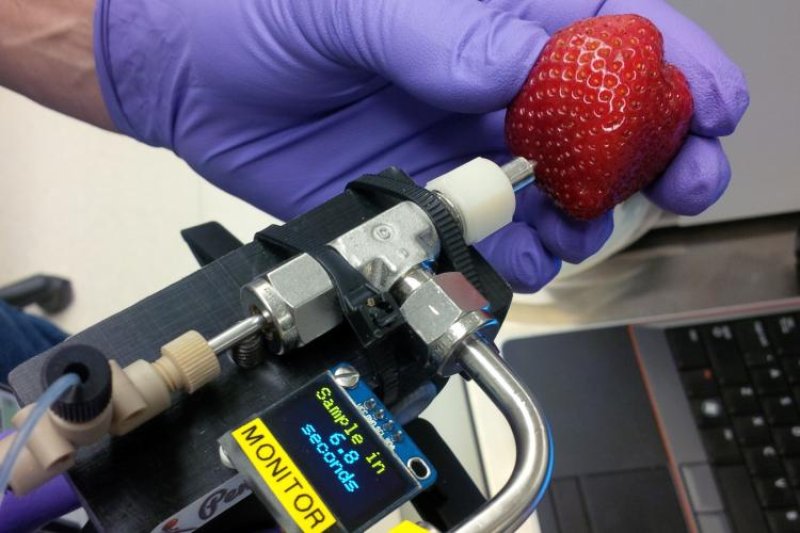

A wellness blog called Mamavation had a lab test two containers of Driscoll’s from a single store on a single day, found trace residues of 12 pesticides in the conventional box (and none in the organic one), and framed them as “PFAS pesticides.” That one shopping trip became worldwide headlines claiming strawberries cause cancer. People were tossing fruit. So, we sat down with a toxicologist (the amazing Dr. Joe Zagorski) and ran the actual numbers.
Take indoxacarb, one of the residues on that list, as an example. To reach its safety threshold, which already bakes in a 100-fold buffer, a 154-pound adult would have to eat 123 pounds of strawberries every single day for the rest of their life. The “PFAS pesticide” label doing all the scaring isn’t a recognized scientific category, and even the blog’s own reviewer conceded the EPA disputes that classification. The organic box showing nothing wasn’t the damning contrast it looked like either. Organic farms use their own approved pesticides, which a synthetic-focused residue panel can miss, so a non-detect there says less than it seems.
The fear underneath most of this is also the most reasonable one, that even trace amounts add up over the years and never leave your body. It’s a fair thing to wonder. The “forever” in “forever chemicals” is about how slowly these break down in the environment, not about your body being unable to clear them. Even PFOA and PFOS, the legacy chemicals that started the whole worry, are eliminated by the body over time, and population blood levels have dropped by something like 80% since they were phased out. Pesticides like the ones found here are metabolized and cleared faster still. And the safety thresholds toxicologists use already assume a lifetime of daily exposure, so the “it adds up over decades” part is built into the number. Joe’s take on the bigger version of this, the whole cocktail of residues over time, is honest and measured. It’s a real and active area of research, but the trace levels on food are unlikely to rise to a level of concern.
The part that actually worries us isn’t the trace residue. It’s that a scare like this pushes people to eat less produce, a genuine health cost, in exchange for a risk the numbers don’t support. And USDA’s pesticide monitoring finds residues across produce sitting well below safety limits year after year.



Strawberries get this treatment on a schedule, too, because they top the EWG’s Dirty Dozen list almost every year. We write about that list a lot, because it ranks produce by how many pesticide residues turn up, not by whether any of them come close to a harmful level, and even its own authors concede it doesn’t assess actual risk. The main thing it reliably does is make people anxious about some of the healthiest food they can buy. We covered the strawberry case in full here, and the broader Dirty Dozen problem in our pesticide Q&A (here’s part one and part two of our series, and there are more posts coming!).