
The wellness craze of the moment. Peptides themselves are just short chains of amino acids, the same building blocks that make up proteins, and the science on how they work is well established. The problem is a distinction the industry is counting on you missing, which is what Part one of our ongoing peptide series digs into. The FDA-approved peptide drugs like insulin and GLP-1s, backed by decades of trials, are not the same thing as the unregulated wellness peptides (BPC-157, TB-500, and friends) sold for recovery and anti-aging. Most of those have little or no human data, some were built as research tools and never meant for people at all, and stacking several at once just multiplies the unknowns.
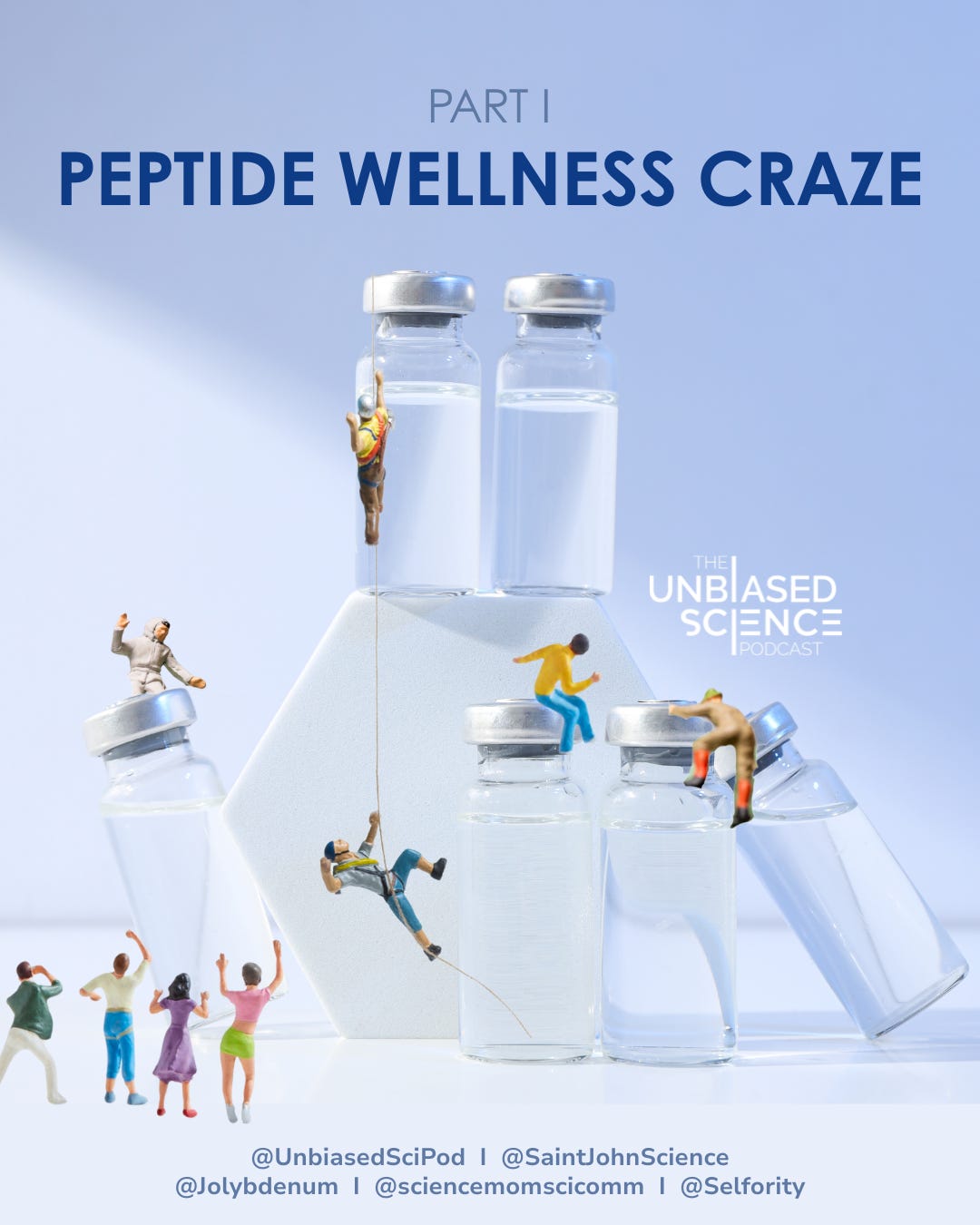
So, why are peptides suddenly everywhere? Every single time I open social media, another celeb is touting them as a panacea. Mostly that’s because someone is paying for you to hear about it. The wellness industry is enormous, influencer marketing is its engine, and there’s usually a discount code attached. There’s also a genuine reason people reach for them, though. Conventional medicine has real gaps, and people dealing with chronic pain, fatigue, and aging are often told nothing can be done, so a confident promise of control lands even when the evidence hasn’t caught up. Our bottom line is uncomfortable and not very satisfying. We just don’t know yet, and that’s true whether you’re hyping these or fearing them.
Part two is coming, and a preview of where it lands. It follows the patents and the regulation. The popular line that “pharma can’t patent these, so they’re hiding the cure” isn’t true, because peptides can absolutely be patented. The real reason industry hasn’t chased most of them is that the data isn’t there (though the biological reasons for caution are), and the majority of compounds that look good in mice fail in people. And while the FDA is reviewing whether to let compounding pharmacies prepare some of these, moving a peptide into a new regulatory category isn’t approval and isn’t new evidence. What’s changing is access, not the science.