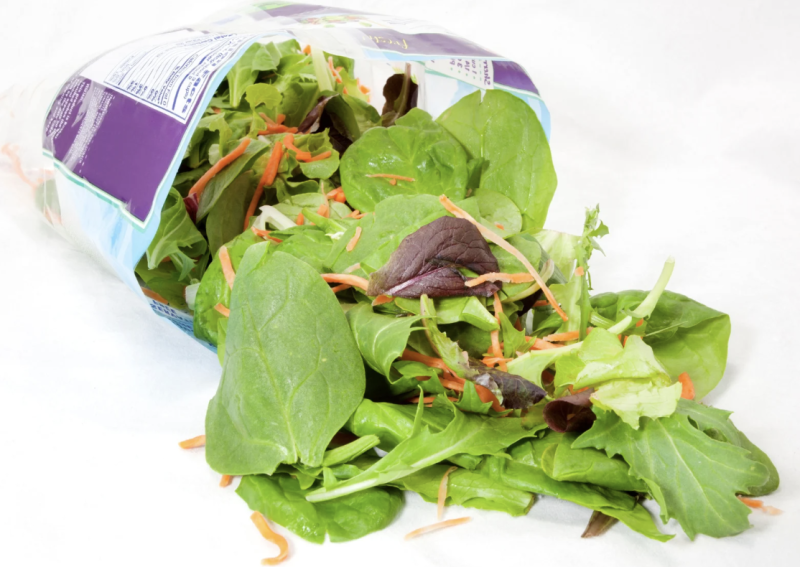

A video posted on X by @WallStreetApes shows a woman o claiming that U.S. bagged lettuce is “soaked in chlorine, gassed for 14 days and sealed in it.” In the comments, many consumers ask about how packaged salad greens are processed.
In the video, the woman says that bagged products such as spring mix and romaine lettuce undergo controversial treatments before reaching grocery shelves. She also suggested that these practices are banned in several other countries.
However, according to food safety regulations, while some parts of the claim are based on real food processing methods, the claims omit important context about how these food processing methods are regulated.
Later in the video, it is explained that U.S. lettuce processors wash greens using chlorinated water and modified atmosphere packaging (MAP). That process involves gases such as nitrogen, carbon dioxide, and oxygen being used to slow spoilage and extend shelf life.
The process does not involve harmful substances — the gases used are nitrogen, carbon dioxide and oxygen, which occur naturally in the atmosphere.
The U.S. Food and Drug Administration (FDA) allows food manufacturers to use antimicrobial washes, including chlorine-based solutions, on fresh produce as part of sanitation processes. The FDA sets specific limits on chlorine concentrations used in produce washing.
So the claim that lettuce is “sealed in gas for 14 days” is a misunderstanding of how modified atmosphere packaging works. The gases are introduced into the package to change the internal atmosphere and slow deterioration, so some packaged greens stay fresh longer.




The woman also says that such practices are “illegal in [third-world] countries.” However, some regions of the European Union, too, have restricted/prohibited some chlorine-based decontamination methods. At the same time, not all forms of such preservation are banned.
Just re-rinse it. Chlorinated water is to kill the nastiest organisms. You can actually drink chlorinated water (small amounts). I rewash vegetables. They can get contaminated on the way to your kitchen. It’s not a biggie. Or buy organic.
— Sandra (@SpeckBella) July 8, 2026
On X, some users are urging people to buy whole heads of lettuce from farmers’ markets. “Never buy bagged salads!” one wrote as they recommended washing and cutting fresh lettuce at home. Others note that nitrogen and carbon dioxide are common gases and that packaging methods help make affordable, convenient salad products available.
“Fine point; however, there wouldn’t be abundant, cheap salad mix without it,” said another as they specifically explained that such cheaper food preservation methods involve trade-offs. Some criticized government agencies and food companies, while others said they would continue buying packaged greens because of their convenience.
A version of this article was originally posted on Yahoo News and has been reposted here. Any reposting should credit both the GLP and the original article. Yahoo News can be found on X @YahooNews