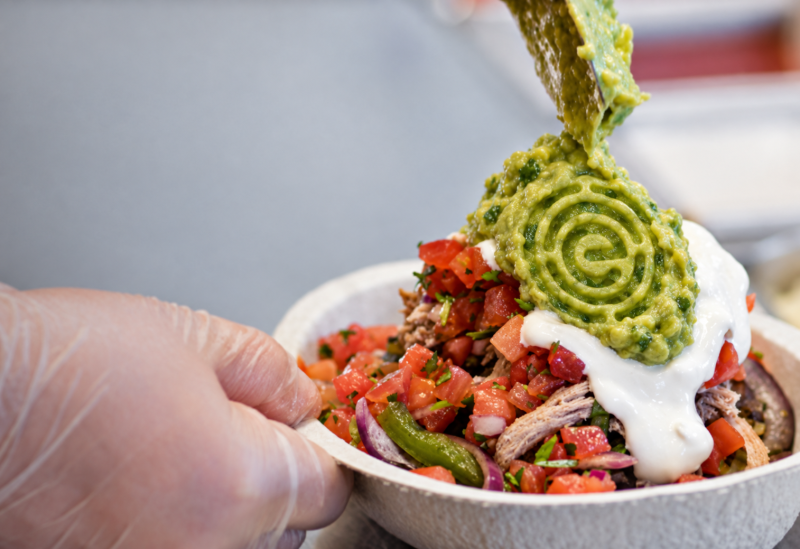

The Environmental Working Group recently compared ultra-processed foods across major fast-food chains and found one conspicuous exception: Chipotle. That makes for an appealing yet incomplete nutritional story.
I like to receive emails from the Environmental Working Group (EWG). Given my work at ACSH, I think of it as opposition research. Today they sent me an article I wanted to share. They begin by noting that roughly a third of American families get their calories “somewhere other than home.” And then came the hook.
“But if you’re looking to eat less ultra-processed food, or UPF, eating out can be a challenge.”
A great preamble to a review of UPFs to be found in 12 of the top fast-food franchises [1] in the US.
Buns, pizza crusts, and sandwich breads are formulated for softness, shelf life, and consistency. Processed meats such as pepperoni and sausage contain preservatives. Sauces and dressings include sweeteners, flavorings, emulsifiers, stabilizers, and thickeners. And we need not forget beverages with sugar, artificial sweeteners, and other flavorings. There is no doubt that fast foods contain a range of ingredients associated with ultra-processed foods, mainly to provide a very standardized, and evidently yummy, experience, whether you have it your way in New York or Cleveland.
However, in the words of EWG,
“There was one surprising standout: Chipotle’s food menu contains no ultra-processed ingredients.”
EWG gives Chipotle a shout-out for its 53 real-food ingredients.
In true EWG fashion, they caution against too much of a good thing; not every meal should be a burrito bowl. They note that sodium and saturated fats can climb past the recommended daily limits, and add-ins add up. They do end on this hopeful note.
“But if you keep those caveats in mind, you can get a good amount of nutrients, vitamins, and minerals from whole food sources.”
What Processing Prevents
You know what else you can get from whole food sources? Food poisoning. As it turns out, “less processed” doesn’t mean “less risky.” Chipotle’s emphasis on fresh ingredients has also exposed it to the other side of the food-safety equation: microbial contamination.
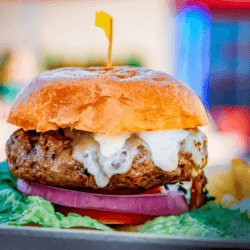



According to the FDA, Salmonella was traced to jalapeños being served at Chipotle and Qdoba, resulting in 431 illnesses and 57 hospitalizations this year. The 2026 Cyclospora outbreak eventually sickened more than 10,000 people; investigators traced it to iceberg lettuce from Taylor Farms de Mexico, including lettuce served at Taco Bell. McDonald’s had an outbreak of E. coli-tainted onions resulting in 104 cases and 34 hospitalizations in 2024.
This is not Chipotle’s first time in the food-borne illness rodeo. In 2015, two outbreaks of E. coli O26 linked to Chipotle sickened 60 people, although investigators never identified the specific contaminated ingredient. In 2018, poor food handling at an Ohio restaurant caused hundreds of illnesses. The remaining nine of the 12 fast-food restaurants have not had foodborne illnesses attributed to them.
My point here isn’t to shame or blame Chipotle. Fresh and minimally processed produce is an important source of foodborne outbreaks because, unlike many highly processed foods, it often receives no final “kill step”—such as cooking or pasteurization—before reaching the consumer. None of the foodborne illness cases involved ultra-processed buns, sandwich meats (I’m looking at you, pepperoni), sauces, or dressings.
One hidden ingredient in processed foods is safety. The same industrial food system EWG criticizes for its processing also employs processing steps that address genuine food-safety problems. Processing isn’t nutritional vandalism; it can perform useful functions.
EWG wants to frame the fast-food trade-off largely as convenience versus long-term health. But another axis matters: microbial safety. Fresh, minimally processed ingredients can offer nutritional advantages while retaining risks that cooking, preservation, and other processing steps are specifically designed to reduce. None of that makes ultra-processed food “healthy.” It simply reminds us that processing isn’t a toxin; it’s a technology. The relevant question isn’t whether a food has been processed, but what the processing does, what problem it solves, and what trade-offs it creates.
[1] Arby’s, Burger King, Chick-fil-A, Chipotle, Domino’s, KFC, McDonald’s, Panera, Pizza Hut, Subway, Taco Bell, Wendy’s
Dr. Charles Dinerstein, M.D., MBA, FACS is the Medical Director at the American Council on Science and Health. He has over 25 years of experience as a vascular surgeon. He completed his MBA with distinction in the George Washington University Healthcare MBA program and has served as a consultant to hospitals. While no longer clinically active, he has had his writing featured at KevinMD and Doximity.
A version of this article was originally posted at American Council on Science and Health and has been reposted here with permission. Any reposting should credit the original author and provide links to both the GLP and the original article. Find American Council on Science and Health on X @ACSHorg