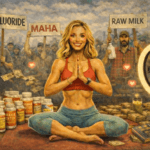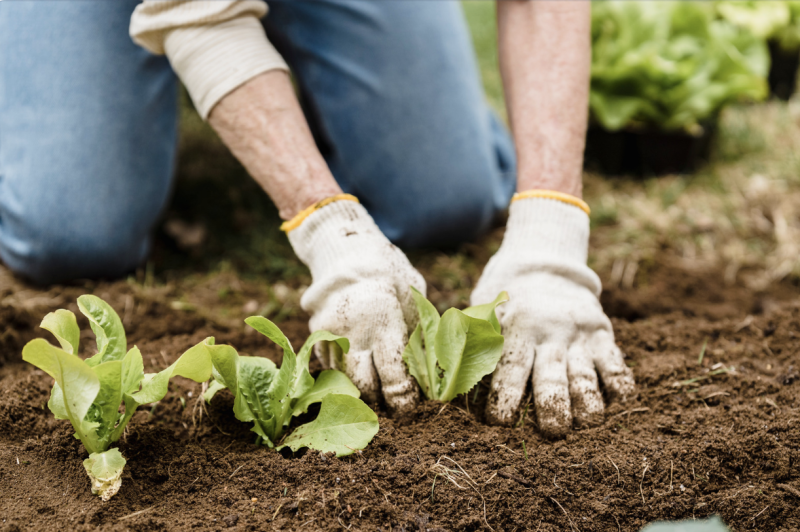
There is a woman who lives on my For You page. She has wild curly hair and a wardrobe of whimsical dresses, and she lives in a cottage with a garden that looks like it was set-dressed for a fairy tale. She walks you through the beds and tells you what she grows, what she dries, what she steeps. Lemon balm for anxiety. Raspberry leaf for cramps. Her voice is low and calm, and somewhere in the background the song from Practical Magic plays quietly, so the whole thing feels less like a video and more like a spell.
I watch every single one.
My algorithm has me figured out. It serves up the cottage videos, the bread made from scratch, the women in linen aprons pulling carrots out of dark soil. I am mesmerized by all of it.
What you might not guess, watching me watch her, is that I’m a public health scientist. I have a doctorate in public health and I’ve spent my career in vaccines, in data, in the unglamorous machinery of evidence. And I watch her anyway, because the appeal is real.
The pendulum
I did not grow up crunchy. I grew up in South Brooklyn with parents who took me to Atlantic City on weekends to scratch my father’s gambling itch, and I don’t remember the room service being organic. We ate out four or five nights a week, and when we didn’t, dinner was a TV dinner or a Happy Meal handed through a car window that let the cigarette smoke out when it rolled down. Nobody was checking labels, because checking labels wasn’t really a thing yet.
Then I got into public health, and the pendulum swung hard the other way. I remember a school project where I measured out the actual sugar in sodas, spooning it into little mounds, and feeling something close to betrayal. I married a California boy with deeply crunchy roots, and my mother-in-law taught me the “Dirty Dozen” (more on this soon) and the long list of things to avoid while pregnant. She once went through my cupboards and was genuinely aghast. The bleach in my cleaning supplies. The carrageenan in the almond milk in my fridge. The aluminum in my deodorant. Monster.
These days I’ve landed somewhere in the middle: a public health scientist with a few crunchy-ish habits. We keep a vegetable garden. We compost. I occasionally make my own oat milk, though I should be honest about why. It’s to dodge the price tag, not the gums and additives.
That little distinction, the reason I make the oat milk, is the whole point of this piece.
Two ideas wearing one apron
When I watch the woman in the cottage, or the sourdough videos, what pulls me in is the making. It is genuinely wonderful to bake bread with your own hands and then eat the thing you created. To grow food and pick it. To know how to do things. What I don’t believe is that the loaf at the grocery store is hurting me.
Those are two different ideas, and nearly all the trouble in the wellness world comes from quietly fusing them.
The first idea is additive (it adds to your life). Grow things. Make things. Slow down. Dry herbs on the windowsill, learn what lemon balm smells like when you crush it, feed the compost, knead the dough. All of it is good for you in the way that hobbies and rituals and beauty are. You can keep every bit of it. No scientist anywhere wants to take your garden.
The second idea is subtractive (it takes things away from your life), and it usually slips in wearing the first idea’s clothes. Skip the vaccine, because natural immunity is better. Skip the antibiotics, take the elderberry. Skip the sunscreen, because the sun is natural. (So is melanoma.) Pay double for anything labeled clean or non-toxic, as if the unlabeled version were dirty and toxic, which, legally and chemically, it is not allowed to be.
Earth, balms, gardens, healing. Hands in soil. It evokes an image that feels like the opposite of factories and labs, and if you carry any mistrust of industry, and most of us carry some, a fair amount of it earned, then the cottage starts to feel not just lovely but safe. Safer than the pharmacy. That’s the leap I want to gently take apart, because the lovely part is true and the safer part is not.
Ingredients you can pronounce
The strange part is that you never have to go looking for any of this. The vocabulary comes to you. The podcasts I put on to let my brain unplug (the pop culture ones, the celebrity interviews, the true crime) all run the same ads. Without fail, once I hit play I hear the same laundry list of buzzy terms: non-toxic, clean, all natural, no artificial ingredients, organic, non-GMO, no aluminum, pesticide-free, raw, ingredients you can pronounce. Those words are drilled into our subconscious every time we consume content in 2026.
Nobody ever sits you down and argues that natural means safe. There’s no lecture to push back on. You just absorb it, passively, until the framing feels like common sense, until “I can’t pronounce it” starts to sound like a reason to be afraid of something.
For the record, I can’t pronounce cyanocobalamin on the first try either. It’s vitamin B12. Meanwhile, arsenic and hemlock roll right off the tongue. Everything has a chemical name, because everything is made of chemicals. A banana contains phylloquinone and 3-methylbutyl ethanoate. Water is dihydrogen monoxide. The lemon balm in the cottage garden is, chemically speaking, a long list of terpenes.
When I say this, people tend to roll their eyes. You know what I mean, they say. The “bad” chemicals. And I do know what they mean, that’s the thing. There really is a difference between something that helps you and something that hurts you. It’s just not the difference between a hard word and an easy one, or between a lab and a leaf. It’s the dose. So let’s talk about the dose.
Toxic at what dose?
The other word doing heavy lifting in those ads is toxic, and toxic is a measurement pretending to be a category. Everything is toxic at some dose, water included, but for most of what gets called toxic in a wellness ad, almost nothing is toxic at the dose you actually encounter it. So when a product is sold as free of toxic aspartame or toxic aluminum, the questions that actually matter never get asked. Toxic at what amount? And how much would I have to consume to get there?
Take aspartame. To reach the acceptable daily intake the FDA has set, an adult would need to drink something like 75 packets’ worth, or well over a dozen cans of diet soda, every single day, and that threshold already sits far below where any harm appears. Or aluminum, the most abundant metal in the earth’s crust. It’s in the soil of that cottage garden and in nearly everything that grows from it, which means the trace amounts in an antiperspirant or a vaccine are a rounding error next to what you take in from an ordinary week of meals.
The pesticide panic runs on the same missing number. Take the Dirty Dozen, the annual list of produce ranked by pesticide residue. What the ranking measures is whether a residue was detected, not whether the amount detected comes anywhere near a level that could harm you. So a fruit can top the scary list while carrying a quantity thousands of times below any threshold of concern. It’s a list of “we found a trace,” dressed up as a list of “this will hurt you.” Strawberries are the perennial villain. So, we ran the math: to reach the EPA’s chronic safety threshold for the residue in question, a 154-pound adult would have to eat roughly 123 pounds of strawberries a day, every day, for life, and that threshold already carries a hundredfold safety margin. You would make yourself sick on the sheer volume long before the pesticide could do a thing. Eat that many strawberries and it’s the strawberries that get you, not what’s on them.
What worries me about the strawberry panic isn’t the strawberries, it’s that it scares people off produce entirely, when not eating enough fruits and vegetables is a far more certain harm than any trace residue. I want my kids eating greens. I don’t track whether they’re organic or conventional, because I have a finite amount of worry to spend, and the food supply is not where I’m spending it. People whose entire job is setting these limits have already done it, with margins built in by the hundredfold, and I’d rather trust that and use my attention on things that are actually up to me.
And plenty of the vilified ingredients aren’t just failing to harm us, they’re doing a job. Preservatives are in food because the alternative isn’t purity, it’s mold and botulism, and we put them there on purpose after a long history of people dying from food that spoiled. Pesticides, used within regulated limits, are a large part of why food is abundant and affordable, and organic farms use them too, just from a different approved list. Organic doesn’t mean pesticide-free, and an organic pesticide isn’t automatically safer or gentler on the environment than a synthetic one. There are many of each, and what matters is the specific compound and the dose, not which list it came from. And the appeal of aspartame is that it isn’t sugar: sweetness with almost no calories and no blood sugar spike. Most of the nutrition scientists on my feed will tell you that for the many people who are going to drink soda regardless, the diet version is the better choice, not the dangerous one. “Not natural” tells you nothing about which side of the ledger an ingredient sits on. Sometimes the unpronounceable thing is the reason the food is safe.
Genetically modified food triggers the same reflex, and it might be the clearest case of fear attaching to an aesthetic rather than a fact. GM crops are among the most studied foods on the planet, examined across decades and thousands of studies, and the scientific consensus that they’re safe to eat is about as settled as the consensus on vaccines. Some were built to resist insects so the field gets sprayed less, which means the very technology people fear as unnatural is part of why there’s less pesticide on the food they’re trying to avoid. What the label sells is a feeling about origin. Frankenfood, something foreign and lab-made standing in for something grown, when the lab and the field were never the opposites the word wants them to be. (By the way, the technology is already in the medicine cabinet of people who’d never think twice about it. The insulin that keeps a diabetic alive is made by genetically engineered microbes, bacteria or yeast given the human insulin gene and set to produce it, which is purer and steadier than the older version scraped from pig and cattle pancreases. The same tool behind the “scary” GM crops is behind a drug nobody calls frankenfood.)Subscribe

A petition to rename natural immunity
So let’s talk prevention, because this is where the stakes climb. The phrase “natural immunity” makes it sound like Mother Nature bops Snow White on the nose and grants her protection from future illness. A more honest name would be survivor immunity, or infection immunity, as my colleague Dr. Aimee Bernard calls it, because you have to survive the infection to gain protection, and you take on every risk it carries along the way.
And those risks are not small, with death only the most final of them. Measles can erase your immune system’s memory of other diseases it already learned to fight, and in some children it swells the brain. Mumps can cause permanent hearing loss. Chickenpox never fully leaves; it hides in your nerves and can return decades later as shingles. HPV causes cancers that take years to announce themselves. Flu kills tens of thousands of Americans in a bad season, most of whom assumed they’d shake it off, and hospitalizes far more.
A vaccine offers your immune system the same protection with the dangerous parts removed. Nothing about it bypasses nature. It works through the most natural equipment you own, your own immune system, the same cells and antibodies and memory. The only thing it skips is the part where you might get seriously ill, or worse.
Medicine and nature were never the opposites the marketing implies. Aspirin began as willow bark, penicillin is a mold, and the lab didn’t replace the garden so much as learn from it, then add what the garden never had: precise doses, purity, and proof.
About the supplements
If you love your vitamins and your elderberry syrup, I’m not coming for them. But there are a few things to consider before the next repurchase.
For most people who aren’t actually deficient in something, most supplements do very little, which means that you’re mostly paying for a feeling. Feelings have value, so that can be fine, as long as you know what you’re buying. And supplements are not held to the same standards as medications. A drug has to prove it is safe and effective before it can be sold. A supplement does not. There’s no required testing before it reaches the shelf, and studies that check bottles against their labels keep finding doses that don’t match and ingredients that were never listed. The pharma-versus-natural framing has it backward here: the synthetic pill is the one somebody had to prove something about. There’s a strange asymmetry in who gets the skepticism. People distrust the FDA and CDC while giving the supplement and wellness industry a pass, even though it’s a multi-billion-dollar business selling peptides and powders and proprietary blends with a fraction of the oversight. The doubt is sometimes earned. It just rarely gets pointed at the people actually profiting from the fear.
The benefits get inflated on the way to you, too. A cottage video tells you a spice or a berry is a powerful anti-inflammatory, and underneath that claim is usually a study where the compound did something interesting to cells in a dish, or to mice at a dose no human could eat. The clip keeps the impressive verb and quietly drops the context: how much you’d actually need, whether your body absorbs it, whether it does anything in a person at all. A modest finding in a lab becomes a miracle in your cupboard, and the part that got cut is almost always the part that mattered.
Natural also doesn’t mean gentle. St. John’s wort can interfere with birth control and antidepressants. Turmeric has been linked to liver injury at high doses. Megadoses of certain vitamins cause real harm. These compounds follow the same rule as their synthetic counterparts: harmless at one dose, harmful at another. “Herbal” describes where something came from, not what it will do to you.
And none of it is a substitute for medicine. Enjoy the herbal tea because you like it, because it’s warm and it tastes like something and the ritual is its own reward. Just not in place of the antibiotics your doctor prescribed. The tea is lovely. The tea was never the medicine.
The pull of the simpler past
I live in western Massachusetts now, surrounded by dairy farms, and plenty of them have raw milk signs out front. I understand the pull completely. And I should admit something: I’m a city girl who landed in a pretty rural part of the country on purpose. I came for the calm, the farmstands, the Saturday markets, the quiet simplicity of it. So I’m not standing outside this feeling. I’m in it.
Raw milk is the purest version of the fantasy. Milk warm from the cow, nothing done to it, no factory and no lab between the animal and the glass. It isn’t really about milk. It’s about wanting the thing closest to the origin, before anyone in a white coat got their hands on it, because surely that’s how it was meant to be. And underneath that is the bigger romance, the one this whole essay keeps circling: yesteryear. The sense that people once lived closer to the land and were better for it, that somewhere back there was a simpler, cleaner way we’ve since lost.
Will everyone who drinks raw milk get sick? No, and that’s exactly what makes it persuasive. Most people who skip a single vaccine in a given year are fine too, but only because nearly everyone around them didn’t skip it; the protection they’re enjoying was paid for by the people who showed up. Raw milk works similarly in reverse. It’s a reliable carrier of Listeria, E. coli, and Salmonella, and the people who pay for that gamble most often are the ones least able to absorb it: the children it gets poured for, pregnant women, the elderly, anyone immunocompromised. And the danger isn’t filed away in some distant past. As I write this, Idaho is investigating an outbreak that has sickened nearly 60 people since mid-May, traced mostly to raw milk from two dairies, at least 45 of them testing positive for Campylobacter. All pasteurization does is heat the milk enough to kill those bacteria. It doesn’t touch the nutrition. The sign out front is rejecting the one step that would have kept those people out of the doctor’s office.
That’s the trap in the simpler past. It looks simpler partly because the harm gets edited out of the picture. We keep the cow in the field and the warm glass of milk, and quietly crop out the part where it puts real people, this month, in a real place, in the hospital.
Keep the garden
I’m going to keep watching the woman in the cottage. I’m growing mint in my garden right now to dry for tea, and over the weekend my husband and I got our raised garden beds ready for the season and talked about how good it felt to have our hands in the dirt.
Here’s the line I’ve landed on, for myself and my kids. Natural is wonderful right up until it starts costing you the things that actually keep you alive. The vaccine. The antibiotic. The preservative that’s standing between you and a foodborne illness. It turns sour when it tips into constant worry about what’s in everything, into anxiety around food and your own body, into a forced choice between the garden and the doctor’s office. The fallacy isn’t loving lemon balm. It’s the dichotomy, the belief that to have one good thing you must refuse the other.
You don’t. We can love nature and also love the modern marvels that science has built on top of it.
And it helps to be honest about the fantasy because, for almost all of us, it is one. We don’t live in cottages in mountain towns or on small farms with a cow out back. We live in towns and cities and buy our food at grocery stores, and that food has to be grown at a scale that requires pesticides, kept shelf-stable with additives, and protected, along with the rest of us, by vaccines that are the reason children no longer routinely die at twelve of things that used to be ordinary. Our minds live in the past. Our bodies live in the present. We are being sold a picture of a life that almost none of us actually lead.
But you can keep the real parts. The garden, the sourdough, the herbs drying upside down in the kitchen, the candles, the tea you grew yourself, the whole gorgeous slow world of making things by hand. None of it conflicts with a flu shot. None of it is threatened by an antibiotic. Keep all of it. Just keep it as your hobby, in your kitchen, and for your hour of calm at the end of the day, but not as your immune system’s entire plan. Because Mother Nature, whatever the cottage videos suggest, was never really taking sides. She made the lemon balm.
She also made the measles.
Jess Steier is a public health scientist dedicated to bridging the gap between complex scientific evidence and public understanding. Jess is the Founder of Unbiased Science, CEO of Vital Statistics Consulting, and Executive Director of The Science Literacy Lab (a 501c3 non-profit organization).
A version of this article was originally posted at Unbiased Science and has been reposted here with permission. Any reposting should credit the original author and provide links to both the GLP and the original article. Find Unbiased Science on X @unbiasedscipod