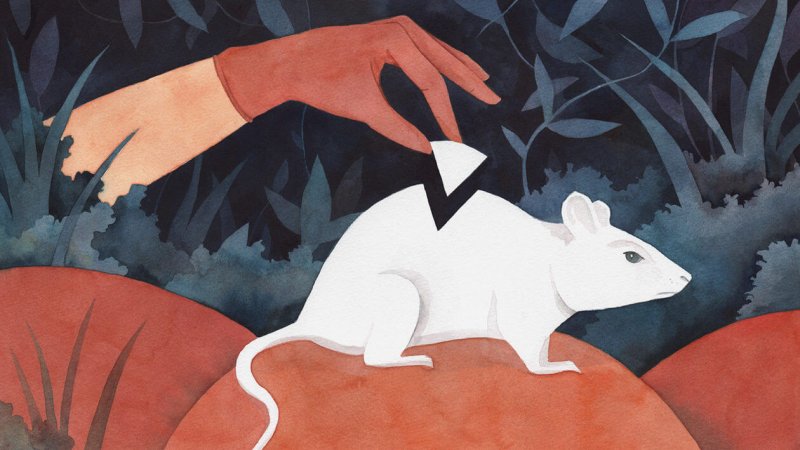
A million animal and plant species are at risk of extinction. Could we tweak their genes to help them adapt to a changing world?

Changing the factors that lead to species decline is important, but changing the animals to endure may be a more sound idea. Credit: Luisa Rivera

The United Nations has warned that about a million animal and plant species are at risk of extinction. In response, conservation breeding programs are ramping up to boost and protect populations.

The problem is that while conservation breeding can prevent extinction, it doesn’t allow threatened species to survive in the wild in the face of these difficult to mitigate threats.

Follow the latest news and policy debates on sustainable agriculture, biomedicine, and other ‘disruptive’ innovations. Subscribe to our newsletter.

This is where Targeted Genetic Intervention (TGI) comes in.

TGI works by adapting methods that are successfully used in agriculture and medicine in which an individual’s genetics are tweaked in ways that, when passed on to the wider population through breeding, can change the traits of a species to improve its survival.

Two of the most promising approaches in this toolkit include artificial selection and synthetic biology.

While these methods frequently figure in science fiction and are sometimes feared for their unintended consequences, the real science of synthetic biology is gaining traction in the conservation community due to its many benefits.

Additionally, a recent public opinion survey conducted by the Commonwealth Scientific and Industrial Research Organisation (CSIRO) indicates that the public are moderately-to-strongly supportive of use of synthetic biology approaches for conservation.


This is an excerpt. Read the original post here.

{{ reviewsTotal }}{{ options.labels.singularReviewCountLabel }}
{{ reviewsTotal }}{{ options.labels.pluralReviewCountLabel }}
{{ options.labels.newReviewButton }}
{{ userData.canReview.message }}

Related Articles

Infographic: Global regulatory and health research agencies on whether glyphosate causes cancer

Infographic: Global regulatory and health research agencies on whether glyphosate causes cancer

Does glyphosate—the world's most heavily-used herbicide—pose serious harm to humans? Is it carcinogenic? Those issues are of both legal and ...

Most Popular

ChatGPT-Image-May-7-2026-12_32_36-PM
Viewpoint: The state of U.S. vaccine policy? Dismal nationally, but some states are stepping up.
Screenshot-2026-04-13-at-1.39.26-PM
Viewpoint: ‘Safer for children?’ Stonyfield yogurt under fire for deceptive organic marketing
Screenshot-2026-04-22-at-10.46.29-AM
Viewpoint: How to counter science disinformation? Science journalist offers 12 practical tips
the magic of mRNA
Viewpoint: Anti-vax fake ‘turbo cancer’ claims threaten cancer treatment breakthroughs
ChatGPT-Image-May-7-2026-12_16_37-PM-2
Viewpoint: Are cancer rates ‘skyrocketing’ as RFK, Jr. and MAHA claim? The evidence says mostly the opposite
artificial intelligence brain think illustration md
Viewpoint — Digital gods and human extinction: Will we be the first species ever to design our own descendants?
Picture1-1
Cooling the planet with balloons: Could a geoengineering gamble slow global warming?
ChatGPT-Image-May-7-2026-01_23_27-PM-2
Viewpoint: Will AI democratize personalized cancer treatment or fuel medical misinformation?
Defense_Secretary_Ash_Carter_tours_the_Microsoft_Cybercrime_Center_in_Seattle_March_3_2016
How criminals are using AI to target social media users and steal their money and confidential data
Screenshot-2026-04-23-at-11.00.36-AM
Regulators' dilemma: Thalidomide, Metformin, and the cost of getting drug approvals wrong
Picture1-14
When superbugs threaten vulnerable children: Can AI help solve antibiotic resistance?
glp menu logo outlined

Get news on human & agricultural genetics and biotechnology delivered to your inbox.