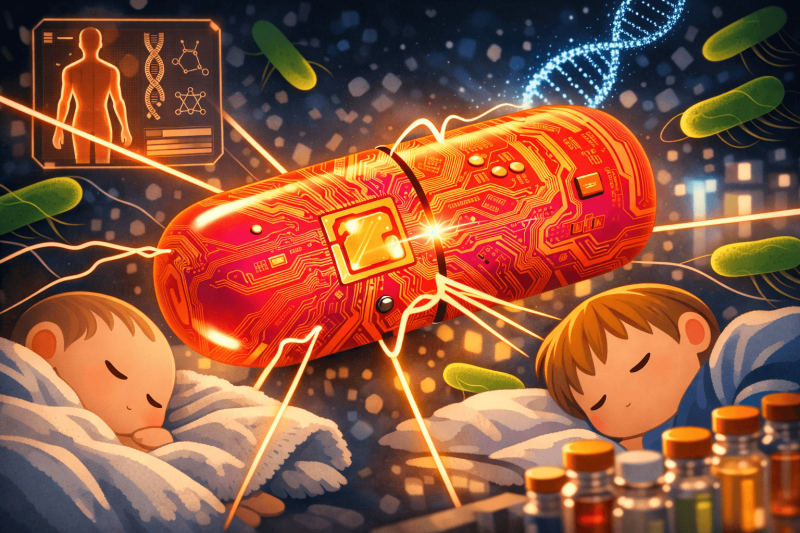
They are newborns, many of them less than two weeks old, and the race to save them is measured in hours. Across parts of Southeast Asia, a wave of bloodstream infections is cutting through neonatal wards faster than doctors can stop it. When researchers examined blood samples from the sick babies, they found a grim pattern: The bacteria driving many of the infections were not responding to the medicines available to treat them. The old drugs are wearing out. The new ones take years to arrive.
It is a tragic but increasingly familiar story. Antibiotic resistance is spreading faster than the world can replace the medicines it is losing. This month, the World Health Organization warned that the pipeline for new antibiotics remains dangerously thin where the threat is greatest. That leaves a terrifying question: How do you replace failing drugs before children (and adults) run out of time?
Researchers at the Massachusetts Institute of Technology (MIT) believe artificial intelligence may offer an answer. Using generative AI, they screened more than 36 million possible compounds and identified promising antibiotic leads against some of the world’s toughest pathogens. It is early work, but in a field that has spent decades falling farther and farther behind, it’s a glimpse of a desperately needed future.
Yet the race against resistance will not be won in the lab alone. The antibiotic crisis is also an information crisis. Resistance is fueled not just by bacterial evolution, but by overuse, bad prescribing, and persistent myths about what these drugs can do. Antibiotics are still widely treated as catch-all remedies, even though they do nothing against viral infections such as colds, flu, or COVID. During the pandemic, that confusion only deepened. AI cannot stop people from spreading bad advice, but it could help limit the fallout by giving doctors faster, evidence-based guidance and by spotting resistance patterns sooner.
That is the crisis MIT researchers set out to confront. If bacteria are evolving faster than medicine can replace its drugs, then the old way of hunting for antibiotics — screening known compounds one by one and making minor tweaks to familiar molecules — is too slow. AI offers a way to search much farther and faster.
In 2020, a research team at MIT used AI to identify halicin, a compound effective against several drug-resistant pathogens. It wasn’t a silver bullet, but it did show that antibiotics need not be accidents of history or products of nature; they can be designed. In a field largely stalled for half a century, that possibility alone was revolutionary.
History of antibiotics
To understand why that matters, it helps to remember how antibiotics transformed medicine in the first place. There is hardly a person alive who at some point hasn’t needed antibiotics — for pneumonia, a urinary tract infection, or sepsis. But seldom do we think about their long and storied history.
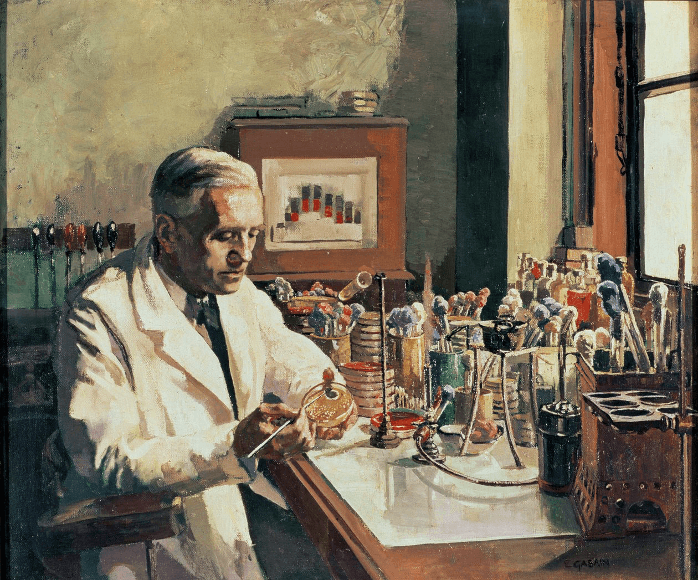
Nearly a century ago, a stroke of luck changed the course of medicine. In 1928, Scottish physician and microbiologist Alexander Fleming returned from vacation to find that one of his bacterial Staphylococcus culture plates had been contaminated with the Penicillium notatum mold. Around the mold was a clear halo where the bacteria had died. He surmised that the mold was producing a substance capable of stopping bacterial growth and extracted the active compound from the mold, naming it penicillin, after the mold. With that accidental discovery, the modern antibiotic era was born.
The rest is history, with many more natural, synthetic, and semi-synthetic antibiotics having radically changed the treatment of bacterial infections and saved millions of lives over the next century. However, Darwinian “survival of the fittest” has given rise to the appearance of antibiotic-resistant bacteria, or “superbugs,” that threaten to unravel decades of medical progress. Our dilemma is easy to describe but hard to solve: We have too few new antibiotics, and too few of them work in genuinely new ways.
Artificial intelligence (AI) is now giving researchers a new way to fight back. Instead of testing compounds one by one, algorithms can devise millions of possible new ones, flagging candidate molecules thought to have antibacterial potential.
In 2020, as described above, a research team at MIT used AI to identify halicin, a compound effective against several drug-resistant pathogens. In the unending battle between bacteria and antibiotics, a groundbreaking study led by some of the same MIT researchers and published last year offers hope. Scientists have harnessed the power of generative artificial intelligence (AI) to design entirely new antibiotics that are effective against two of the most formidable bacterial foes: drug-resistant Neisseria gonorrhoeae (which causes gonorrhea) and methicillin-resistant Staphylococcus aureus (MRSA).
Published in the journal Cell in October, the article, “A generative deep learning approach to de novo antibiotic design,” marks a major step forward in the battle against antibiotic resistance, a crisis that the World Health Organization estimates could claim millions of lives annually by mid-century if left unchecked.
Antimicrobial resistance occurs when bacteria mutate and evolve to resist the drugs designed to kill them. Decades of antibiotic overuse in medicine and agriculture have accelerated this process, causing once-reliable treatments to become ineffective. Infections like gonorrhea and MRSA, which can cause severe skin infections, bloodstream infections, and even death, are becoming harder to treat. The pipeline for new antibiotics has also slowed to a trickle, with few novel compounds developed in recent decades.

Most new antibiotics are variations of existing drugs, enabling bacteria to quickly adapt to them. What makes this crisis particularly alarming has been the lack of structurally distinct antibiotics that work in entirely new ways to outsmart resistant bacteria. Traditional drug discovery methods, which rely on screening existing chemical libraries, are limited by the finite number of compounds available. Enter generative AI, which promises to rewrite the rules of drug development by creating entirely new molecules from scratch.
Generative AI designs new drugs
Led by MIT Professor James Collins, the research team developed a generative AI framework to design antibiotics de novo. Unlike traditional methods that search existing chemical libraries, this approach explores vast numbers of uncharted permutations of chemical structures — hypothetical molecules that may not yet exist in nature or laboratories. “Our work shows the power of AI from a drug design standpoint, and enables us to exploit much larger chemical spaces that were previously inaccessible,” Collins said.
The researchers pursued two tracks. One focused on gonorrhea, using AI to build new molecules from promising chemical fragments. The other targeted MRSA, giving the system more freedom to generate entirely new candidates and then filtering them for safety and antibacterial power. In both cases, the computer did the first pass: It generated huge numbers of possible compounds, screened them virtually, and helped the team narrow the list to the few worth synthesizing and testing in the lab.
In parallel, the team used an “unconstrained” approach to design antibiotics against multidrug-resistant S. aureus (MRSA), a notorious superbug responsible for severe infections. Across both tracks, the researchers ultimately synthesized 24 compounds in the lab. Seven demonstrated selective antibacterial activity, meaning they killed bacteria without harming human cells. The two lead compounds, NG1 and DN1, stood out for their efficacy against multidrug-resistant bacterial strains and their performance in animal models. NG1 showed promise against drug-resistant gonorrhea, while DN1 worked against MRSA skin infections in mice. Phare Bio, a nonprofit partner in MIT’s Antibiotics-AI Project, is now working to optimize these compounds for further testing, with the goal of advancing them toward clinical trials.
The implications of this work are profound. By generating structurally novel antibiotics with unique mechanisms of action, the researchers have opened a new frontier in drug discovery. Unlike traditional antibiotics, which bacteria can often resist through familiar mechanisms, NG1 and DN1 attack bacteria in ways that could delay or prevent the development of resistance. The larger point is AI’s speed and reach: It provides scientists a way to search vastly more chemical possibilities than conventional methods.
Moreover, the AI-driven approach is scalable, allowing scientists to target other dangerous pathogens, such as Mycobacterium tuberculosis, which causes tuberculosis, and Pseudomonas aeruginosa, a common cause of hospital-acquired infections. But the work is still early. These are promising leads, not finished medicines, and any drug that emerges will still have to clear the long hurdles of safety testing, human trials, and manufacturing.
New frontier
Despite its promise, the path from lab to pharmacy is long and uncertain. Scaling up production and ensuring safety and efficacy in humans will require substantial investment and testing. Additionally, while the two isolated compounds show promise, their long-term effectiveness against evolving bacteria remains to be seen.
As Professor Collins has noted, the team is already eyeing other challenging bacteria, signaling that this is just the beginning. The potential of generative AI extends far beyond antibiotics. The same principles could be applied to design drugs for cancer, neurodegenerative diseases, and other conditions where novel molecules are needed.
That matters for another reason as well. Antibiotic resistance is not just a scientific crisis. It is also a crisis of public understanding. Overuse, bad prescribing, and misunderstanding what antibiotics can do have all helped accelerate the problem. Antibiotics do nothing against viral infections such as colds, flu, or COVID, yet they are still widely treated as all-purpose remedies. Every unnecessary prescription gives bacteria another chance to adapt. AI cannot fix that confusion by itself. But it may help contain the damage — by speeding the search for replacement drugs, helping doctors make better prescribing decisions, and spotting dangerous resistance patterns sooner.
The rise of antibiotic-resistant superbugs is one of the greatest public health challenges of our time. With generative AI, scientists are approaching the time when they will no longer be limited to tweaking existing drugs or stumbling upon new ones in nature. Instead, they can design custom molecules tailored to outsmart even the most resilient bacteria. If this approach succeeds, it could usher in a new era of antibiotics — one in which human ingenuity, powered by AI, helps medicine stay a step ahead of the microorganisms that threaten our health.
Henry I. Miller, a physician and molecular biologist, is the Glenn Swogger Distinguished Scholar at the Science Literacy Project. He was the founding director of the FDA’s Office of Biotechnology. Find Henry on his website: henrymillermd.org