Viewpoint: Many vaccine-suspicious conservatives and MAHA reject shots for their children by invoking ‘patient autonomy’. That’s ridiculous.

Credit: Creative Commons

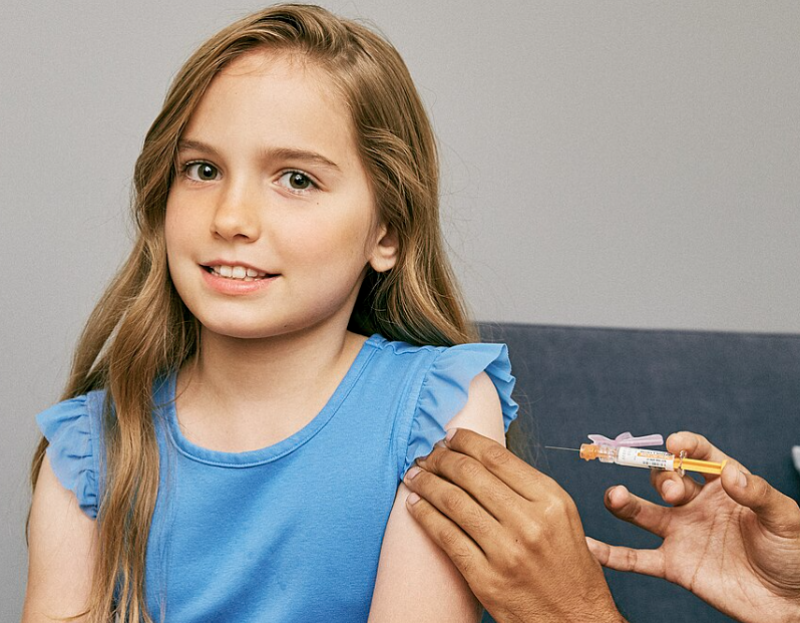
In January, Department of Health and Human Services head Robert F. Kennedy Jr. Trump’s slashed the number of routinely recommended childhood vaccines from 17 to 11 after an HHS report emphasized “personal autonomy and self-determination” as key principles necessitating reconsideration of the childhood vaccine schedule.

Pushback against such policies from those who support school vaccine requirements — as I do — typically emphasizes that failure to vaccinate a child can jeopardize not only his or her own health, but that of other children in the classroom, including some who may not be able to be vaccinated. It’s not only a matter of personal autonomy, the argument might go: Our choices have impacts on others.

Follow the latest news and policy debates on sustainable agriculture, biomedicine, and other ‘disruptive’ innovations. Subscribe to our newsletter.

The principle of autonomy is rightly sacrosanct in medicine, although even it has limits, which gives rise to multitude ethical quandaries in my field of intensive care unit medicine, and other disciplines. But such controversies are incidental to the debate over school vaccine mandates. When it comes to childhood vaccine recommendations or requirements, “personal autonomy” is little more than a red herring. 

This is an excerpt. Read the original post here

{{ reviewsTotal }}{{ options.labels.singularReviewCountLabel }}
{{ reviewsTotal }}{{ options.labels.pluralReviewCountLabel }}
{{ options.labels.newReviewButton }}
{{ userData.canReview.message }}

Related Articles

Infographic: Global regulatory and health research agencies on whether glyphosate causes cancer

Infographic: Global regulatory and health research agencies on whether glyphosate causes cancer

Does glyphosate—the world's most heavily-used herbicide—pose serious harm to humans? Is it carcinogenic? Those issues are of both legal and ...

Most Popular

ChatGPT-Image-May-26-2026-07_51_21-AM-2
Viewpoint: There are more than 1,000 chemicals in a cup of coffee—including many substances that can cause cancer. Why isn’t it banned?
Screenshot 2026-05-29 at 2.47
Psychological inoculation: With a vaccine to prevent HIV on the horizon, misinformation is soaring. What can be done.
Screenshot-2026-04-30-at-11.33.46-AM
Anti-seed-oil to anti-vax pipeline: MAHA movement spreads to teen influencers
ChatGPT-Image-May-28-2026-02_12_17-PM
Can ‘Social Stress Indicators’ help contain social media misfluencers?
Screenshot-2026-05-29-at-1.23.52-PM
Viewpoint: Scientists recently revised downward the likelihood of catastrophic global warming. Reassured? You shouldn't be.
Screenshot-2026-04-14-at-11.11.06-AM
‘Turbo cancer’ or mRNA cancer cure? Strategies to counter misinformation
Screenshot 2025-07-30 at 10.48
Can gene editing eliminate Down syndrome? Scientists have done it in lab-grown cells
ChatGPT-Image-May-22-2026-10_56_42-AM-2
‘It’s not super useful’: As wariness about AI grows, Trump proposes rollback of healthcare safeguards
ChatGPT Image May 28, 2026, 08_16_38 PM
Viewpoint: Why the EPA mismeasures cancer risk of chemicals and what should be done to fix it
ChatGPT-Image-Mar-10-2026-01_39_01-PM
Viewpoint—“Miracle molecule” debunked: Why acemannan supplements don’t work
Screenshot-2026-05-29-at-12.17.58-PM
RFK, Jr.’s delusion: Anti-depressants are not harder to quit than heroin—but that does not mean tapering off is easy
downsyndrome_compilation_MID_1
CRISPR breakthrough that can remove the chromosome responsible for Down syndrome raises ethical questions
Screenshot-2026-05-27-at-10.51.25-AM
Viewpoint: ‘Monsanto’ blues—Planned Netflix movie promises yet another round of anti-glyphosate disinformation
glp menu logo outlined

Get news on human & agricultural genetics and biotechnology delivered to your inbox.