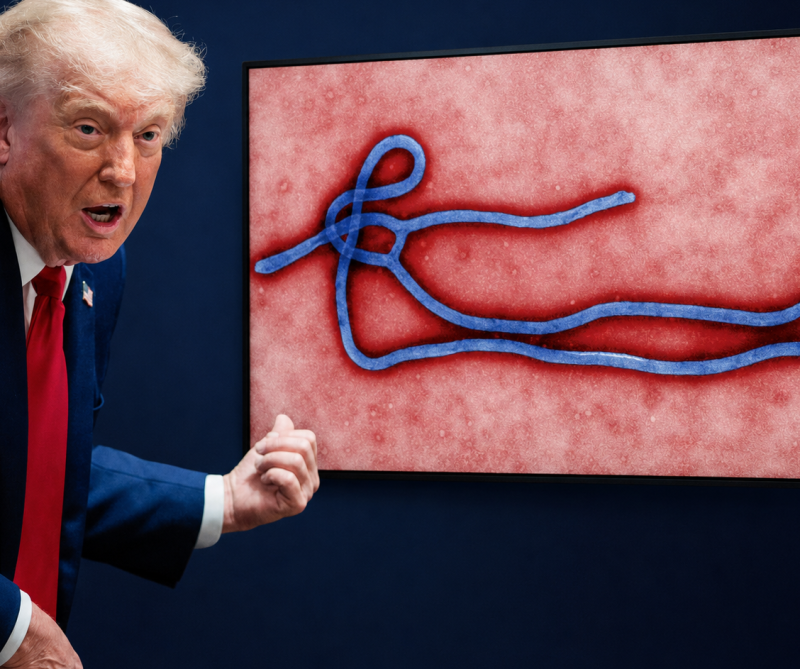
How Trump gutted Ebola research

ChatGPT Image Jun 2, 2026, 02_03_20 PM

As the world struggles to contain the rapidly growing Ebola outbreak in the Democratic Republic of Congo’s Ituri province, a vital network of research centers has been unable to help on the ground. The reason: The Trump administration slashed its funding last year, in part due to conspiracy theories about the origins of Covid-19.

Established in 2020 by the National Institutes of Health, the Centers for Research in Emerging Infectious Diseases Network was conducting research into viruses that emerge from wildlife and spill over to people, including the family of viruses that Ebola belongs to. The network operated 10 sites around the world where these types of disease outbreaks are likely to occur, including in Central and East Africa. (The network was also researching hantavirus, a disease that saw a recent rare outbreak on a cruise ship.)

Follow the latest news and policy debates on sustainable agriculture, biomedicine, and other ‘disruptive’ innovations. Subscribe to our newsletter.

NIH provided CREID with approximately $82 million in funding over five years, and its funding was up for renewal in 2025. But last June, the centers received a stop-work order stating that their research had been deemed “unsafe for Americans and not a good use of taxpayer funding” ….

This is an excerpt. Read the original post here

{{ reviewsTotal }}{{ options.labels.singularReviewCountLabel }}
{{ reviewsTotal }}{{ options.labels.pluralReviewCountLabel }}
{{ options.labels.newReviewButton }}
{{ userData.canReview.message }}

Related Articles

Infographic: Global regulatory and health research agencies on whether glyphosate causes cancer

Infographic: Global regulatory and health research agencies on whether glyphosate causes cancer

Does glyphosate—the world's most heavily-used herbicide—pose serious harm to humans? Is it carcinogenic? Those issues are of both legal and ...

Most Popular

ChatGPT-Image-May-26-2026-07_51_21-AM-2
Viewpoint: There are more than 1,000 chemicals in a cup of coffee—including many substances that can cause cancer. Why isn’t it banned?
Picture1
Sounds we can’t hear — the hidden planetary signals behind science, fear, and misinformation
Screenshot-2026-06-01-at-1.35.32-PM
Viewpoint: Swine farmers are under attack for allegedly mistreating their animals. Here are the facts.
the magic of mRNA
Viewpoint: Anti-vax fake ‘turbo cancer’ claims threaten cancer treatment breakthroughs
Screenshot-2026-05-27-at-10.51.25-AM
Viewpoint: ‘Monsanto’ blues—Planned Netflix movie promises yet another round of anti-glyphosate disinformation
Screenshot 2025-07-30 at 10.48
Can gene editing eliminate Down syndrome? Scientists have done it in lab-grown cells
Screenshot-2026-06-01-at-11.07.22-AM
Viewpoint: Many vaccine-suspicious conservatives and MAHA reject shots for their children by invoking ‘patient autonomy’. That’s ridiculous.
ChatGPT Image Jun 1, 2026, 11_39_17 AM
Viewpoint: When food myths go viral, farmers pay the price
ChatGPT Image May 28, 2026, 08_16_38 PM
Viewpoint: Why the EPA mismeasures cancer risk of chemicals and what should be done to fix it
ChatGPT-Image-May-28-2026-02_12_17-PM
Can ‘Social Stress Indicators’ help contain social media misfluencers?
Screenshot-2026-06-01-at-12.25.33-PM
Would you go to a holistic dentist? It’s either a scam or a dentist trying to sell you unnecessary supplements.
downsyndrome_compilation_MID_1
CRISPR breakthrough that can remove the chromosome responsible for Down syndrome raises ethical questions

Sorry. No data so far.

glp menu logo outlined

Get news on human & agricultural genetics and biotechnology delivered to your inbox.