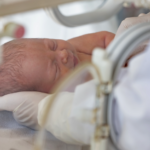
Pass on only the positive traits? How IVF can stop genetic diseases from reaching offspring

Credit: Eros Dervishi for STAT

In vitro fertilization (IVF), widely known as a way to help infertile couples have babies, has taken on another remarkable use: It has become part of a procedure to help families keep from passing on serious genetic diseases to their children.

Parents who know they carry genetic mutations for muscular dystrophy, cystic fibrosis, sickle cell anemia, breast cancer, Huntington’s disease, Alzheimer’s and other inherited diseases can undergo IVF, where the mother’s eggs are collected and combined with sperm in a dish, and another procedure called preimplantation genetic testing (PGT), in which embryos are screened for the particular mutation and only disease-free embryos can be implanted in the mother.

Follow the latest news and policy debates on sustainable agriculture, biomedicine, and other ‘disruptive’ innovations. Subscribe to our newsletter.

One of the earliest cases of using preimplantation screening for adult-onset heritable diseases occurred about 20 years ago when a woman in her 30s discovered she carried a genetic mutation for early-onset Alzheimer’s.

She and her husband turned to Rechitsky and the then-new combination of IVF and PGT to identify embryos that would not carry the mutation that causes Alzheimer’s.

The technique enabled the couple, who chose to remain anonymous, to create several embryos that testing showed were free of the genetic mutation, and they eventually had three children using those embryos.


This is an excerpt. Read the original post here. 

{{ reviewsTotal }}{{ options.labels.singularReviewCountLabel }}
{{ reviewsTotal }}{{ options.labels.pluralReviewCountLabel }}
{{ options.labels.newReviewButton }}
{{ userData.canReview.message }}

Related Articles

Infographic: Global regulatory and health research agencies on whether glyphosate causes cancer

Infographic: Global regulatory and health research agencies on whether glyphosate causes cancer

Does glyphosate—the world's most heavily-used herbicide—pose serious harm to humans? Is it carcinogenic? Those issues are of both legal and ...

Most Popular

ChatGPT Image May 10, 2026, 08_16_59 PM 2
Overmedicalization? RFK Jr.’s antidepressant crackdown raises conflict questions over his fee stake in Wisner Baum, the tort firm built on suing drug makers
Picture1-5
Science Disinformation Gap: The transatlantic battle over social media and censorship
Picture1-1
Cooling the planet with balloons: Could a geoengineering gamble slow global warming?
Screenshot-2026-05-11-104424
Hantavirus outbreak research: Trump administration shut down study last year on rodent-to-human transmission
Picture1-14
When superbugs threaten vulnerable children: Can AI help solve antibiotic resistance?
Screenshot 2026-05-11 at 11.30
Despite politicized disinformation, Midwest AI data centers are fueling a solar energy boom
ChatGPT-Image-Apr-13-2026-02_20_22-PM
Viewpoint: Misinformation infodemic? Why assessing evidence is so challenging 
S
As vaccine rejectionism spreads, measles may be taking a more dangerous turn
Screenshot-2026-05-08-at-11.55.47-AM
Anti-vax activists falsely blame COVID vaccines for the rising U.S. cancer rate among younger people.
Screenshot-2026-05-01-at-1.29.41-PM
Viewpoint: What happens when whole grains meet modern food manufacturing? Labels don’t tell the whole story.
Screenshot-2026-05-08-at-3.40.33-PM
Seeds of power: China turns to genetic engineering to become global superpower
Screenshot-2026-04-20-at-2.26.27-PM
Viewpoint — Food-fear world: The latest activist scientists campaign: Cancer-causing additives
glp menu logo outlined

Get news on human & agricultural genetics and biotechnology delivered to your inbox.