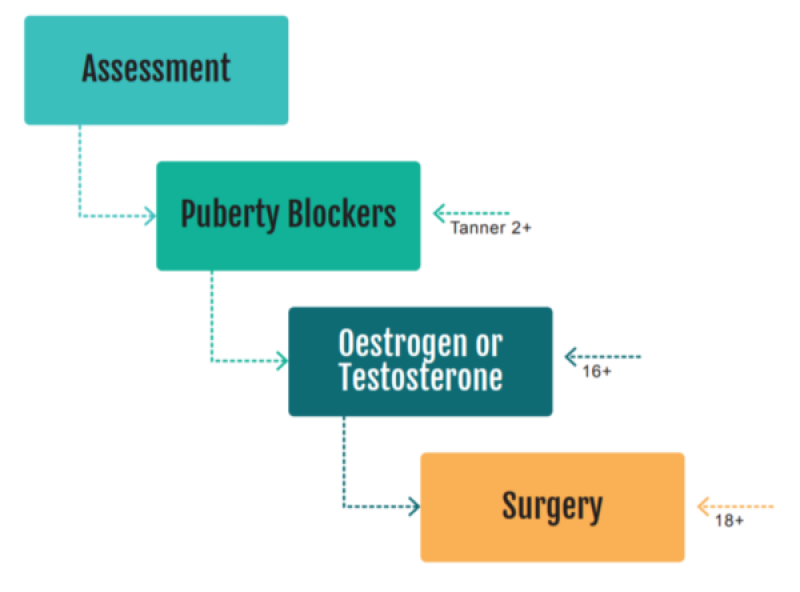
The BMA’s long awaited critique of the Cass review has largely vindicated the findings of the original landmark review into gender identity services for young people.
The BMA report,1 published today, concludes that the evidence base for puberty suppression and gender affirming hormones is limited and uncertain. But it also claims that some of the government actions taken after the Cass review—particularly the nationwide ban on puberty blockers ordered by the health secretary, Wes Streeting, in 2024—went beyond Hilary Cass’s explicit recommendations.
Nearly two years after BMA members controversially voted to conduct an independent evaluation of the Cass review,2 the report agrees that the evidence base for treatment is weak, that the risks of osteoporosis and fertility problems are present in the current evidence, and that there is a need for improved research, better data, and more robust multidisciplinary services.

But the BMA takes issue with Cass, the paediatrician who led the government review, on several occasions. In its own report the BMA says that Cass’s review simplified “complex findings” or emphasised “potential risks without equivalent contextualisation of potential benefits.”