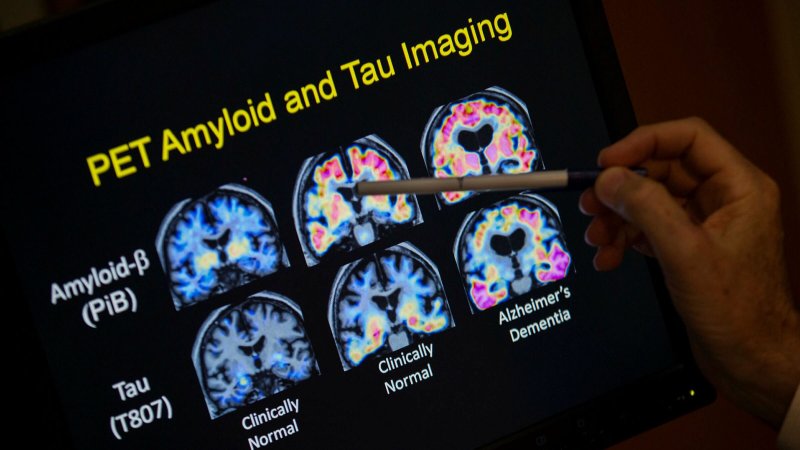
Are plaque deposits in the brain the true cause of Alzheimer’s disease?

Credit: Associated Press

Alzheimer’s disease was to be defined by the presence of plaques. Yet plaques are a feature that is not present in 15 percent of the people with a clinical diagnosis of Alzheimer’s, and a feature that is present in people of all ages including 30 percent of elderly people without any cognitive impairment. If this doesn’t make sense to you, it’s because it doesn’t make sense.

Mis- and disinformation are distorting science and public policy. Subscribe to our Daily and Weekly Digests for incisive coverage of ‘disruptive’ innovations in AI, agricultural biotechnology, food, chemicals, nuclear energy, vaccines, and other disruptive innovations.

In the basic research laboratories of the world, data kept accumulating that violated the expectations of an amyloid-only definition for Alzheimer’s disease biology.

In response the NIA began to recognize that there was a “broad consensus … that the criteria should be revised to incorporate state-of-the-art scientific knowledge.”

The result was a truly comprehensive review — a compendium of four papers comprising reports of three working groups plus an introductory summary.


Coming as it did, a full quarter century after the Consortium to Establish a Registry for Alzheimer’s Disease (CERAD) working group met, it would have been an ideal platform to announce the decision to cut the definition of Alzheimer’s disease loose from the presence of plaques.

Instead the experts in the field doubled down and bet the store on amyloid. In doing so, they made the entire situation much, much worse.


This is an excerpt. Read the original post here. 

Related Articles

Infographic: Global regulatory and health research agencies on whether glyphosate causes cancer

Infographic: Global regulatory and health research agencies on whether glyphosate causes cancer

Does glyphosate—the world's most heavily-used herbicide—pose serious harm to humans? Is it carcinogenic? Those issues are of both legal and ...

Most Popular

Neon Syringe Portrait with BPC-157
Viewpoint: Peptides and medical freedom: The MAHA obsession that can damage your health
ChatGPT-Image-Mar-10-2026-01_39_01-PM
Viewpoint—“Miracle molecule” debunked: Why acemannan supplements don’t work
Screenshot 2026-07-29 at 10.40
The COVID vaccine turbo cancer scare is back. Science still proves it’s wrong.
Screenshot 2026-10-27 at 10.32
“Do your own research”: What Medicare’s annual open enrollment circus teaches us about the seductive trap of DIY health and science
Screenshot 2026-10-28 at 10.11
We're likely over-consuming the world's most profitable nutrient – and it’s wrecking our waistlines.
Screenshot 2026-10-20 at 1.37
Race against food rot: How AI and gene editing could slash fruit and vegetable waste
Screenshot-2026-10-29-at-10.31.49-AM
Solar engineering to cool the planet might well work. Could it touch off a geoengineering arms race?
Diet Soda with Measuring Tape 2
Science challenges anti-soda activists: No, sodas won’t make you fat
glp menu logo outlined

Get news on human & agricultural genetics and biotechnology delivered to your inbox.