‘You act like a Neanderthal’? Consensus view changes — Homo Sapiens no smarter than our extinct cousins

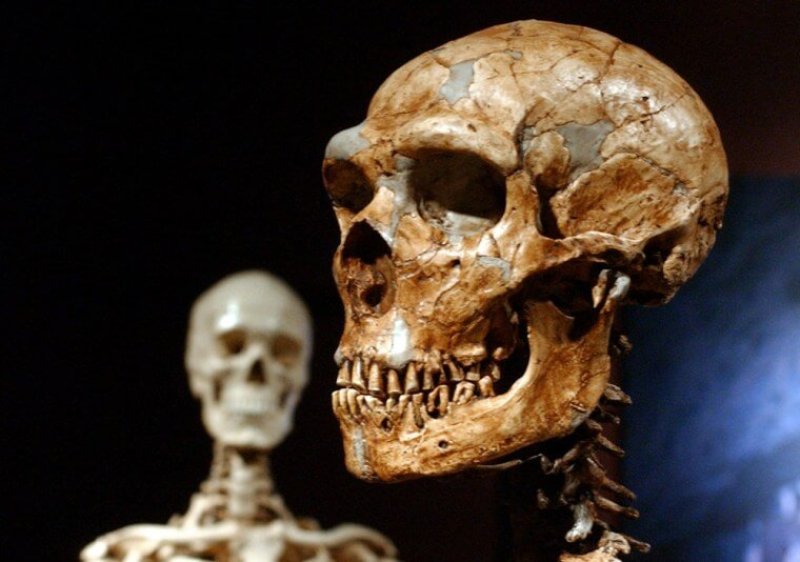
Credit: Frank Franklin II / AP file

We’ve long thought that humans must have survived because we were intelligent enough to outsmart our own extinction; meanwhile the Neanderthals’ demise must have been due, at least in part, to their intellectual inferiority…. In fact, the story of our survival is much more complicated.

Roger Seymour is a cardiovascular physiologist at the University of Adelaide in Australia who researches blood flow to the brain as an indication of species intelligence.

Follow the latest news and policy debates on sustainable agriculture, biomedicine, and other ‘disruptive’ innovations. Subscribe to our newsletter.

“The brains were similar in size and similar in blood supply from the internal carotid arteries to the cerebrum, the cognitive part of the brain… so effectively there is no evidence that the cognitive ability of the two species was any different,” Seymour says.
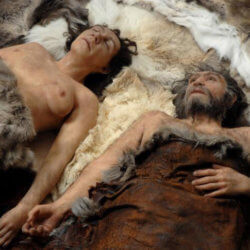
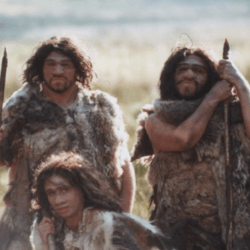
And it’s not just basic anatomy that disputes our claim of superior intelligence, says anthropologist Oren Kolodny…. All of the characteristics that have been used to demonstrate human superiority — for example, symbolic art, tool and weapon-making, the use of fire, and burial ceremonies — have also been exhibited in Neanderthals.

“If one species were brighter than the other you would expect it to be reflected in the material cultures of the two and this isn’t the case,” Kolodny says.


This is an excerpt. Read the original post here. 

{{ reviewsTotal }}{{ options.labels.singularReviewCountLabel }}
{{ reviewsTotal }}{{ options.labels.pluralReviewCountLabel }}
{{ options.labels.newReviewButton }}
{{ userData.canReview.message }}

Related Articles

Infographic: Global regulatory and health research agencies on whether glyphosate causes cancer

Infographic: Global regulatory and health research agencies on whether glyphosate causes cancer

Does glyphosate—the world's most heavily-used herbicide—pose serious harm to humans? Is it carcinogenic? Those issues are of both legal and ...

Most Popular

ChatGPT Image May 26, 2026, 08_42_17 AM (1)
Viewpoint: Greenpeace and poison: How environmental advocacy groups rely on compliant (and often ignorant) journalists to spread disinformation and spark litigation
Screenshot 2025-07-30 at 10.48
Can gene editing eliminate Down syndrome? Scientists have done it in lab-grown cells
Screenshot-2026-05-28-at-1.36.28-PM
Viewpoint: Can mRNA research survive the Trump administration?
Screenshot-2026-06-02-at-11.59.11-AM
Magnifica Humanitas: Pope’s encyclical broadside against AI naivete and overreach
Screenshot 2025-11-18 at 3.45
Viewpoint—GMOs and sustainability: Why buying organic foods is the least environmentally-sensitive food choice—without offering any health benefits
ChatGPT-Image-May-26-2026-07_51_21-AM-2
Viewpoint: There are more than 1,000 chemicals in a cup of coffee—including many substances that can cause cancer. Why isn’t it banned?
ChatGPT-Image-Jun-2-2026-11_39_58-AM
Viewpoint: Who is RFK, Jr.’s newly-appointed CDC senior counselor, Sara Brenner — Vaccine skeptic and self-proclaimed “MAHA mom”
Picture1
Sounds we can’t hear — the hidden planetary signals behind science, fear, and misinformation
ChatGPT Image May 28, 2026, 08_16_38 PM
Viewpoint: Why the EPA mismeasures cancer risk of chemicals and what should be done to fix it
Screenshot-2026-04-14-at-11.11.06-AM
‘Turbo cancer’ or mRNA cancer cure? Strategies to counter misinformation
glp menu logo outlined

Get news on human & agricultural genetics and biotechnology delivered to your inbox.