
America’s food-safety system hasn’t kept pace with an increasingly industrial, globe-spanning food supply, and recent staffing and budget cuts are widening the gap, argues Eric Schlosser, author of Fast Food Nation, in The Atlantic.
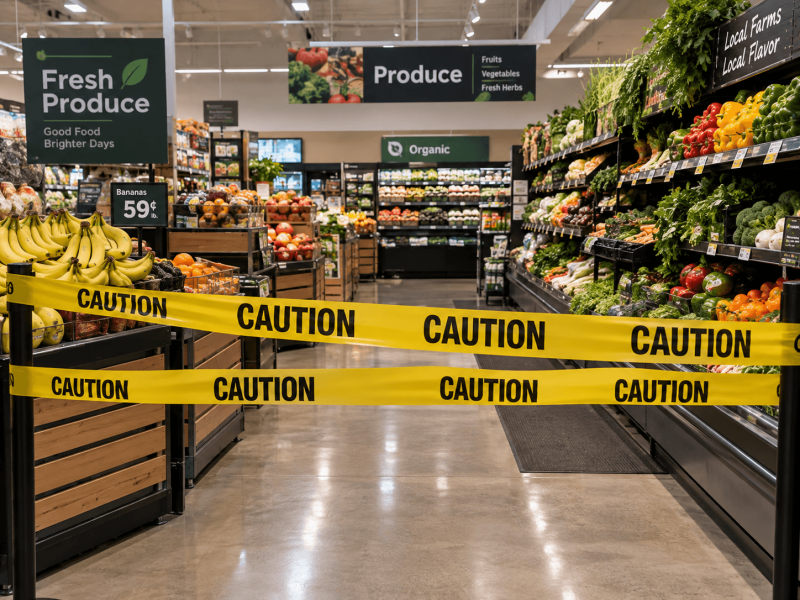
The cyclosporiasis outbreak linked to contaminated iceberg lettuce has hit at least 48 states, with roughly 17,000 lab-confirmed cases. But cyclospora is relatively mild, Schlosser notes, compared with Salmonella, which sickens more than 1 million Americans a year, or botulism.
Botulism is the more alarming story. At least 48 infants across 17 states were hospitalized after consuming ByHeart powdered formula, and at least four more fell ill from Nara Organics formula. Both likely shared a culprit: milk powder from one Nevada plant, made with raw milk from 55 California dairies and shipped as far as Germany and Denmark before reaching U.S. shelves. “Nobody has ever fed babies this kind of stuff before,” Schlosser writes.
Oversight is fragmented. A frozen cheese pizza falls under the FDA, while a meat-heavy one belongs to the USDA, and the U.S. is the only developed country that splits food safety among separate agencies. Meanwhile, the USDA lost about a fifth of its workforce in 2025, and the number of pathogens tracked by the CDC’s FoodNet surveillance program has been cut by 75 percent.


Fixes exist. A 2013 “test and hold” rule for E. coli in ground beef, championed by George Washington University professor Barbara Kowalcyk after her son died, has made beef-linked outbreaks rare. Denmark cut Salmonella in broiler chickens from 14 to 0.3 percent. Yet after a 2022 Consumer Reports investigation found Salmonella in nearly a third of U.S. ground chicken, the USDA withdrew a proposed poultry rule, citing “significant financial and operational burdens on American businesses and consumers.”
In 1906, a food executive told Congress, “We are paying all we care to pay.” That remains the industry’s response today, Schlosser argues. “It’s the rest of us who bear the cost.”