


Genetically modified crops won’t single-handedly rescue harvests from worsening droughts, but Europe’s rulebook is making sure they barely get the chance to try. That’s the case made by Xabier Simón, a senior researcher at the University of Essex with a doctorate in environmental agrobiology, in an interview with Europa Press published by Demócrata.
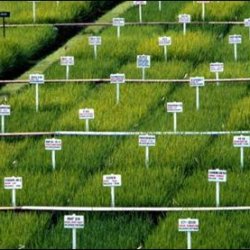
Simón calls GM crops “one more piece of the puzzle, not the definitive solution” against intense droughts. Still, the field results he cites are worth a look. Wheat carrying a sunflower gene “produced on average 6% more, and 16% more under drought conditions” in Argentine field trials, while corn with a bacterial gene gained 4-8% in yield under severe drought in Africa. He’s careful to call these “moderate” advances and “not miracles.”
The bigger hurdle is regulatory. Bringing a new transgenic trait to market takes about 16 and a half years and roughly €100 million on average. In the EU, “with one of the strictest regulations in the world,” that journey takes “four more years” and “between 11 and 17 million euros more” than in the US, Canada, Australia or Brazil. Even a trait that clears every technical review can still be voted down.
The result, Simón says, is that private companies “often do not even attempt it in the EU, and that the public sector lacks funding to complete the process.” He points to a wheat with 85% less gluten developed by Spain’s CSIC in Córdoba, which will likely be licensed and grown abroad, “and then we will import the flour.”



Today, the only GM crop cultivated in the EU is MON810, a pest-resistant corn grown mainly in Spain. Some relief is coming: new EU rules on plants made with new genomic techniques take effect in July 2028, giving CRISPR edits “a much shorter path than before.”
On safety, Simón doesn’t hedge: “various scientific reports and meta-analyses have found that transgenic crops are as safe for health as conventional ones.”



























