


Science Literacy Project Daily Digest

Impossible Burger, Beyond Burger earn endorsement from anti-GMO Center for Biological Diversity
The Center for Biological Diversity supports Beyond and Impossible burgers and other food innovations urgently needed to accelerate the shift ...

ASMR: Being triggered by ‘ordinary sounds and sights’ may be more than pseudoscience
What do the sounds of whispering, crinkling paper, and tapping fingernails have in common? What about the sight of soft ...
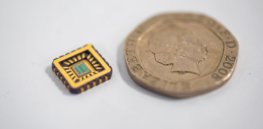
‘Paradigm-changing’: Artificial nerve cells could lead to treatments for Alzheimer’s, other brain disorders
Scientists have made artificial nerve cells, paving the way for new ways to repair the human body. The tiny "brain ...
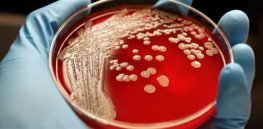
Viewpoint: Battling antibiotic resistance requires ‘detection, prevention, innovation’ to counter rising threats
The latest Antibiotic Resistance Threats Report, recently published by the Centers for Disease Control and Prevention, shows that antibiotic-resistant (AR) infections ...

New Zealand mulls loosening strict biotech crop rules as GMO ryegrass shows promise in field trial
While New Zealand has not yet approved the release of genetically modified crops, its agricultural research agency’s principle scientist has ...
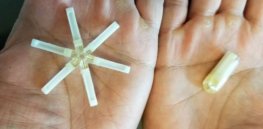
Once-a-month birth control pill could be possible with innovative design
Scientists say they have made a breakthrough on developing a contraceptive pill that only needs to be taken once a ...
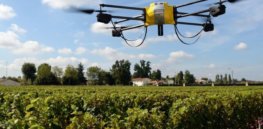
Farmers may soon use drones to battle herbicide-resistant weeds
Remote sensing provides an alternative to ground-based manual scouting for weeds in agriculture fields. And, while many advances have been ...

Your dog may be paying closer attention to your words than you realize
Dogs pay much closer attention to what humans say than we realised, even to words that are probably meaningless to ...

Why finding a blood test for Alzheimer’s could be the key to new treatments
Alzheimer’s patients who were at earlier stages of the disease did better than those with more advanced cognitive decline [in ...
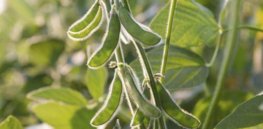
Opportunity to develop disease-resistant crops ‘has never been greater,’ plant pathologists say
Approaches to manipulating disease resistance in plants is expanding exponentially due to advances in our understanding of plant defense mechanisms ...
Does your DNA leave a unique identifying code? Not always, if you get a bone marrow transplant
Three months after his bone marrow transplant, Chris Long of Reno, Nev., learned that the DNA in his blood had ...

Why it’s so hard to call someone a sex addict: ‘Who’s to say what’s normal or abnormal’
Today we have a tiny number of true sexual compulsives who do things like getting repeatedly arrested for public masturbation. We ...
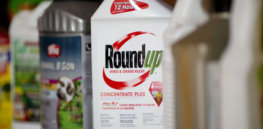
Austria’s January 2020 glyphosate ban halted on technical grounds
An Austrian ban on the weedkiller glyphosate, a substance that has long been disputed in Europe and beyond, can’t take ...

Viewpoint: Conventional, organic farmers risk alienating consumers by ‘trashing’ each other’s products
I once rescued a car from a mechanic who was pushing much unnecessary “repair” work. The ethical mechanic I took ...

Viewpoint: Synthetic biology, and the quest to engineer life, will define a generation
More than ever, the systemic and slowly unfolding problems in our world today will define my generation. From petroleum-based production ...
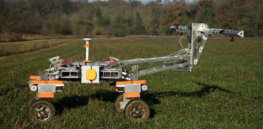
Meet ‘Tom’: The weed-spotting robot that could slash blanket herbicide spraying
A National Trust estate farm has brought in a robot called Tom to map its weeds. The robot’s mapping capability ...
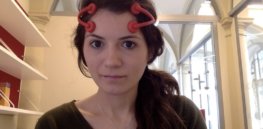
Brain zapping may be a new type of snake oil. But it might also work—in some instances
According to the advertising hype, you too can enjoy incredible neural and psychological benefits in the comfort of your own ...
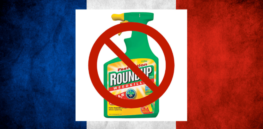
France bans 36 glyphosate weed killers, citing products’ potential to damage DNA
French health and environment agency ANSES said on [Dec. 9] it was banning glyphosate-based weedkillers that represent most of the ...

Does the pill cause depression? Why its too soon to be worried
“Does the pill cause depression?” the news headline asked. Prompted by a recent study that described a link between taking birth ...

Fungi ‘junk genes’ could yield new drugs, biopesticides, study shows
Bio-Protection Research Centre scientists and collaborators have made a discovery that potentially opens the door to new medicines and biological ...

Could ‘ultrasonic squeals’ from plants help farmers protect water-starved crops?
Although it has been revealed in recent years that plants are capable of seeing, hearing and smelling, they are still ...

Sequenced sugarcane genome aids development of high-yielding GMO crop varieties
An international group of researchers led by scientists from Brazil's Fundação de Amparo à Pesquisa do Estado de São Paulo ...

Computer simulation suggests we aren’t even close to designing better babies
It’s difficult to talk about genetic selection without the umbrella of morality or ethics. Yet like all scientific advancements, it ...

Microbe-coated seeds survive salty growing conditions in new study
Researchers at Florida International University have found coating seeds with a fungus and a bacterium could help valuable crops block ...

Was it ‘bad luck’—not ancient humans—that drove Neanderthals to extinction?
Neanderthals may have gone extinct due to chance, and not, as some researchers previously thought, due to competition for resources ...
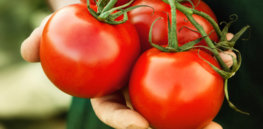
Manipulating plant microbiome could yield healthier crops, cut chemical use, study shows
A new study by University of California, Berkeley, microbial ecologists used experimental evolution to help identify the core microbiome of ...

Why DNA is the thumb drive of the future
DNA is designed to keep lots of data in a tiny space for an extremely long time. But the best ...
