


Science Literacy Project Daily Digest

Can we rejuvenate brain function by disabling this protein? It worked with older mice.
Scientists have shown that delivering blood from an old mouse into a young mouse or vice versa prompts a sort ...

Chasing the ‘perplexing’ link between appendectomies and Parkinson’s disease
New research has found a perplexing, though relatively small link between the devastating neurological illness Parkinson’s disease and having your ...

United Nations: Intensive agriculture driving bee declines, threatening global food security
Declining bee populations pose threat to global food security and nutrition FAO urges countries to step up efforts to protect ...

Glyphosate-tainted burgers? Impossible Foods rebuffs Moms Across America’s latest anti-GMO campaign
“Moms Across America” has escalated a year-long campaign against Impossible Foods to push its anti-vaccine, anti-GMO agenda to anyone gullible ...

Open-source gene expression platform could yield more efficient food, biofuel crops
An open-source RNA analysis platform has been successfully used on plant cells for the first time -- a breakthrough that ...

When meditation goes wrong: Some people find it distressing, survey shows
One of the most stereotypical relaxing things to do—meditation—may actually cause distress for some people, according to the findings of ...

Mining ‘extremely hostile environments’ for keys to new drugs, tech breakthroughs
Many scientists have been investigating the planet’s countless extreme environments, on the hunt for molecules that will inspire the next ...

AI’s surprising development of ‘number sense’ mimics that of human babies
Training software that emulates brain networks to identify dog breeds or sports equipment is by now old news. But getting ...

Consumers want to buy from ethical companies, but interest in non-GMO, organic labels dropping, survey shows
A survey conducted by Crestline Custom Promotional Products showed 68.3% of American consumers want to support companies that promote similar ...

Why having a risky genetic mutation isn’t necessarily doom and gloom
Most people think carrying a gene variant associated with a disease means automatically getting that disease, according to Sekar Kathiresan, ...
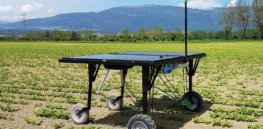
Market for agricultural robots expected to hit $87.9 billion by 2025
A new report by market analysts and consultants Tractica has said that global shipments of robots designed for agricultural use ...

Wall Street Journal: Costly glyphosate-cancer legal battle one of ‘worst crises’ in Bayer’s 155-year history
Stuck in one of the worst crises in its 155-year history, Bayer AG, the German company that invented aspirin and ...

Are men angrier than women? Or do they just show it more?
Science is beginning to provide new explanations about the ways that personality, age, gender and life experiences shape the way ...

With Burger King plant-based whopper available nationwide, meatless meat ‘here to stay’
Gone are the days when vegan meat was derided as tasteless — a sacrifice vegetarians made in service of a ...

Gut bacteria from thin people fails to help obese people lose weight in study
Changing your gut microbes may not help you lose belly fat. In a preliminary study, obese people got either capsules ...

‘Ultra-processed’ food may boost weight gain, first randomized controlled trial shows
People eating ultra-processed foods ate more calories and gained more weight than when they ate a minimally processed diet, according ...

Afraid of GMOs? Thousands of studies, strict regulations show there’s nothing to fear, farmer says
GMOs have been widely misunderstood. People are concerned about their health and the environment (and they should be worried about ...
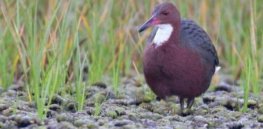
How did this bird evolve into existence again after disappearing 136,000 years ago?
The Aldabra white-throated rail, a flightless bird that lives on its namesake atoll in the Indian Ocean, doesn’t look like ...

Using AI to understand biological vision is another step toward engineering artificial brains
[Recently,] two studies independently tapped into the power of [artificial neural networks] to solve a 70-year-old neuroscience mystery: how does ...

Viewpoint: How ‘insect Armageddon’ stories erode public trust in science
When I was growing up in Tulsa, Oklahoma, long before we spent our evenings drawn to the soft glow of ...

Why biotech firms are jumping into the cannabis business
As biotechnology embraces the legal cannabis industry, not a few of its executives are grappling with a dilemma: what will ...

Chickens don’t want to be ‘free range,’ they prefer being indoors, Australian government veterinarians says
Do chickens really like being free-range? It seems like a dumb question. Who wouldn't like a big green paddock full ...

Autism war rages: Is it a medical condition or ‘neurodiversity’?
[There is] a deep divide in the autism community: On one side are parents of autistic children with severe traits ...
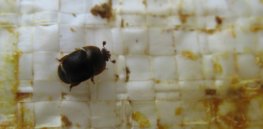
Decoded small hive beetle genome could help control invasive honeybee parasite
Scientists at the U.S. Department of Agriculture’s Agricultural Research Service have deciphered the genome of a serious threat to honeybees ...

What might be Bayer’s defense if one of the glyphosate cancer verdicts end up at the Supreme Court?
Bayer AG plans to argue that a $2 billion jury award and thousands of U.S. lawsuits claiming its glyphosate-based weed ...

USDA launches genomics ‘blueprint’ initiative to enhance sustainable farming as global food demand booms
A new U.S. Department of Agriculture (USDA) blueprint, published [May 16] in Frontiers and Genetics, will serve as a guide for ...

Replacing the polygraph: Brain imaging could give us a reliable lie detector
It’s fairly common knowledge at this point that the polygraph test for detecting who is lying is not reliable enough ...
