


Science Literacy Project Daily Digest

Video: Biohacker documents his own DIY gene therapy
DIY gene therapy is far from the mainstream, but the numbers of people who are attempting to genetically engineer their ...

Proposed California ballot initiative ignores scientific consensus on GMOs, vaccine safety
A proposed ballot initiative takes Golden State wackiness to the next level. ... This fall, Californians may have the opportunity ...

Fossil-like traces found on Mars—How can we know if this is biological life?
In early January, NASA's Curiosity Mars rover came across what some researchers thought might be trace fossils on Mars. ... A strictly ...

Viewpoint: Rethinking scientist Richard Dawkins’ classic book ‘The Selfish Gene’
Richard Dawkins’ 1976 book The Selfish Gene, which topped a poll last year for the most inspiring science books of all ...

Molecular biologist Nina Fedoroff: Despite opposition, GMOs adopted faster than any crops in human history
Despite the controversy surrounding it, genetically modified organisms (GMOs) used for food can play a big role in meeting the ...

Sri Lanka’s tea industry calls on government to lift ‘arbitrary’ ban on glyphosate herbicide
In a strongly-worded statement, Sri Lanka’s tea industry stakeholders, including state-run Sri Lanka Tea Board (SLTB) Chairman Rohan Pethiyagoda, called ...

Stop flu symptoms in one day? Experimental pill could be available in the US by 2019
A new medicine can rid flu suffers of their symptoms in as little as a day, but the drug will ...

Should doctors heed ‘do not resuscitate’ tattoos?
Doctors at a Florida hospital’s emergency department were startled in May [2017] to discover the words “DO NOT RESUSCITATE” tattooed on an ...
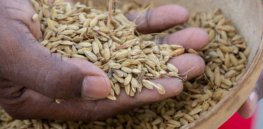
Lost rice variety cultivated by US slaves rediscovered in Trinidad—and coming to your plates
Among the biologists, geneticists and historians who use food as a lens to study the African diaspora, rice is a ...

Who owns the most CRISPR patents worldwide? Surprisingly, it’s agrochemical giant DowDuPont
A new study of the global CRISPR patent landscape ... provides the most detailed insight yet into how entities are ...

Pinpointing time of death for crime victims may be possible through our genes
Thanks to an extensive new survey of gene activity in human tissue after death, computational biologists have taken the first ...

Digging in the dirt may yield new class of antibiotics
It might come as a surprise to learn that dirt, that canonical cause of infection, is also a megafactory for ...

Herbicide resistance management strategies may not be enough to slow weeds’ evolution, UK study suggests
Editor's note: In the study, the authors note that this research contrasts current industry advice and scientific literature on herbicide resistance management ...

Australian farmers protest state GMO ban, demand right to grow ‘revolutionary’ omega-3 canola
South Australian grain growers are loudly lamenting the cost of their state’s ban on genetically modified (GM) crops which threatens ...
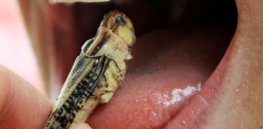
Bugs as food? They may have played a role in our evolution
Editor's note: Darcy Shapiro is an evolutionary anthropologist at Rutgers University Did you know that what your ancestors ate affects your ...

Gene editing could help brassica crops adapt to climate change
A harmful effect of climate change that poses a major threat to food crops around the world could be overcome ...

Disease-resistant GMO cassava developed by Kenyan scientists moves closer to approval
Cassava farmers are about five years away from accessing disease-resistant genetically modified varieties, currently being tested in specific locations around ...

California may soon label coffee as a cancer risk—more than 100 studies suggest the opposite
In what's got to be the dumbest idea yet from the nanny state of California (sorry, guys, but it's true), coffee sold ...

Viewpoint: GMO supporters should stop touting dubious health benefits of pink pineapples, Innate potatoes
Editor's note: Layla Katiraee is currently a senior scientist at a California biotech company and holds a PhD in molecular genetics from ...

Epigenetics and doping: Steroids may have long-lasting performance enhancing effects
Editor's note: E. Paul Zehr is a professor of neuroscience and kinesiology at the University of Victoria in Canada [Olympic ...

Genetic engineering will ensure that human evolution will continue–for better or worse
Editor's note: Scott Solomon is an associate teaching professor in the department of BioSciences at Rice University [Feb. 12 was] Charles Darwin's ...

Evolution of walking: Primitive fish shows key nerves appeared 20 million years before land animals
The genes and nerve cells that allow people and other mammals to walk around can also be found in a ...

GMO yeast could replace hops in beer to save water
If you are a beer drinker, it might surprise you to learn how much water goes into one pint of ...

Is there a link between autism spike and ultrasound tests?
[A]s ultrasound use has sharply increased, so too have diagnoses of autism—prompting questions about a potential relationship. A rigorous new ...

Gates Foundation, other development donors turn to GMO crops for humanitarian projects
Despite ongoing opposition from some activists to genetically modified organisms, a number of development donors are investigating and funding research ...

Can we boost memory through brain stimulation?
In a study appearing [February 6] in Nature Communications, [...] a team of researchers succeeded at enhancing memory more reliably, by stimulating ...

Harnessing bacteria like E. coli to dispense medicines shows promise, but hurdles remain
We’ve already seen the first cellular medicines, human immune cells genetically reprogrammed to attack cancer cells. Now the first bacterial medicines ...
