


Science Literacy Project Daily Digest
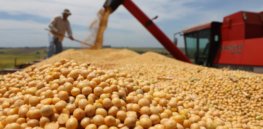
Argentine farmers reverse course, agree to pay royalties for GMO seeds
Argentine farmers have agreed to pay perpetual royalties when they replant genetically modified seeds made by companies like Monsanto Co, ...

‘Universal genetic scissors’: CRISPR Cas-9 sister protein cuts both DNA and RNA
Researchers have discovered a single protein that can perform CRISPR-style, precise programmable cutting on both DNA and RNA. This protein ...
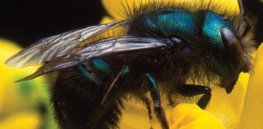
Backup pollinators: California almond, fruit producers hope blue orchard bees can reinforce honeybees
The need for a backup bee has become critical, particularly in almond orchards. Almonds are California’s second-largest crop, injecting an ...

Viewpoint: Alternative medicine strikes again—and why cancer treatment should be left to professionals
Every doctor who treats cancer patients can tell you stories of patients who present with cancers too advanced to treat ...

Future of food: Huge algae farms could feed humans, animals more sustainably
Scientists hoping to meet the Paris climate accord goal of limiting global temperature rise to less than two degrees Celsius ...

Promiscuous bacterial ‘sex’ plays role in antibiotic resistance
Bacteria and fungi created natural antibiotics eons before drug companies turned them into medicines. To counter these natural microbe killers, ...

How might humans react to alien life? ‘We will take it rather well’
[R]esearchers say the discovery of alien life is more likely to be welcomed with open arms than panic. … To ...
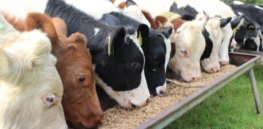
New Breeding Techniques (NBTs) needed to improve protein crops, says European farmers group
There is a need to maintain the EU’s main source of protein feed that are the co-product of biofuels, the ...
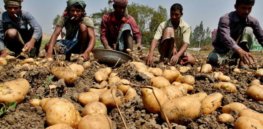
Bangladesh embraces GMO crops to boost yields, reduce pesticide use
Bangladesh is the world’s seventh-largest producer of potatoes. Most of the crop is grown by small-holder farmers. Akhter Hossain, a ...

The CRISPR Journal: New peer-reviewed publication dedicated to cutting edge research
Several features of CRISPR are behind the rise in the excitement that surrounds it. It is an incredibly easy to do, ...

Farmers, ag companies launch court challenge of California’s Prop 65 listing of glyphosate
On [Feb. 20], a national agricultural coalition presented arguments for a preliminary injunction before the U.S. District Court for the Eastern ...

Blood test predicts autism with 90% accuracy
New research, published Sunday [Feb. 18] in the journal Molecular Autism, might provide one of the first steps needed toward developing an accurate ...
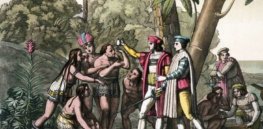
What happened to the native Caribbeans? Ancient DNA could solve mystery
The Bahamas weren’t settled until 1,500 years ago. The people who settled there are known as the Lucayan Taino, and ...

Non-GMO herbicide-tolerant canola to be grown in Canada this year
Supporting modern agriculture while also selling into the market for non-genetically modified food seems like a contradiction. But an American ...

‘Fully customizable’ genome: Replacing yeast’s 12.5 million base pairs piece by piece
Homo sapiens has had a tight relationship with Saccharomyces cerevisiae, the unicellular fungus better known as brewer’s yeast. … That doesn’t mean S ...

Genetically engineered poplar trees, switchgrass could lead to more efficient biofuels
A research team led by the University of Georgia has discovered that manipulation of the same gene in poplar trees ...

Growing human organs in sheep could help solve transplant shortage
Growing human organs inside other animals has taken another step away from science-fiction, with researchers announcing they have grown sheep ...
Viewpoint: Total ban on ‘bee-harming’ neonicotinoid insecticides is not the best path forward
Calls to ban ‘bee-harming pesticides’ heightened last year following the release of new field studies on the effects of neonicotinoids, ...
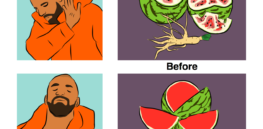
Artist illustrates how humans ‘genetically modified’ food since the dawn of agriculture
Although genetically modified foods appeared recently, human beings have been altering unintentional plant genomes for millennia. Agriculture appeared around 10,000 ...

Keep hitting the gym: Exercise can help stave off brain deterioration
In recent years, there has been a groundswell of science-based evidence linking the triad of (1) brain health, (2) cognitive function, and (3) ...

Viewpoint: Anti-science activists beware—Uganda’s president knows GMO crops are good for farmers
We came to learn about a month ago that [Ugandan] President [Yoweri] Museveni had referred the Biotechnology and Bio-safety Bill ...

Viewpoint: CRISPR is for more than just human gene editing
If you’ve ever heard of CRISPR, it has most likely been in the context of human gene editing. … CRISPR ...
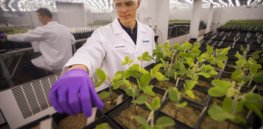
Biotech startup Indigo Ag aims to upend agriculture with microbiology
[David Perry, CEO of Indigo Ag, an agricultural-technology startup headquartered in Boston] sees an opportunity for Indigo Ag to lead ...

Why don’t more women pursue STEM fields? There’s no easy answer
Many academics in the modern world seem obsessed with the sex difference in engagement with science, technology, mathematics, and engineering ...

First land plants may have appeared 100 million years earlier than previously thought
A seminal event in the Earth's history - when plants appeared on land - may have happened 100 million years ...

CRISPR ‘black box’ tells us what’s happening inside human cells
To get a peek inside the cell, scientists at the Broad Institute of MIT and Harvard have developed a sort ...

CRISPR revolution could level the playing field for crop biotech companies
For agriculture, [CRISPR] technology is a new way to instill crops and livestock with desirable traits — or to remove ...
