How might humans react to alien life? ‘We will take it rather well’

Alien galaxy
[R]esearchers say the discovery of alien life is more likely to be welcomed with open arms than panic.

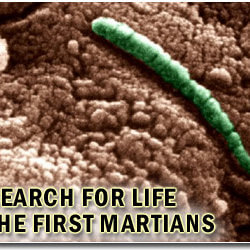
To examine public reaction to aliens, [professor Michael] Varnum and his colleagues analysed the language of 15 media articles written at the time of three discoveries which were initially suggested to be evidence of extraterrestrial life, including Nasa’s 1996 announcement of possible microbial life on a Martian meteorite.

They also analysed the responses of 500 participants recruited online to a hypothetical announcement that extraterrestrial microbial life had been discovered, both in terms of their own views and their thoughts on how humanity would react.

The results, recently published research in the journal Frontiers of Psychology, reveal that across the board positive language was more common than negative language, while extraterrestrial life was generally viewed as bringing more potential rewards than risks.

Moreover, participants’ language was more strongly titled towards the positive when it came to microbes on Mars than producing synthetic life in the lab – a finding Varum says shows that there is something special about the prospect of finding alien life.

Nonetheless, the authors say the research offers insights into how humans will react to the discovery of alien life. “If our findings provide a reasonable guide, then the answer appears to be that we will take it rather well,” they write.

Read full, original post: Earthlings likely to welcome alien life rather than panicking, study shows

{{ reviewsTotal }}{{ options.labels.singularReviewCountLabel }}
{{ reviewsTotal }}{{ options.labels.pluralReviewCountLabel }}
{{ options.labels.newReviewButton }}
{{ userData.canReview.message }}

Related Articles

Infographic: Global regulatory and health research agencies on whether glyphosate causes cancer

Infographic: Global regulatory and health research agencies on whether glyphosate causes cancer

Does glyphosate—the world's most heavily-used herbicide—pose serious harm to humans? Is it carcinogenic? Those issues are of both legal and ...

Most Popular

ChatGPT-Image-Mar-10-2026-01_39_01-PM
Viewpoint—“Miracle molecule” debunked: Why acemannan supplements don’t work
DtAieAIkCZy-uchn-oqg
Viewpoint: In the science misinformed grifter game plan, the organic-food-is-healthier myth might be the worst.
ChatGPT-Image-Jun-15-2026-01_04_14-PM
Viewpoint: How politicized science became a political religion 
Screenshot-2026-07-06-at-11.30.08-AM
AI is making even its founders uneasy: ‘We find evidence of introspection, joy, satisfaction, fear, grief and unease.’
eu-farming-policy
EU bureaucrats are finally catching up to the gene editing revolution in food and agriculture
chjpdmf zs sci pbwfnzxmvd vic l zs ymdiylta l zsmtu nty otkwmtetaw hz uta a dzjyy euanbn
Technical milestone or designer baby obsession: Latest gene-editing advance reignites a familiar ethical debate
Food+as+Medicine
Viewpoint: Treat food as medicine
Picture1
The Lackland flu outbreak is fading but Hegseth’s military anti-vaccine fiasco is not
ChatGPT-Image-Jun-25-2026-12_23_17-PM
No, Bill Gates did not secretly engineer ticks to promote veganism
Screenshot-2026-07-02-at-10.03.56-AM
‘Trust, access, and equity’: After billions of doses worldwide, yet another review of COVID vaccine confirms its safety and effectiveness
Screenshot-2026-07-02-at-11.22.28-AM
Is Ebola a hoax created by fake humanitarians to steal African land and resources? Disinformation sweeps through the Congo. 
Screenshot-2026-06-15-at-1.50.43-PM
Viewpoint—Gutting the CDC: Survey of current and past CDC workforce accuses RFK, Jr. and Trump of destroying the agency and endangering public health
full
Misnamed ‘medical freedom’ movement stalls in Florida as Republicans fail to advance legislation ending school vaccine mandates
glp menu logo outlined

Get news on human & agricultural genetics and biotechnology delivered to your inbox.