Technical milestone or designer baby obsession: Latest gene-editing advance reignites a familiar ethical debate

chjpdmf zs sci pbwfnzxmvd vic l zs ymdiylta l zsmtu nty otkwmtetaw hz uta a dzjyy euanbn
Credit: Rawpixel (Public Domain)

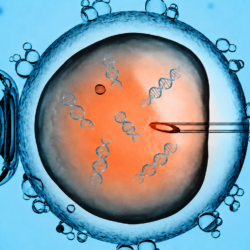
Scientists at Columbia University have used a precise gene-editing tool, base editing, to make changes in three disease-linked genes in early-stage human embryos. The goal wasn’t to create pregnancies, but to test the safety and limits of rewriting DNA at the very early stages of life.

The paper, not yet peer reviewed, sparked immediate controversy. Some researchers hailed it as a technical milestone that could one day prevent devastating inherited diseases before birth. Others warned it edges society closer to the prospect of “designer babies”—an idea bioethicists have argued is akin to modern eugenics.

Follow the latest news and policy debates on sustainable agriculture, biomedicine, and other ‘disruptive’ innovations. Subscribe to our newsletter.

The debate is hardly hypothetical. The work has already attracted commercial interest. New York-based Nucleus Genomics, which screens in vitro fertilization (IVF) embryos for serious genetic disorders, has also developed predictive models for complex traits such as intelligence. The company plans to sponsor future research by study leader Dieter Egli and team.
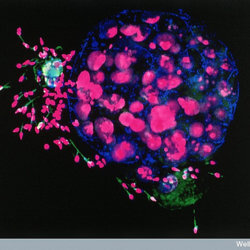
Critics worry that even experimental advances could fuel demand from wealthy patients while encouraging companies to develop and market embryo-editing technologies, despite unresolved ethical and safety concerns.


This is an excerpt. Read the original post here

{{ reviewsTotal }}{{ options.labels.singularReviewCountLabel }}
{{ reviewsTotal }}{{ options.labels.pluralReviewCountLabel }}
{{ options.labels.noReviewsLabel }}
{{ options.labels.newReviewButton }}
{{ userData.canReview.message }}

Related Articles

Infographic: Global regulatory and health research agencies on whether glyphosate causes cancer

Infographic: Global regulatory and health research agencies on whether glyphosate causes cancer

Does glyphosate—the world's most heavily-used herbicide—pose serious harm to humans? Is it carcinogenic? Those issues are of both legal and ...

Most Popular

ChatGPT-Image-Jul-26-2026-05_58_17-PM
Louisiana and Texas bring RFK,Jr.- MAHA-backed restrictions on dyes and other ‘controversial’ ingredients to eight states
ChatGPT-Image-Jul-26-2026-05_35_53-PM
FDA takes up peptide therapies as hype outpaces science
ChatGPT-Image-Mar-10-2026-01_39_01-PM
Viewpoint—“Miracle molecule” debunked: Why acemannan supplements don’t work
organic scaled
Facts & Fallacies podcast: Organic food cuts pesticide exposure? A response to Dr. Rhonda Patrick
ChatGPT-Image-Jul-9-2026-11_33_49-AM
Viewpoint: High-dose resveratrol supplements to extend health and life? Don’t waste your money.
ChatGPT-Image-Jul-22-2026-09_13_07-AM
Viewpoint—The Strategic Litigation boom: Understanding the tightening coalition among NGOs, foundations, journalists, and tort lawyers
ChatGPT-Image-Jul-10-2026-09_42_12-AM-1
Peptides, patient autonomy, and the limits of medical freedom
Screenshot-2026-07-23-at-11.58.47-AM
Viewpoint: ‘Thought police in the UK?’ Conservatives lash out at government report calling anti-LGBQT+ narratives ‘false and misleading’
IVF Rex
Poll: Younger people more open to using genetics to increase fertility and reduce chances of inherited diseases 
How to Include More Strawberries in Your Diet
Strawberries are berries—and 35 other surprising food and drink myths
Screenshot-2026-07-07-at-12.55.44-PM
Viewpoint: Yes, we can adapt to a changing climate without devastating the environment and the economy
ChatGPT-Image-Jun-25-2026-12_23_17-PM
No, Bill Gates did not secretly engineer ticks to promote veganism
ChatGPT-Image-May-22-2026-10_26_09-AM
Trump-RFK, Jr. National Science Board firings: Accountability vs. partisan meddling
glp menu logo outlined

Get news on human & agricultural genetics and biotechnology delivered to your inbox.