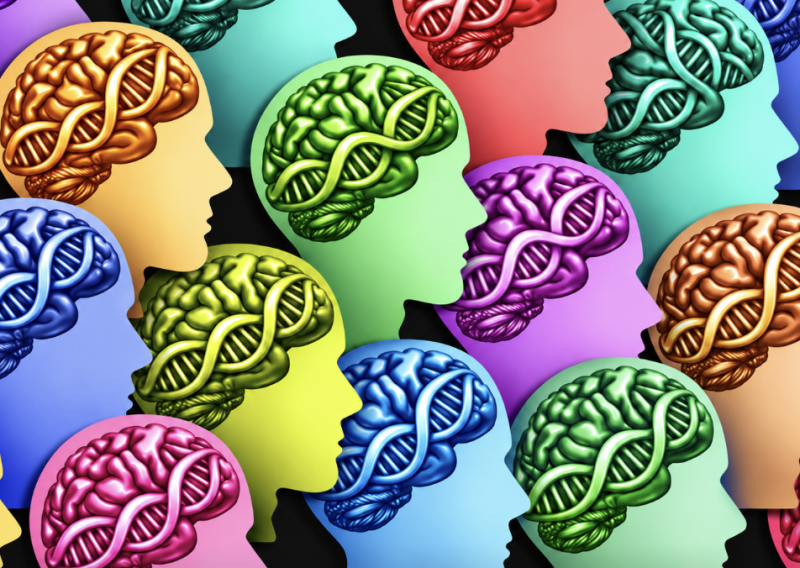

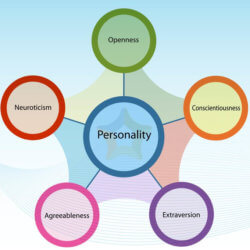
Personality isn’t written in a handful of genes — it’s scribbled across more than a thousand of them. A massive new genomic analysis has identified 1,260 genetic markers tied to the “Big Five” personality traits — extroversion, agreeableness, conscientiousness, neuroticism and openness to experience — nearly two-thirds of them never spotted before, as The New York Times’ Emily Baumgaertner Nunn reports.
A research consortium analyzed more than one million genomes from 46 cohorts, plus thousands of sibling and parent-child pairs to weed out confounding factors. The study, published in Nature, confirms that temperament emerges from thousands of tiny variants rather than a few influential genes.
“I view the 1,260 variants as kind of a testament to the fact that we’ve now got the power to answer all of these other questions that we couldn’t answer before,” said Elliot Tucker-Drob, a professor of psychology at the University of Texas at Austin and a leader of the study.
Common variants still explain only about 5 to 10 percent of personality differences. But unlike educational attainment, where apparent genetic effects often mask parental privilege, family comparisons showed about 96 percent of personality’s genetic influence comes directly from DNA.
The genetic signals ripple outward into health and habits. A high genetic score for extroversion was linked to lower risk of anxiety, depression and PTSD, but also to ADHD. Conscientiousness predicted exercise, low-calorie food choices and better sleep. Neuroticism correlated with 10 psychiatric disorders, higher body mass index and smoking.



Neuroticism variants were especially active in brain cells but showed nothing pronounced in the serotonin system, challenging a long-held theory. “I wouldn’t say it’s slaying that theory forever,” said Dalton Conley, a Princeton University sociologist who wasn’t involved in the research, “but it’s definitely casting doubt.”
Romance offered another surprise. Unlike traits such as educational attainment, partners’ personality variants matched mostly at random, though spouses’ actual openness to experience sometimes converged, perhaps through shared daily life.