Viewpoint: Most online personality tests are scientific quackery––except maybe this one

big five personality model

While most of the personality tests shared around the internet are, indeed, bogus procrastination devices, there is a science to personality, and it’s something that researchers really can put into a quantified, testable format, said Simine Vazire, a psychology professor at the University of California, Davis.

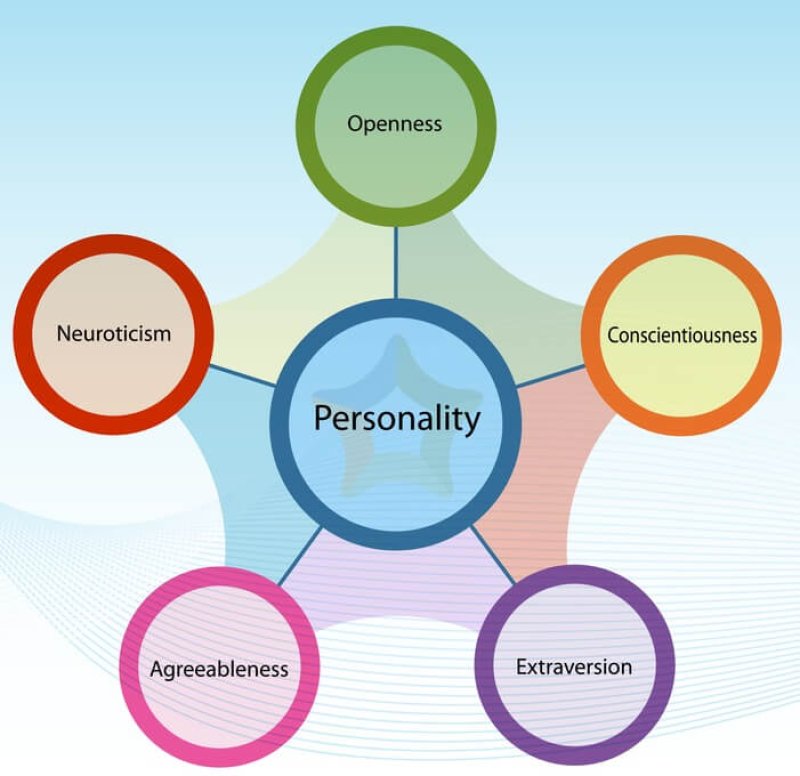
The most popular — used by the vast majority of scientists who study personality — is called the Big Five, a system that organizes personality around five broad clusters of traits: extroversion, agreeableness, conscientiousness, neuroticism and openness to experience.

…

The idea behind the Big Five is that everyone’s personality has a little of all five trait groups. What the test does, essentially, is tell you where you fall on the spectrum of each of the clusters.

…
The Big Five, [Vazire] told me, has produced results that can be shown to remain largely consistent across a person’s lifespan and that can be used to predict at least some part of a person’s likely academic achievement, dating choices and even future parenting behavior. It has also been validated cross-culturally to some extent.

…

Their science resolution, she said, isn’t so much to get people to stop taking personality quizzes, but to get those people who love quizzes to transfer some of that enjoyment to the Big Five.

Read full, original post: Most Personality Quizzes Are Junk Science. I Found One That Isn’t.

Related Articles

Infographic: Global regulatory and health research agencies on whether glyphosate causes cancer

Infographic: Global regulatory and health research agencies on whether glyphosate causes cancer

Does glyphosate—the world's most heavily-used herbicide—pose serious harm to humans? Is it carcinogenic? Those issues are of both legal and ...

Most Popular

ChatGPT-Image-Mar-10-2026-01_39_01-PM
Viewpoint—“Miracle molecule” debunked: Why acemannan supplements don’t work
Screenshot-2026-09-28-at-11.26.17-AM
Viewpoint: Wellness movement activists reposition nicotine from a killer addictive drug into a cure-all for brain ills
strand of dna genetics
No, GMO foods do not “damage genes, natural disposition and hormones, or decrease physical health and intelligence”
Screenshot-2026-10-02-at-9.11.36-AM
The genetics of personality
Radioactive-Americana-Collage-2
The kooky logic behind the raft of spurious cancer claims from Harvard’s T.H. Chan School of Public Health
Screenshot-2026-10-01-at-10.52.08-AM
Non-browning CRISPR gene-edited bananas move one step closer to British markets
Screenshot-2026-10-02-at-8.56.38-AM
Trump finalizes Medicare drug price cuts, drawing Big Pharma’s fury and a legal challenge
Screenshot-2026-10-02-at-11.12.24-AM
‘Why do we keep falling for this stuff?’ America’s love affair with snake oil salesmen and scams
Screenshot-2026-09-22-at-10.54.12-AM
‘They misunderstand science’: Research attempting to tie autism to changes in the gut microbiome comes under fire
AI-Force-Leadership-Portrait
Jay Clayton controversy: The divisive history of Trump’s newly-appointed AI czar
ChatGPT-Image-Sep-21-2026-11_21_39-AM
Viewpoint: Food cults: Online ‘nutrition communities’ can pose unique dangers
glp menu logo outlined

Get news on human & agricultural genetics and biotechnology delivered to your inbox.