Backup pollinators: California almond, fruit producers hope blue orchard bees can reinforce honeybees

photo

The need for a backup bee has become critical, particularly in almond orchards. Almonds are California’s second-largest crop, injecting an estimated $21 billion annually into the state’s economy. In 2016 California’s almond growers needed nearly 1.9 million honeybee colonies—almost three-quarters of all the commercial colonies in the country—to pollinate their 940,000 acres.

Annual colony losses in the U.S. for the past 11 years have ranged between 29 and 45 percent. Add in the ever-expanding almond acreage—from 570,000 acres in 2004 to more than a million today—and the entire system is stretched.

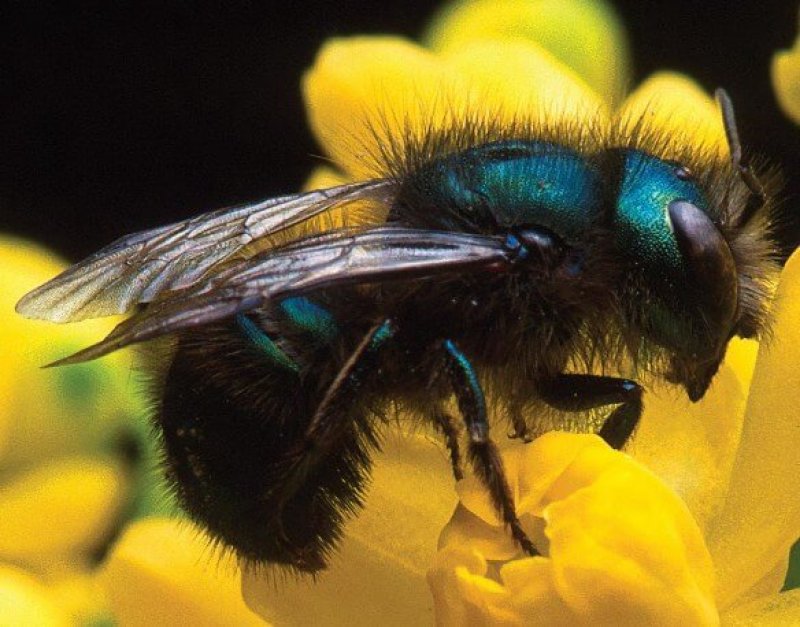
[The Wonderful Company, the largest almond grower in the world] chose to develop Osmia lignaria, a native mason bee known as the blue orchard bee, or BOB.

In 2017 Wonderful needed about 76,000 honeybee colonies to pollinate its almonds (at two colonies per acre). But that number will diminish by 320 this spring because [Gordon Wardell, director of bee biology for the Wonderful Company] will put 128,000 female BOBs into the orchards—the largest deployment ever. If Wardell’s experiment succeeds, the results could have far-reaching implications for the almond industry as well as a host of other early-blooming crops—from apples and cherries to apricots and peaches. All told, more than a million and a half acres could benefit from having BOBs as a backup—if they prove worthy this year.

Read full, original post: Building a backup bee

{{ reviewsTotal }}{{ options.labels.singularReviewCountLabel }}
{{ reviewsTotal }}{{ options.labels.pluralReviewCountLabel }}
{{ options.labels.newReviewButton }}
{{ userData.canReview.message }}

Related Articles

Infographic: Global regulatory and health research agencies on whether glyphosate causes cancer

Infographic: Global regulatory and health research agencies on whether glyphosate causes cancer

Does glyphosate—the world's most heavily-used herbicide—pose serious harm to humans? Is it carcinogenic? Those issues are of both legal and ...

Most Popular

ChatGPT-Image-Jun-17-2026-10_52_43-AM
Anguished parents, doctors in tears: Utah’s long measles outbreak takes a toll
Screenshot-2026-06-22-at-9.04.46-PM
Kennedy’s nutrition prescription for medical schools: Real problem, bad cure
Screenshot-2026-06-24-at-2.57.41-PM
Viewpoint: Trump’s Reflecting Pool algae fiasco points to a bigger culprit: Climate change
Screenshot-2026-06-24-at-2.40.46-PM
Hegseth reversal: As Air Force flu outbreak continues to surge, military reinstitutes mandatory vaccines for recruits
Screenshot-2026-06-23-at-12.00.12-PM
Desperate patients of autistic children paying up to $20,000 for bogus stem cell injections recommended by RFK, Jr.
ChatGPT-Image-Jun-23-2026-01_12_57-PM
After Mel Gibson’s Joe Rogan comments, grifters promoting ivermectin, without evidence, as a hantavirus preventive 
Screenshot-2026-06-15-at-1.17.09-PM
Viewpoint: More and more younger men are falling outside our health system. What can reverse this?
ChatGPT-Image-Mar-10-2026-01_39_01-PM
Viewpoint—“Miracle molecule” debunked: Why acemannan supplements don’t work
ChatGPT-Image-Jun-22-2026-01_30_11-PM
Facts & Fallacies podcast: Psychedelics for PTSD? Examining RFK, Jr's claims about ibogaine
Screenshot-2026-06-25-at-1.48.40-PM
Glyphosate affirmed as safe: Supreme Court rejects lawsuit claiming Roundup herbicide causes cancer, upholding EPA determination
ChatGPT-Image-Jun-22-2026-02_03_24-PM-2
AI’s promotion of ‘fake news’ erodes everyday thinking, MIT study reveals
ChatGPT-Image-Jun-19-2026-04_11_20-PM
Daubert for Dummies—Scientific Reliability in U.S. Courts: Daubert, Rule 702, and Made-for-Litigation Evidence
ChatGPT-Image-Jun-18-2026-04_15_29-PM
Viewpoint: RFK, Jr. ignores oversight of vast HHS programs to focus on his pet obsessions—and gets much of the science wrong
glp menu logo outlined

Get news on human & agricultural genetics and biotechnology delivered to your inbox.