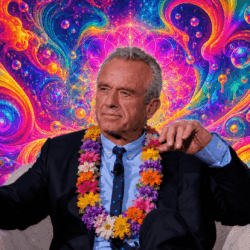
Robert F. Kennedy Jr. has joined the chorus of psychedelic advocates who claim the drugs could revolutionize mental health care, particularly treatment of post-traumatic stress disorder (PTSD). Despite the recent fanfare, the hype around these potent hallucinogens remains just that—overconfident speculation in search of confirmatory evidence. The conclusion has already been reached, with Kennedy and others now on the hunt for data to validate their preferred conclusion.
Kennedy contends that government barriers have blocked progress on substances such as ibogaine for treating PTSD, depression and opioid withdrawal. Ibogaine, extracted from an African shrub used in traditional ceremonies, has shown preliminary signs of reducing withdrawal symptoms and cravings in self-reported and observational studies. Evidence supporting its use specifically for PTSD is even lower quality; advocates and reporters often point to anecdotes to strengthen the case for experimental use of the psychedelic, though serious risks, including life-threatening cardiac arrhythmias, tend to be minimized during that discussion.
The poor evidence base goes back decades to Timothy Leary’s work at Harvard with another psychedelic called psilocybin. Initial research explored applications for alcoholism and prisoner rehabilitation, but concerns over study methods, undisclosed side effects and promotion of recreational use to undergraduates led to Leary’s dismissal. His “turn on, tune in, drop out” message helped establish him as a counterculture figure, but his primary concern wasn’t carefully testing potential PTSD treatments.
The problem is more troublesome in RFK Jr.’s case since he wields significant influence over federal policy as Health and Human Services secretary and is an infamous contrarian, content to reject robust evidence when it threatens his views. Although he claims the effects of ibogaine and related drugs should be settled by data, Kennedy has already staked out positions on multiple issues—vaccines, antidepressants and pesticides to name just three—that contradict the best available science. What confidence can we have, then, that his approach to psychedelics will be any better?
Join Dr. Liza Lockwood and Cam English on this episode of Facts & Fallacies as they scrutinize Kennedy’s claims about ibogaine.




Podcast: Play in new window | Download
Subscribe: RSS
Dr. Liza Lockwood is a medical toxicologist and the medical affairs lead at Bayer Crop Science. Follow her on X @DrLizaMD
Cameron J. English is the executive vice president at the American Council on Science and Health. Follow him on X @camjenglish