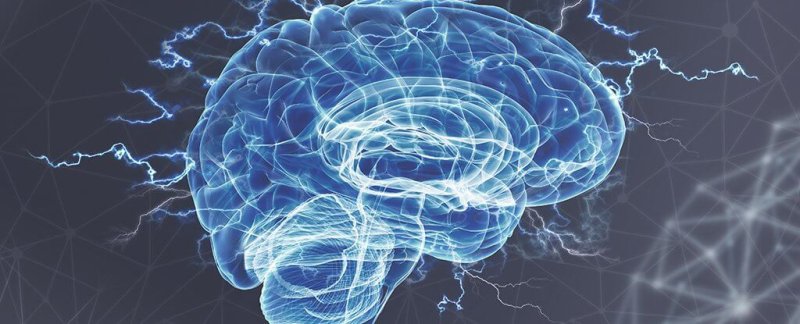

In a study appearing [February 6] in Nature Communications, […] a team of researchers succeeded at enhancing memory more reliably, by stimulating an area of the brain mostly ignored in earlier studies and by applying that stimulation more strategically and selectively.
…
[T]he experiment [was conducted] in patients with epilepsy whose treatment already involved invasive neurosurgical procedures. As the patients were shown a series of words they would be asked to remember later, the researchers recorded activity in several regions of their brains. They then used a machine-learning algorithm to build a “memory model” for each individual: It could read a patient’s neural response — more specifically, changing patterns of low- and high-frequency activity throughout the memory network — when first presented with a word, and predict how likely he or she was to remember it. If the model predicted the patient had more than a 50 percent chance of forgetting, it triggered stimulation to the left lateral temporal cortex, a surface area of the brain known to be active during memory tasks, including ones related to language.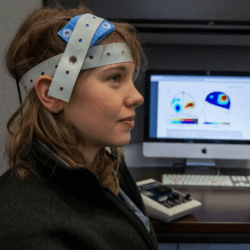
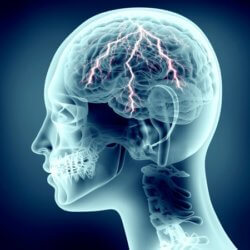


“We essentially built a control system” for the subjects’ memory, [researcher Michael] Kahana said. He and his colleagues found that the control system enabled patients to remember approximately 15 percent more of the task’s words than they could without it.
Read full, original post: With Strategic Zaps to the Brain, Scientists Boost Memory