
Artificial intelligence chatbots can’t yet hand a bad actor a ready-made plague, but the queries Anthropic flagged this month suggest state-run labs, not lone hackers, are testing the limits, as Carl Zimmer reports for The New York Times. Anthropic said it had blocked several attempts to misuse Claude for pathogen research, prompting CEO Dario Amodei to call for a ban on using AI to build biological weapons.
Despite the alarm, Stanford synthetic biologist Drew Endy argues today’s chatbots add only modestly to a threat that predates AI. “In terms of the net impact on our biosecurity risk right now, I find it to be modest,” he said, since the models mostly retrieve knowledge scientists already published rather than understand biology on their own.
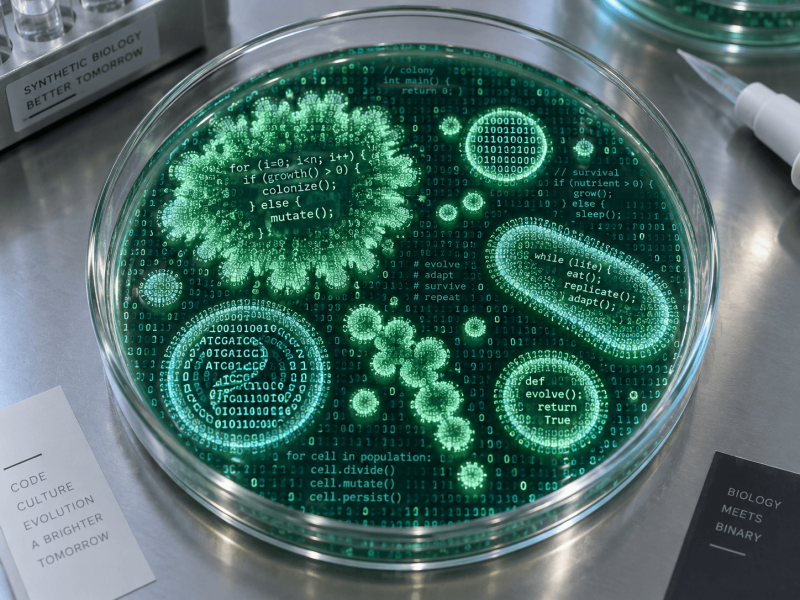
The bigger concern is a newer class of AI trained directly on raw genetic data. Evo2, built by Stanford and the Arc Institute, has generated hundreds of thousands of candidate virus genomes, 16 of which produced real, viable viruses. Its creators have kept it from human pathogens, but Johns Hopkins biosecurity director Thomas Inglesby warns that’s a matter of scale: “With enough training data, these A.I. systems will be able to make predictions of more lethal, contagious, immune-evasive variants.”
DNA synthesis has also grown far cheaper. In 2016, researchers reconstructed horsepox, a relative of smallpox, by mail-ordering genome fragments and assembling them, a feat detailed in a study published in PLOS ONE that AI now makes easier to replicate.




What worries Inglesby most isn’t rogue individuals: “How a Ph.D. student can individually misuse a model for harm is only one small portion of the problem.” Endy sees a troubling pattern of nations accusing each other of covert bioweapons programs: “Today we live in a world where the U.S. State Department accuses North Korea and Russia of having programs, and suspects Iran and China. And China and Russia accuse the United States. This is not something that was happening 10 years ago.”