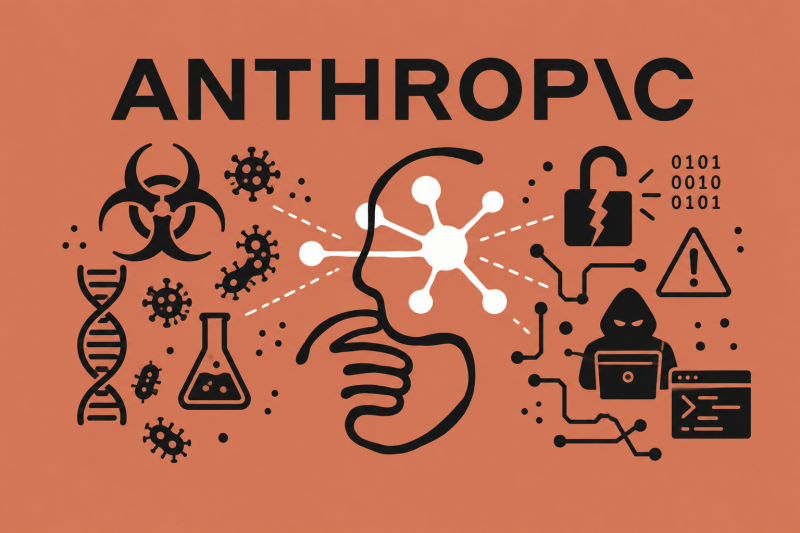

In its third disclosure since March 2025, the AI company detailed threat activity it identified between December 2025 and August 2026. One case involved a blocked request asking Claude to help draft a grant application for gain-of-function research on the chikungunya virus, aimed at making the pathogen spread more easily and evade immune defenses. Anthropic acknowledged such research can serve legitimate purposes, like vaccine development, but said the same work “could also be used to make the pathogen more dangerous.”
The company also said it disrupted nine coordinated influence operations tied to Russia, Iran, Turkey, and networks across the Gulf, South Asia, Africa, and Europe, in which fake social media accounts were used to push political narratives. Separately, Anthropic flagged what it described as an industrial-scale attempt to covertly copy Claude’s underlying capabilities without authorization, along with activity connected to state-sponsored surveillance efforts.
“The cases we share here aren’t typical misuse, but rather examples of the most notable and novel threat activity we’ve identified,” Anthropic said in the report. “We’re publishing this work because we believe we have a responsibility to disclose malicious misuse of our services.”





The disclosures come as Anthropic and its rivals face growing pressure to prove their safety guardrails can keep pace with what their models can actually do. The company has repeatedly warned that increasingly capable AI systems can hand people sophisticated attack and research capabilities they wouldn’t otherwise have — raising the stakes for detection even as the underlying technology keeps advancing. The full findings are laid out in Anthropic’s third misuse report since March 2025.