Many hospitals embrace longevity medicine. Are they separating science from hype?

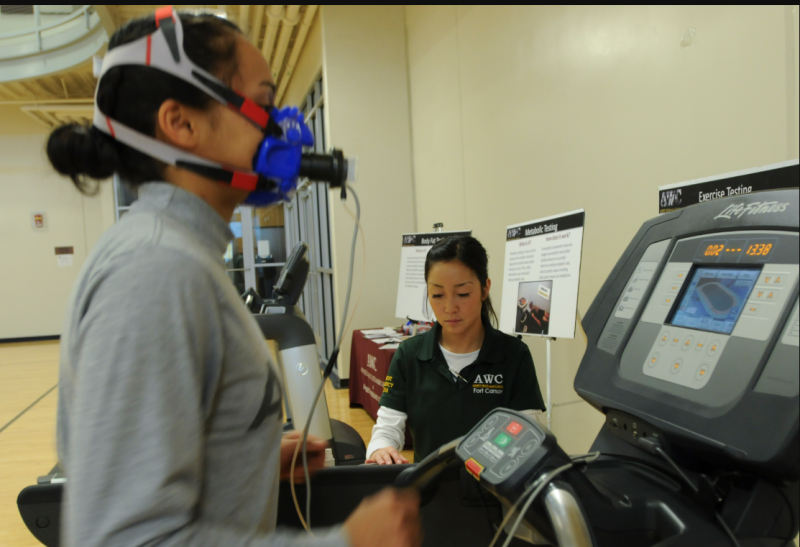
One's VO2 max is a popular measure of health and longevity often measured at clinics. Credit: William Smith via Public Domain

Longevity medicine, long the turf of boutique clinics selling pricey and often unproven screenings, is getting an academic makeover. As The New York Times’ Eilene Zimmerman reports, several major health systems have opened their own longevity clinics in the past year, a shift that could lend credibility to a field often regarded with skepticism.

The draw is accountability. Kathleen Wood, 66, whose parents both died before 62, chose Northwestern Medicine’s Human Longevity Clinic because she wanted care backed by medical research.

Northwestern’s $5,500-a-year program pairs well-established measures like VO2 max testing with less-validated ones such as biological age tests. But it won’t offer whole-body MRIs or genome sequencing. “We know for those with financial means who want this testing we’re losing that share of the market, but we have a pretty strong line in the sand about it,” said Dr. Baljash S. Cheema, a cardiologist and the clinic’s medical director.

Mis- and disinformation are distorting science and public policy. Subscribe to our Daily and Weekly Digests for incisive coverage of ‘disruptive’ innovations in AI, agricultural biotechnology, food, chemicals, nuclear energy, vaccines, and other disruptive innovations.

Other centers draw that line elsewhere. Mount Sinai’s new Healthspan program in New York includes genetic testing and full-body MRIs after a risk discussion, despite concerns that the scans flag benign findings that can trigger anxiety or unnecessary treatment. Weill Cornell offers the scans as optional add-ons to programs costing $7,500 to $12,000, though its focus is cardiorespiratory fitness.


Insurance rarely covers any of this, and skeptics see business motives at work. “Some of this is a response to market forces,” said Leigh Turner, a professor and director of the Center for Health Ethics at the University of California, Irvine, who argues that many of the thinner-evidence tests belong “in the clinical trial space.”

That’s roughly how Cedars-Sinai’s Healthspan Clinic in Los Angeles operates: insurance covers core evaluations, and patients access other assessments through research trials. “We don’t want that to be available only to the wealthy,” said Dr. Sara E. Espinoza, a geriatric internist and the clinic’s medical director.


Read the original article here

Related Articles

Infographic: Global regulatory and health research agencies on whether glyphosate causes cancer

Infographic: Global regulatory and health research agencies on whether glyphosate causes cancer

Does glyphosate—the world's most heavily-used herbicide—pose serious harm to humans? Is it carcinogenic? Those issues are of both legal and ...

Most Popular

Cancer mRNA Vaccine Concept
'A new frontier': Though scorned by RFK Jr., personalized mRNA vaccine offers hope for many suffering from melanoma skin cancer
Healthy Food Sensitivity Test Collection
Viewpoint: That’ll be $300: The wellness industry’s junk science scam to ‘fix’ your immune system that isn’t broken
ChatGPT-Image-Mar-10-2026-01_39_01-PM
Viewpoint—“Miracle molecule” debunked: Why acemannan supplements don’t work
Screenshot-2026-10-22-at-12.45.14-PM
Pennsylvania tells doctors to prepare for a surge in newborn measles cases—a complication unseen in decades
ChatGPT Image Jul 31, 2026, 08_05_37 AM
26% and far worse than during COVID: Under RFK Jr., Americans’ opinion of ‘revamped’ CDC hits an all-time low
Crimson Drips Over the White House
In Trump administration redirect, U.S. steers NIH sharply away from biodefense and pandemic preparedness
Diet Soda with Measuring Tape 2
Science challenges anti-soda activists: No, sodas won’t make you fat
West-Virginia-SNAP-Water-Bottle-Sticker
A ‘shining success’ or 'empty promises’: Two years along, West Virginians assess MAHA’s food promises
Screenshot 2026-10-16 at 5.38
PFAS in Agriculture: Science, Uncertainty, and Risk Communication
Screenshot 2026-10-23 at 2.28
Climate disruption alert: Global emissions hold steady while Trump’s America fuels more warming
Screenshot-2026-10-19-at-12.04.51-PM
Victims of their own success: As memories of killer diseases fade, vaccine rejectionism soars
Strawberry Clamshell with Warning Sticker
Viewpoint: Activists hype ‘dangerous level’ of pesticide residues in Driscoll berries: Separating health concerns from fear-mongering
Rustic Skillet of Raw Brains
‘Weird food’? Testicle- and brain-eating, supplement-gulping MAHA health food enthusiasts defend their ‘natural’ diets
Vibrant Social Media Confetti Explosion
Health misinformation minefield: Countering online deluge by copying its style
Prescription Capsules Scattered on Twenty-Dollar Bills
Facts & Fallacies podcast: America's health care system is broken. A doctor explains how to fix it, Part 2
glp menu logo outlined

Get news on human & agricultural genetics and biotechnology delivered to your inbox.