I landed on a show hosted by two women. I’ve heard people talk about it, so I gave it a try. I’d rather not name it, because the specific podcast isn’t the point. It has millions of listeners and covers current events with a slant toward pop culture. It had nothing to do with health or science (which I appreciated, since my brain sometimes needs a palate cleanser), and that’s exactly why the ads smattered throughout the episode caught my attention. So, what was the algorithm trying to tell me?
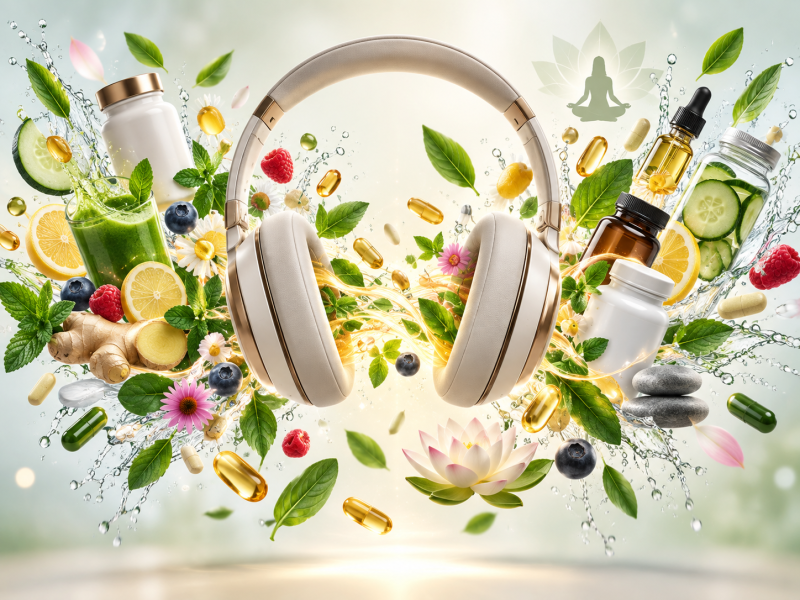
- “Natural is better,” and it’s the default. Ad after ad rattled off the list of what was NOT in the product. Non-GMO. Organic. Nontoxic. No artificial dyes. No preservatives. No ingredients you can’t pronounce. Clean. Green. The usual suspects. One tea described itself as “farm to can” with “simple ingredients,” “never ultra-processed,” and verified by something called the non-UPF verified standard (I have questions).
- “Your body needs to be detoxified.” Teas and supplements to cleanse you of whatever the first category was warning you about. One brand offered a “gentle daily detox” built around chlorophyll, plus a beet-based product for cardiovascular health.
- “Your body needs to be upgraded.” Peptides. More supplements. Herbal remedies. A “clean cognitive support” blend of yerba mate, nootropics, adaptogens, and botanicals. Everything “inspired by nature,” “pure and potent,” “thoughtfully sourced,” and my personal favorite, “backed by thoughtful science.”
The very first ad of the episode, for the record, was for Starbucks Frappuccinos, with one of the hosts casually describing herself in line for a latte. A Frappuccino contains exactly the kind of preservatives and artificial ingredients every other ad in the episode was warning me about, and nobody seemed to notice the dissonance. To be clear, you will also find me in line for a pecan crunch latte when I feel like overspending on caffeine, so no judgment. I just found the juxtaposition telling.
Dropped in between the ads, and just as casually, was a quiet skepticism of conventional medicine. Nobody said the word “pharma,” but the implication ran through the whole episode, that the products we’re handed at the pharmacy are someone else’s agenda, while the supplements and teas in the ad breaks are somehow not. One of the hosts described being in her trad wife era, baking all of her own bread without the “added junk,” among many other changes she’s made to live what she called the “clean girl life.” None of it was framed as advice. It was just how she lives now, mentioned the way you’d mention a new haircut.
It’s not just this one podcast
This all lined up with clips that have been showing up in my own feed lately, from women around my age with enormous audiences. Gwyneth Paltrow explaining that she takes her coffee with raw heavy cream (emphasis on the raw), which surprised no one. Dakota Johnson walking through the supplements she takes each morning. The one that stopped me was Chelsea Handler raving about peptides. I love Chelsea. She is usually the first one to call out nonsense, and here she was, swept up in it.
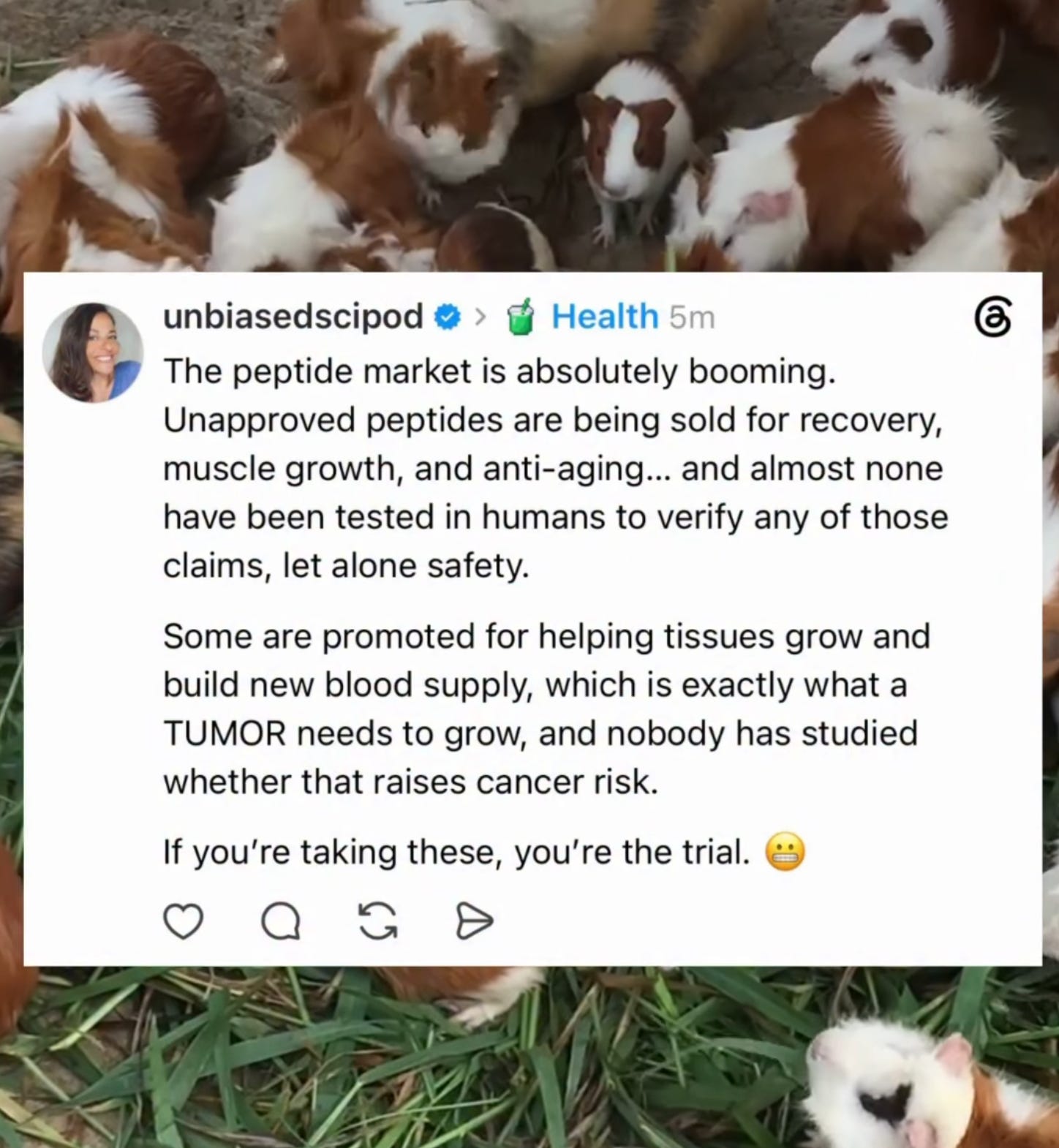
Peptides are on my mind because we recently did a post on them, and I haven’t encountered that level of aggression in my comments in a while (which is saying a lot). If you have the time and the interest, take a scroll through the comments below, though some were filtered out for hate speech, so you won’t get the full experience.
None of what I heard felt like proselytizing, and that’s the part that bothers me. If it had, it would be easy to tune out. Instead, it was subtle, a whole wellness worldview slipped into our ears in between pop culture recaps and celebrity gossip, so seamlessly that it doesn’t register as a claim at all. It has stopped feeling like an ad and started feeling like the norm.




What I would believe if this were my whole algorithm
If this show and others like it were the bulk of what I listened to, I think I would come away believing a few things without ever deciding to believe them.
First, that every ingredient in everything I eat and feed my children is a potential threat, and that the goal is to subtract my way to safety. Second, that my body is accumulating toxins that need to be flushed out on a regular basis, preferably with a tea I ordered online. Third, that a healthy body isn’t maintained so much as optimized, and that optimization comes in monthly subscription form. Fourth, that the doctor’s office and the pharmacy are, at best, a last resort. Fifth, that there’s a discount code for all of the above.
None of these messages is delivered as a lecture, which is exactly why they land. Repetition by voices you already trust and enjoy does the work an argument would otherwise have to do.
Jess Steier is a public health scientist dedicated to bridging the gap between complex scientific evidence and public understanding. Jess is the Founder of Unbiased Science, CEO of Vital Statistics Consulting, and Executive Director of The Science Literacy Lab (a 501c3 non-profit organization).
A version of this article was originally posted at Unbiased Science and has been reposted here with permission. Any reposting should credit the original author and provide links to both the GLP and the original article. Find Unbiased Science on X @unbiasedscipod