


Science Literacy Project Daily Digest
CRISPR founder fighting for patent rights to gene-editing tool
Will the University of California reap the financial rewards of CRISPR's commercial use, likely worth billions of dollars? That's the ...
GMO-free: Corporate irresponsibility trend
Pass any Chipotle these days — and it is my gastronomic preference to pass rather than enter — and you ...
Genetics might help explain why some people have stronger emotions than others
Your genes may influence how sensitive you are to emotional information, according to a new study which found that carriers ...
Should genetic testing be more widely used in medicine than it already is?
As the price of genetic testing continues to fall and the value of the information we're getting from those tests ...

Genetics of depression: Could a test have prevented the Germanwings catastrophe?
Major depression affects an estimated 10 percent of the population and often runs in families. Could a genetic test could ...
Honeybee deaths increase over past year
More than two out of five American honeybee colonies died in the past year, and surprisingly the worst die-off was ...
Politics of Indian farmer suicides
If the National Crime Records Bureau of India (NCRB) data is to be taken seriously, on an average over 15,000 ...
Removing antibiotics from food makes a difference, removing GMOs doesn’t
A lot of food companies are jumping on the transparency bandwagon. Panera, Chipotle, and Pepsi are labeling foods and removing ...
India changes tune and permits GM crop trials but states still block research
Five years ago, India was a hostile place for researchers testing genetically modified (GM) crops. Its government barred the commercial ...
Decades of research lead to new soybean diversity, rust-resistant soybean
It took decades of painstaking work, but research geneticist Ram Singh managed to cross a popular soybean variety ("Dwight" Glycine ...
Rabies virus becomes unlikely tool for mapping brain networks
Humans have a long tradition of turning things that harm us into things that help us. We made bears into ...

Early Europeans closer to Neanderthals than expected
One of Europe’s earliest known humans had a close Neanderthal ancestor: perhaps as close as a great-great-grandparent. The finding, announced ...
Archaeologists reveal native Alaskans’ roots
As humans spread out of Africa and settled the rest of the world tens of thousands of years ago, one ...
Can Apple’s foray into open-source DNA data succeed?
A new rumor is spreading that Apple may be leveraging its ubiquity to encourage iPhone owners to participate in DNA ...
Claims that technology is making children autistic are unfounded
Here we go again. Recently, British newspapers: The Telegraph, The Independent and The Metro (a paper given out free on public transport right across the ...
Hungary poised to become first EU nation to block GMOs under new regulation
“Hungary could be the first to introduce the new European Union regulations allowing countries to ban the cultivation of GMO ...
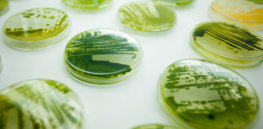
Sustainable household products? Not if anti-GMO “green” groups have their way
The latest “green” household cleaning products are using cutting-edge biotechnology to become more environmentally friendly—but criticism from “green groups” could ...
Celiac disease linked to nerve damage, but doctors still not sure why
Celiac disease, an autoimmune disorder that causes intestinal damage when a person eats gluten, is still something of a medical mystery ...
What will happen if humans are created in a laboratory?
Consider a future in which human babies are created in a test tube. What happens when women no longer have ...
In medicine, listening to the patient matters
Medicine is dominated by the quants. We learn about human health from facts, and facts are measurable. A disease is ...

In defense of Chipotle: GMOs may be safe to eat but they aren’t safe to grow
Critics of Chipotle’s new GMO-free menu claim the restaurant chain is pandering to paranoia and that GM foods are perfectly ...
Wheat genes could help revive American chestnut
Blight has made the American chestnut, once "the dominant tree in the canopy," a rare sight in the forests of the East ...
Why does public have selective hearing on scientific opinions?
How come we sometimes listen to scientific arguments, but sometimes disregard them entirely? Pew Research Center has done a survey ...
Public needs to be more informed on human germline gene editing
The news that scientists have edited the genomes of human embryos induced a predictable sharp intake of breath. The work ...

Video: Bill Nye explains conversion to GMO supporter
Bill Nye made waves last March when he changed his views on genetically modified organisms (GMOs) following a visit with ...
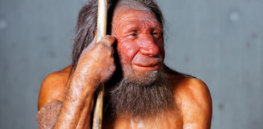
More mystery about Neanderthal and modern humans: How reliable is ancient DNA analysis?
Modern humans share swaths of DNA with long-extinct Neanderthals. But what does this mean? New and complicated dating techniques and ...
In Yellowstone’s hot springs, biotechnology revolution was born
Arguably, the most important enzyme ever discovered was found in a bacterium that lived in one of Yellowstone's hot springs ...
